Taliban attacks kill 21 policemen
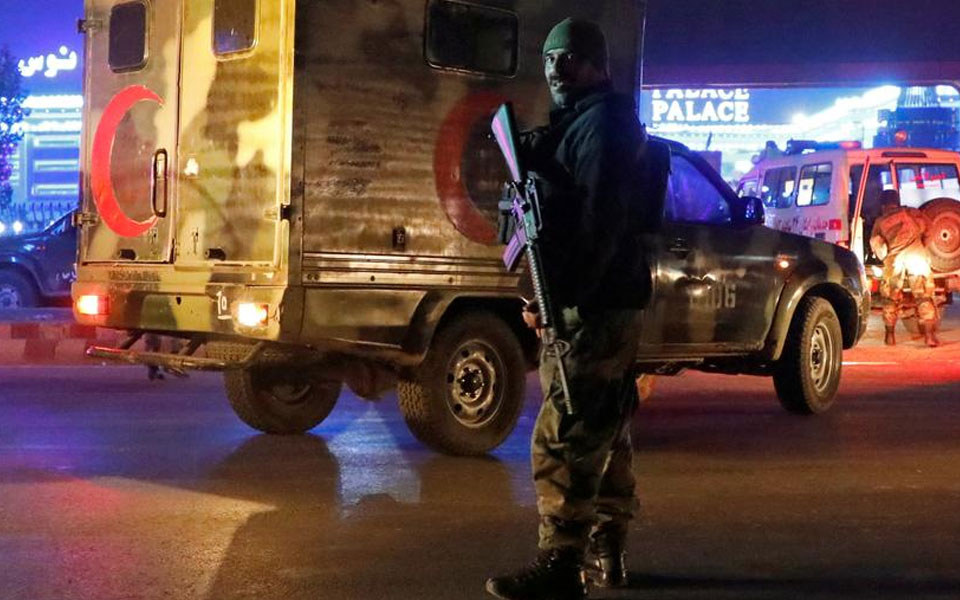
Kabul, Jan 10: Officials say a wave of Taliban attacks in western and northern Afghanistan the previous day has killed 21 members of the country's security forces.
Jamshed Shahabi, spokesman for the governor in western Badghis province, says the insurgents overran outposts there, killing six policemen.
Council member Shamsul Haq Baeakzai in northern Baghlan province says seven members of the local police force were killed there, also on Wednesday.
And in northern Takhar province, council member Ruhollah Raufi says eight policemen were gunned down.
The attacks left another 23 members of the security forces wounded. The Taliban have claimed responsibility for all the attacks.
The insurgents carry out near-daily attacks on Afghan troops, inflicting heavy loses. In response, the government in Kabul no longer releases official casualty figures.
Let the Truth be known. If you read VB and like VB, please be a VB Supporter and Help us deliver the Truth to one and all.
Rickelton's ton in vain as SRH beat MI by 6 wickets
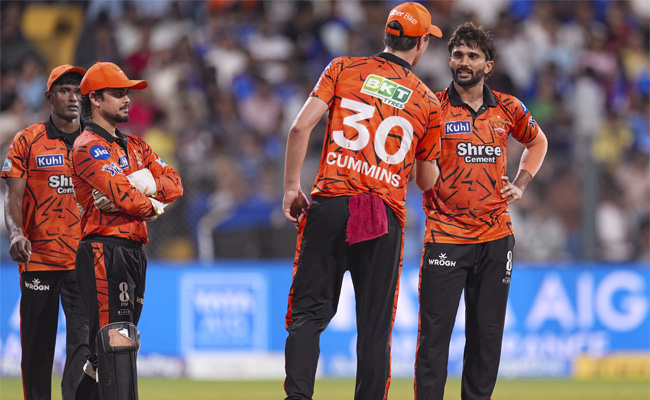
Mumbai (PTI): Ryan Rickelton's whirlwind unbeaten ton was overshadowed by Heinrich Klaasen's unbeaten 65 as Sunrisers Hyderabad defeated Mumbai Indians by six wickets in an IPL match here on Wednesday.
Chasing an imposing 244-run target, Travis Head (76 off 30) and Abhishek Sharma (45 off 24) shared 129 runs for the opening wicket to set the platform for SRH.
Klaasen (65 not out off 30 balls) then displayed his all-round hitting abilities to guide SRH home with the help of Nitish Kumar Reddy (21) and Salil Arora (30 not out off 10) in 18.4 overs.
Earlier, Rickelton's knock powered MI to 243 for five.
MI rode on a 93-run stand between Rickelton (123 not out off 55 balls) and Will Jacks (46 off 22) in 7.1 overs for the opening stand to power the side.
MI skipper Hardik Pandya scored a valuable 31 off 15 balls before being dismissed.
Praful Hinge (2/54), Eshan Malinga (1/29), Sakib Hasan (1/39) and Nitish Kumar Reddy (1/31) were the wicket-takers for SRH.
Brief Scores:
Mumbai Indian: 243 for 5 in 20 overs (Ryan Rickelton 123 not out; Praful Hinge 2/54).
Sunrisers Hyderabad: 249 for 4 in 18.4 overs (Travis Head 76, Heinrich Klaasen 65 not out; AM Ghazanfar 2/51).