Taliban official says Afghan girls of all ages permitted to study in religious schools
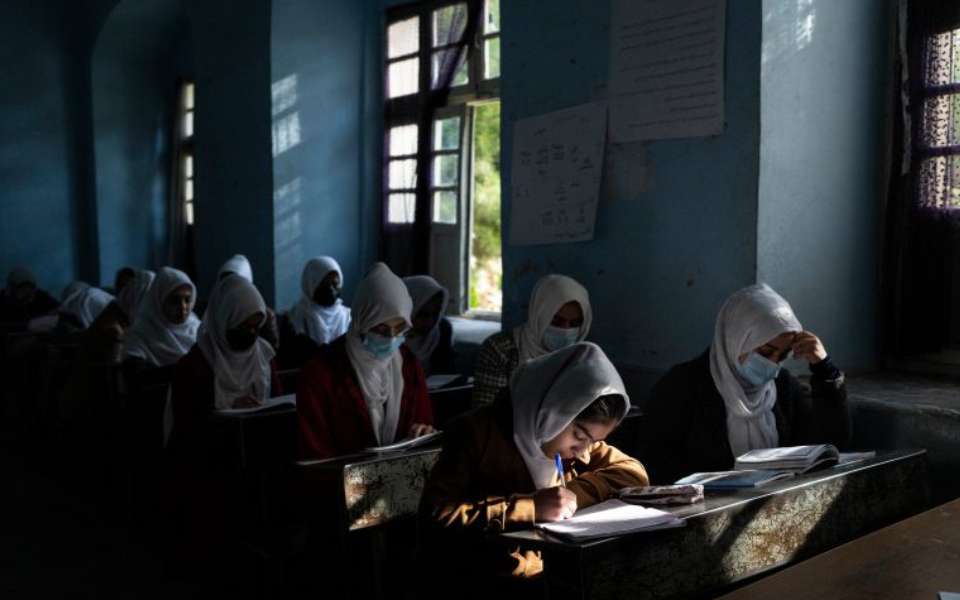
Kabul, Dec 21: Afghan girls of all ages are permitted to study in religious schools, which are traditionally boys-only, a Taliban official said Thursday.
A day earlier, UN special envoy Roza Otunbayeva told the Security Council and reporters that the United Nations was receiving "more and more anecdotal evidence" that girls could study at the Islamic schools known as madrassas.
But Otunbayeva said it wasn't clear what constituted a madrassa, if there was a standardised curriculum that allowed modern education subjects, and how many girls were able to study in the schools.
The Taliban have been globally condemned for banning girls and women from education beyond sixth grade, including university. Madrassas are one of the few options for girls after sixth grade to receive any kind of education.
Mansor Ahmad, a spokesman at the Education Ministry in the Afghan capital Kabul, said in messages to The Associated Press that there are no age restrictions for girls at government-controlled madrassas. The only requirement is that girls must be in a madrassa class appropriate to their age.
"If her age is not in line with the class and (the age) is too high, then she is not allowed," said Ahmad. "Madrassas have the same principles as schools and older women are not allowed in junior classes." Privately run madrassas have no age restrictions and females of all ages, including adult women, can study in these schools, according to Ahmad.
There are around 20,000 madrassas in Afghanistan, of which 13,500 are government-controlled. Private madrassas operate out of mosques or homes, said Ahmad. He did not give details on how many girls are studying in the country's madrassas or if this number increased after the bans.
Otunbayeva addressed the Security Council on the one-year anniversary of the Taliban banning women from universities. Afghanistan is the only country in the world with restrictions on female education.
Higher education officials in Kabul were unavailable for comment Thursday on when or if the restrictions would be lifted, or what steps the Taliban are taking to make campuses and classrooms comply with their interpretation of Islamic law.
Afghanistan's higher education minister, Nida Mohammed Nadim, said last December that the university ban was necessary to prevent the mixing of genders and because he believed some subjects being taught violated the principles of Islam.
Let the Truth be known. If you read VB and like VB, please be a VB Supporter and Help us deliver the Truth to one and all.
Caste census will form basis for future policy decision, says CM Siddaramaiah
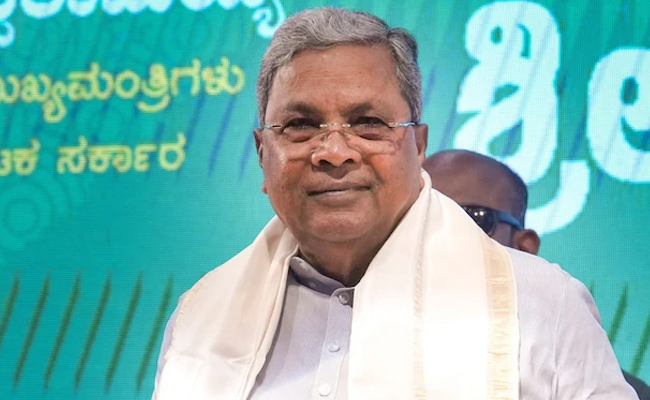
Mysuru (Karnataka) (PTI): Karnataka Chief Minister Siddaramaiah on Wednesday said that the ongoing caste census would form the basis for future policy decisions, asserting that the exercise was crucial to advancing social justice in the state.
Addressing a gathering at the Siddarameshwara Jayanti celebrations here, he said caste enumeration was being carried out for the first time since 1931 and would be followed by deliberations once the report is submitted.
"At present, a caste census (Jaati Sameekshe) is underway. After the report comes, we will discuss it and take necessary decisions," Siddaramaiah said.
He underlined the government’s commitment to equality, stating, "We are committed to social justice. No one should face injustice. Even if not 100 per cent, we will strive to ensure 99 per cent justice."
Referring to measures aimed at addressing intra-caste disparities, the chief minister said the government had already implemented internal reservation based on revised classifications.
"We have gone beyond the Nagamohan Das report and implemented internal reservation… now it has been revised to 5.25 per cent, 5.25 per cent, and 4.5 per cent. This has been approved by the Cabinet," he said.
Siddaramaiah said the broader objective was to ensure equitable distribution of resources and opportunities, while reiterating that policy interventions would be guided by constitutional principles.
"Our objective is equal share and equal life for all," he said.
He also emphasised the role of education in eliminating inequalities, particularly among marginalised communities, and said empowerment was essential to dismantle entrenched caste hierarchies.
"Only when people gain such empowerment can caste divisions be eradicated. Education is essential for this," he added.
The CM said the government would examine demands raised by various communities and take decisions based on feasibility, while ensuring that benefits reached all sections without discrimination.