Tesla recalls over 5.79 lakh vehicles in US over pedestrian warning risk sound
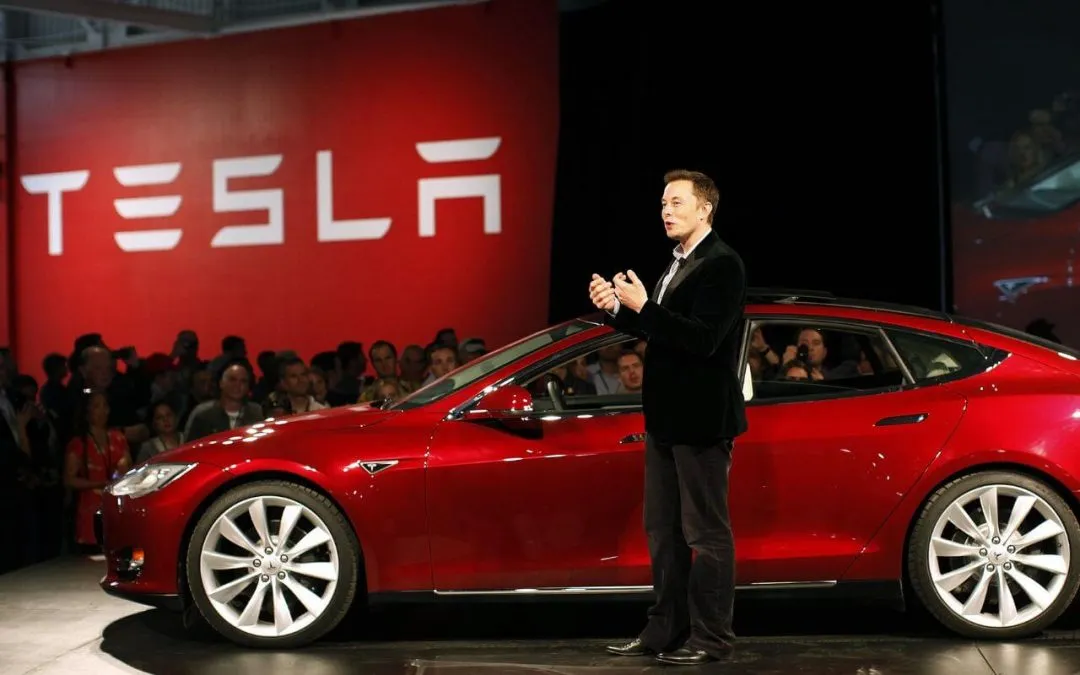
Detroit, Feb 10: Tesla is recalling nearly 579,000 vehicles in the US because a Boombox function can play sounds over an external speaker and obscure audible warnings for pedestrians.
The recall is the fourth made public in the last two weeks as US safety regulators increase scrutiny of the nation's largest electric vehicle maker.
In two of the recalls, Tesla made decisions that violate federal motor vehicle safety standards, while the others are software errors.
The National Highway Traffic Safety Administration says on its website Thursday that the cars and SUVs have what Tesla calls a Boombox function that allows drivers to play sounds while the vehicles are moving.
This violates federal safety standards that require pedestrian warning noises for electric cars, which make little noise when travelling, the agency says.
The agency says the problem will be repaired with an over-the-air software update that will disable Boombox, in drive, reverse or neutral.
The Boombox functionality allows a customer to play preset or custom sounds through the PWS (pedestrian warning system) external speaker when the vehicle is parked or in motion," NHTSA says in documents posted on its website.
While Boombox and the pedestrian alert sound are mutually exclusive sounds, sounds emitted using Boombox could be construed to obscure or prevent the PWS from complying" with safety standards, the agency wrote.
The recall covers certain 2020 through 2022 Tesla Model X, S, and Y vehicles, as well as 2017 through 2022 Model 3s, according to records.
A message was left Thursday seeking comment from Tesla, which has disbanded its media relations department.
The company is not aware of any crashes or injuries due to the problem, NHTSA said.
Tesla enabled Boombox with a software update in December of 2020, NHTSA said in documents.
The agency began seeking information from Tesla in January of 2021, and Tesla explained the feature and contended that it complied with US safety standards.
In September of 2021, NHTSA opened an investigation into the feature. A month later, Tesla defended its rationale for determining that Boombox complied with safety standards.
But on Jan. 29 of this year, the company decided to do a recall and disable Bombox in drive, neutral and reverse.
NHTSA said that in 2010, Congress required electric and hybrid vehicles to make pedestrian warning noises.
The law required agency rules to stop manufactures from allowing anyone other than an automaker or dealer to disable, alter, replace, or modify the pedestrian alert sound or set of sounds.
Tuesday's recall is the 15th done by Tesla since January 2021, according to NHTSA records. In addition, the safety agency has opened multiple investigations of Teslas.
Last week, Tesla had to recall nearly 54,000 vehicles equipped with Full Self-Driving" software that allowed the vehicles to run through stop signs at low speeds, without coming to a complete halt. Selected Tesla owners are beta testing the software on public roads, but the cars can't drive themselves despite the name.
The company also had to recall over 800,000 vehicles because seat belt reminder chimes may not sound when the vehicles are started and the driver isn't buckled up.
And this week, nearly 27,000 vehicles were recalled because the cabin heating systems may not defrost the windshield quickly enough. All were to be fixed with online software updates.
Safety advocates and automated vehicle experts say Tesla is pushing the boundaries of safety to see what it can get away with, but now NHTSA is pushing back.
Also, after a NHTSA inquiry in December, Tesla disabled a function that let drivers play video games on centre touch screens while the vehicles are moving.
In November, NHTSA said it was looking into a complaint from a California Tesla driver that the Full Self-Driving software caused a crash.
The driver complained to the agency that a Model Y went into the wrong lane and was hit by another vehicle.
The SUV gave the driver an alert halfway through the turn, and the driver tried to turn the wheel to avoid other traffic, according to the complaint.
But the car took control and forced itself into the incorrect lane, the driver reported. No one was hurt in the Nov. 3 crash.
NHTSA also is investigating why Teslas using the company's less-sophisticated Autopilot partially automated driver-assist system have repeatedly crashed into emergency vehicles parked on roadways.
The agency opened the investigation in August, citing 12 crashes in which Teslas on Autopilot hit parked police and fire vehicles. In the crashes under investigation, at least 17 people were hurt and one was killed.
Last week Tesla said in its earnings release that Full Self-Driving software is now being tested by owners in nearly 60,000 vehicles in the US. It was only about 2,000 in the third quarter.
The software, which costs 12,000, will accelerate Tesla's profitability, the company said.
Let the Truth be known. If you read VB and like VB, please be a VB Supporter and Help us deliver the Truth to one and all.
Heavy rain, hailstorms likely to lash Uttarakhand on Tuesday; IMD issues warning
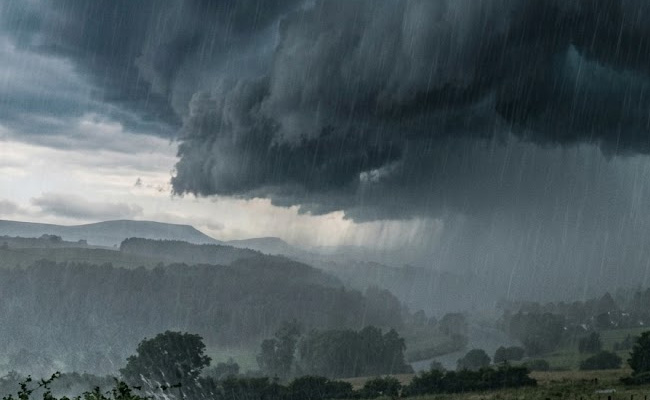
Dehradun/Pithoragarh (PTI): The India Meteorological Department (IMD) has issued a warning for heavy rain and hailstorms across several districts of Uttarakhand on Tuesday, as temperatures remained markedly below normal in the region.
Heavy rainfall is likely at isolated places in Dehradun, Haridwar, Tehri, Pauri, Nainital, Champawat, and Udham Singh Nagar districts. Most places across all districts are expected to receive light to moderate rain or thunderstorms, while higher reaches are likely to witness snowfall, officials said on Monday.
The weather department warned of thunderstorms accompanied by lightning, hail and intense spells of rain in six districts, including Dehradun and Nainital. Gusty winds with speeds reaching 40-50 kmph are also expected at isolated locations in these areas and other hilly districts.
In the state capital, Dehradun, the sky is forecast to remain partly cloudy with light rain and thunderstorms accompanied by gusty winds of 30-40 kmph.
The maximum and minimum temperatures in the city are expected to hover around 31 degrees Celsius and 19 degrees Celsius, respectively.
Maximum temperatures during the past 24 hours remained markedly below normal in the hills and appreciably below normal in the plains. While no significant change in temperature is expected over the next 2-3 days, the IMD predicts a rise of 3-5 degrees Celsius during the subsequent 3-4 days.
Rainfall was recorded in several areas after 8.30 am today, with Ramnagar receiving 31.5 mm and Nainital recording 26.5 mm. Other areas, including Pithoragarh, Khatima and Champawat, also reported moderate precipitation.
Authorities have stopped a batch of 36 Adi Kailash pilgrims at the Dharchula base camp and placed the high-altitude yatra route on high alert following heavy rains and hailstorms in the district on Monday.
Dharchula SDM Ashish Joshi said the pilgrimage was halted due to adverse weather conditions. The issuance of new inner-line passes has been suspended until the weather normalises.
With 1,700 passes issued so far, pilgrims already at higher camps are being monitored for safety, the official added.