Thai election commission moves to dissolve party linked to princess
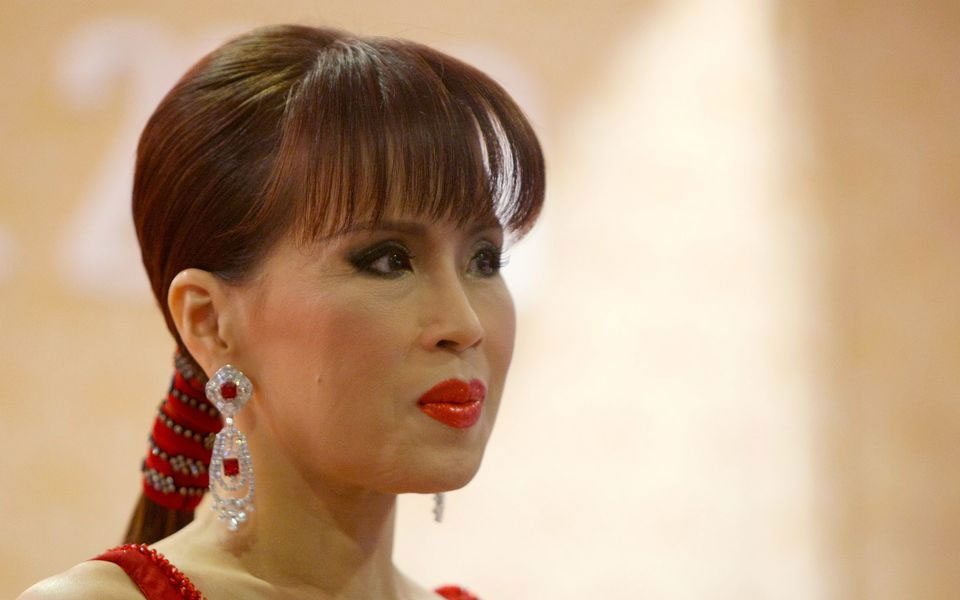
Bangkok : Thailand's election commission on Wednesday asked the constitutional court to dissolve a party that proposed a princess as candidate for prime minister, a potentially serious blow to the political aspirations of the kingdom's powerful Shinawatra clan.
Junta-ruled Thailand has sunk into political chaos since Friday, when Princess Ubolratana's name was submitted by Thai Raksa Chart, a party allied with the divisive billionaire ex-premier Thaksin Shinawatra.
Her unprecedented bid to enter frontline politics unravelled within hours after King Maha Vajiralongkorn, the 67-year-old Ubolratana's younger brother, decried the entry of a royal into the political fray as "highly inappropriate".
Thailand's powerful and vastly wealthy monarchy is seen as above politics, although royals have intervened before during times of political crisis.
The commission brought a premature end to the princess's political career by disqualifying her as a candidate for premier.
On Wednesday the commission filed a request with the constitutional court to disband Thai Raksa Chart for breaching the political parties law by bringing a royal family member into politics.
"That action is considered hostile to the constitutional monarchy," it said.
It was not immediately clear if the court could rule on Thai Raksa Chart's dissolution before the March 24 election.
If dissolved, the party's executives -- including Shinawatra family members -- could face a long political ban, while its candidates would be unable to run in the poll.
The party said it will contest the move.
"Our party will go ahead (with campaigning) we are the hope of ... our people," party leader Preechaphol Pongpanit said, adding that they were "stunned" by how swiftly events had unfolded over the past few days.
Thai Raksa Chart was set to add to the vote bank of the bigger Shinawatra electoral vehicle, Pheu Thai, in an election where secondary parties are targeting seats via the party list system.
Thailand remains a deeply divided kingdom.
Parties affiliated with Thaksin have won every election since 2001, but their governments have been battered by two coups and a barrage of court cases driven through by an arch-royalist Bangkok-based elite.
Thaksin and his sister Yingluck both live abroad to avoid convictions they say are politically motivated.
To off-set their electoral dominance, the ruling junta scripted a new constitution making the upper house entirely appointed, while limiting the number of constituency seats available at the March poll -- the first election since 2011.
If Thai Raksa Chart is banned it will "reduce the opportunity of the Shinawatra party to have big numbers in parliament", said Titipol
Phakdeewanich, a political scientist at Ubon Ratchathani University.
That would benefit the army-linked party Phalang Pracharat and increase the likelihood of its prime ministerial candidate, junta chief Prayut Chan-O-Cha, of returning to power as a civilian leader.
Thais have struggled to digest what Princess Ubolratana's short-lived foray into politics means for the kingdom, with analysts left open-jawed by the rare sight of palace intrigue playing out in public.
In an Instagram post late Tuesday Ubolratana apologised for her role in the drama, which has sent jitters across the politically febrile country.
"I'm sorry that my genuine intention to help work for the country and fellow Thai people has created a problem that shouldn't happen in this era," she wrote.
It was tagged with a hashtag: "#howcomeitsthewayitis".
Ubolratana is the first-born of former king Bhumibol Adulyadej, but she gave up her royal titles when she married an American in 1972.
After her divorce she moved back to Thailand, where she is still regarded by the Thai public as a part of the royal family.
While she said she was exercising her rights as a commoner to stand for premier, the palace statement last week said she is "still a member of the House of Chakri", referring to the name of the dynasty.
The monarchy in Thailand is considered sacred and revered by its people, and is under the protection of draconian lese majeste laws. The king's word is considered final.
Let the Truth be known. If you read VB and like VB, please be a VB Supporter and Help us deliver the Truth to one and all.
Power struggle in ruling Cong has 'created massive confusion' in Karnataka: BJP leader Ashoka
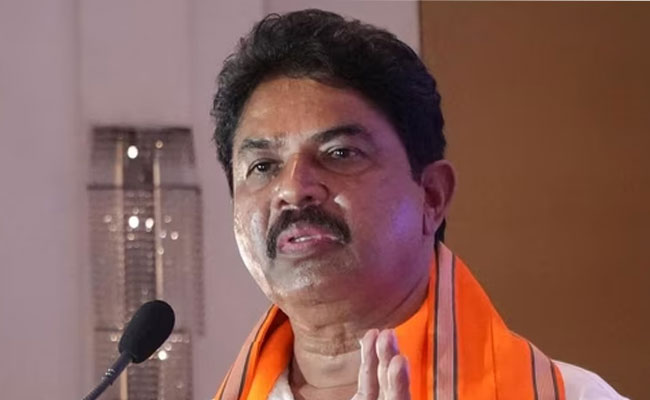
Bengaluru (PTI): BJP leader R Ashoka on Friday claimed that the ongoing power struggle between Chief Minister Siddaramaiah and his deputy D K Shivakumar has created massive confusion in Karnataka.
He remarked that the proverb “when two people fight, the third one benefits” has come true, as AICC President Mallikarjun Kharge is also now making efforts to become Chief Minister.
Speaking to reporters here, Ashoka said the entire government has turned into a house of confusion due to the alleged power tussle.
Kharge’s new statement has only added to the chaos, he said.
Congress chief Mallikarjun Kharge had on Friday said that no date has been fixed yet to discuss possible leadership change in Karnataka.
This came a day after Kharge said there was no change of CM in Karnataka "for now" and that the leadership issue in the state would be resolved soon.
The BJP leader said that Kharge too has aspirations and that he was cheated earlier.
"Perhaps he has received a green signal from the Congress high command to become CM. Everyone is already saying Kharge should become CM. Kharge himself has declared, “I am ready to become CM.” Despite many attempts in the past, he never became CM. Now he is trying to seize the opportunity," the Leader of Opposition in the state assembly said.
According to him, the situation in Congress has perfectly become a case of “two people fighting, third one benefits.”