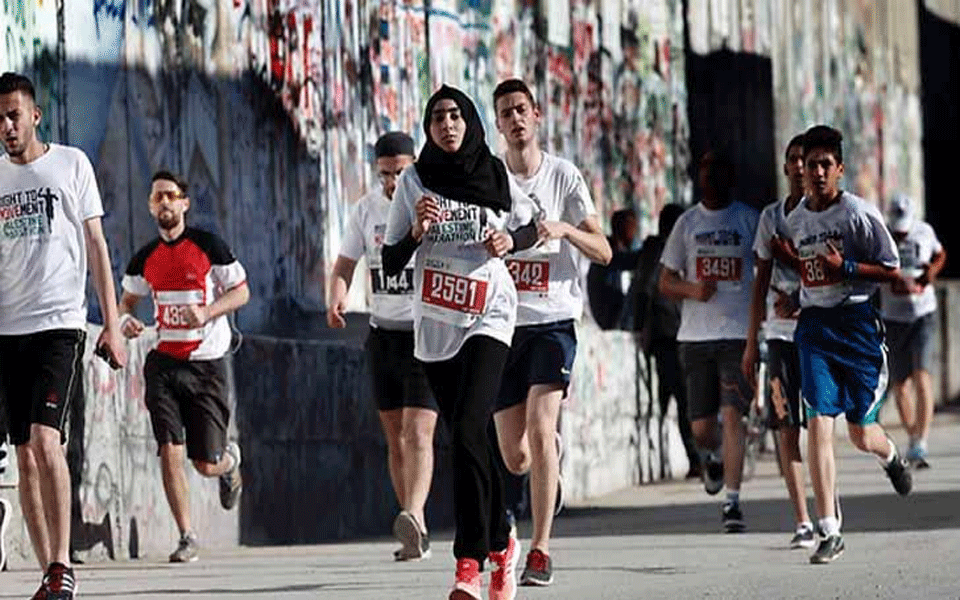
Bethlehem: Thousands of Palestinian and international runners on Friday took part in the sixth edition of the Palestine marathon in Bethlehem, aiming to shed light on the movement restrictions imposed in the Palestinian territories.
Starting near the Church of the Nativity, the annual race took the participants through the city's landmarks as well as the Aida refugee camp, as they ran along the Israeli separation wall in an event the Palestinian Olympic Committee began sponsoring last year.
"I come every year and I am here to break the barriers that Palestinians have. We do not have the freedom to do what we want," Muhsen al-Homouz, originally from Bethlehem, told Efe. "But I am also here to support the sport and encourage everyone to join in."
Photographers captured the festive atmosphere of the race, showing the diverse group of participants including individual runners, families with children, elderly people and people with disabilities.
Music played at the starting and finishing point while many of the participants carried Palestinian flags and banners of the Boycott, Divestment and Sanctions Movement.
Around 7,000 runners, according to the news agency Maan, started the race at 8.00 am and went through the different categories of the event: the 42-kilometre marathon, the half marathon, the 10-kilometre race and the five-kilometre family run.
The marathon's cause of claiming the right to freedom of movement was best visually represented by the image of the participants running along the concrete wall which separates Bethlehem from Jerusalem.
The wall, built by Israel in 2003, cuts through the Palestinian territory of the West Bank and was declared illegal by the International Court of Justice a year after its construction.
Let the Truth be known. If you read VB and like VB, please be a VB Supporter and Help us deliver the Truth to one and all.
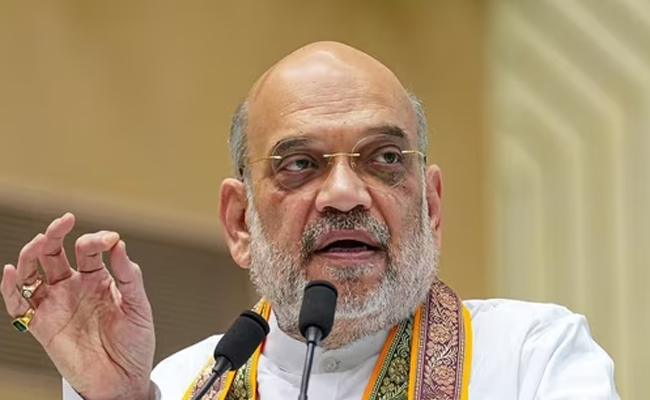
Bengaluru (PTI): Karnataka Food and Civil Supplies Minister K H Muniyappa on Wednesday said the state is facing an acute shortage of LPG cylinders for commercial use, with limited supplies forcing the government to prioritise essential sectors while asking hotels and eateries to temporarily switch to alternative arrangements.
He said the crisis has arisen due to supply constraints at the national level, with shipments stuck overseas, and that the state is making efforts to manage distribution until the situation normalises.
“We have very limited supply for restaurants, dhabas, hotels and industries, only about 1,000 cylinders. It has become very difficult to decide who should get how much from these 1,000 cylinders,” Muniyappa said in the Karnataka Legislative Council.
Citing the reason behind the shortage, he said, “The Central government is making efforts and is in constant touch with Iran. Around 16 ships are in queue and are not being released. If they are released, the situation will ease and return to normal.”
The minister said the government has urged commercial establishments to adjust operations.
“I have called a meeting of hotel owners and told them that for a week they must adjust, even if it means using electricity. This is a difficult situation, a war-like scenario, and the hoteliers should manage by using electricity for the time being,” he said.
Muniyappa said the state plans to streamline supplies by pooling available stock over a week.
“We will consolidate these 1,000 cylinders over a week and increase them to around 10,000 to 15,000 cylinders. I will call the association and discuss how to distribute them,” he said, adding that further consultations will be held next week.
Emphasising that domestic consumers remain the top priority, he said household supply will not be disrupted under any circumstances. “Priority is for domestic use. Household supply cannot be stopped at any cost. Every day, about 3,52,921 cylinders are being consumed,” he said, noting that oil marketing companies are continuing daily distribution.
The minister said the main challenge lies in commercial allocation, which has been capped by the Centre.
“The central government has allowed only 20 per cent allocation. The daily requirement for commercial cylinders is 44,000. Arrangements have been made to supply about 9,000 cylinders,” he said.
He detailed the prioritisation plan evolved in consultation with oil companies.
“We are providing 4,200 cylinders to educational institutions, student hostels, hospitals and other essential institutions,” he said.
In addition, about 1,200 cylinders are being supplied to government-run facilities and key public service points.
“For government PHU institutions, canteens located at airports, railway stations and bus stations, as well as Indira canteens, we are supplying about 1,200 cylinders as per their full requirement."
According to Muniyappa, certain sectors critical to the economy are also being supported.
“For seed processing, food processing, agriculture and allied sectors, pharmaceutical industry, fisheries, zoological parks, sports and sports hostels. Around 500 cylinders are being provided,” he said.
Responding to concerns raised by legislators, he said temporary relief measures have been extended during the ongoing Assembly session.
“As long as the Assembly session continues, we will provide about 50 per cent of their requirement. We cannot provide more than that, but considering the urgency, this arrangement has been made,” he added.