Three dead, scores hurt, in Turkey plane accident

Istanbul: Three people have died and 179 were injured when a plane skidded off the runway at an Istanbul airport, caught fire and split into three after landing in rough weather.
Live images broadcast on Turkish television showed several people climbing through a large crack in the severed aircraft and escaping onto one of the wings at the rear.
The Boeing 737 operated by Turkish low-cost carrier Pegasus Airlines had flown into Istanbul's Sabiha Gokcen airport from the Aegean port city of Izmir on Wednesday, NTV television reported.
The plane was apparently buffeted by strong winds and heavy rain lashing Istanbul, Turkey's largest city. Three Turks were killed and 179 injured, Turkish Health Minister Fahrettin Koca told reporters.
"Some passengers evacuated the plane by themselves but others are stuck inside and our rescuers are working to free them," Transport Minister Mehmet Cahit Turhan said on CNN-Turk television.
The plane was carrying 177 passengers and six crew members, state news agency Anadolu said, revising the previous total given by Turkish authorities. Turkish media reports said there were 12 children on board.
Istanbul governor Ali Yerlikaya said the plane "slid some 60 metres (200 feet)" after skidding off the runway, and then "fell about 30-40 metres" down a bank.
The accident, which he attributed to bad weather, "could have had more serious consequences", he said. NTV showed images of the badly damaged plane and flames inside, which were later put out by firefighters. After darkness fell, television footage showed dozens of rescue workers in high-visibility jackets surrounding the plane with flashlights.
Some sprayed water jets onto the severed body of the aircraft, while others could be seen climbing up onto the plane to comb through the cabin.
According to NTV, Turhan said the plane broke after a "strong landing" at Sabiha Gokcen, one of two main international airports in Istanbul.
The front of the plane including the cockpit was sliced off from the bulk of the fuselage, and another huge fissure separated the rear of the aircraft including the tail.
Sabiha Gokcen, which lies on the Asian side of Turkey's commercial hub, was closed and flights were being redirected to Istanbul's main airport.
There had been very strong winds and rain in the area before the incident and poor weather conditions in Istanbul, particularly in winter, often lead to the cancellation of flights.
The Istanbul public prosecutor has launched an investigation into the incident. The plane had landed at the airport at 1518 GMT, the private DHA news agency reported.
In January 2018, a Pegasus Boeing 737-800 slid down an embankment at Trabzon airport on the Black Sea, and landed just metres from the water with its wheels stuck in thick mud.
After four days, the plane was eventually lifted back onto the runway with engineers using cranes. All 162 passengers and six crew were safely evacuated.
President Recep Tayyip Erdogan has sought to make Istanbul the world's top aviation hub and in 2018 opened a new mega-airport in the city of 15 million people.
Pegasus, which has been flying for 20 years, has a fleet of 83 aircraft, including 47 Boeings and 36 Airbus planes, according to its website.
Let the Truth be known. If you read VB and like VB, please be a VB Supporter and Help us deliver the Truth to one and all.
National Synodal Assembly 2026 begins in Bengaluru with over 220 delegates
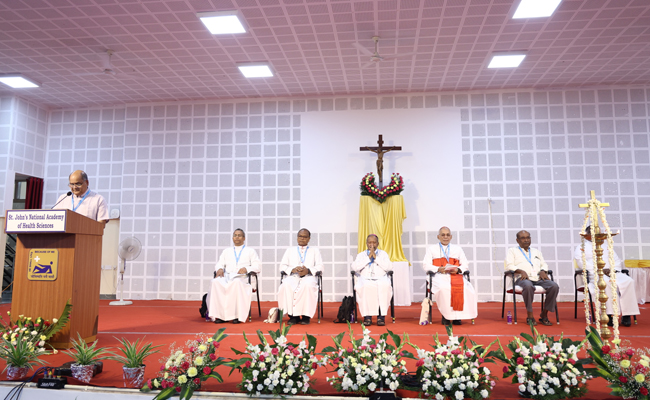
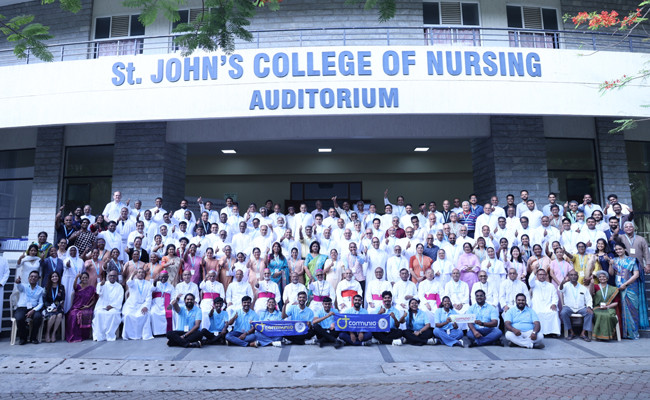
Bengaluru: The Conference of Catholic Bishops of India (CCBI) on May 1 inaugurated its National Synodal Assembly 2026 at St. John’s Medical College, bringing together more than 220 delegates from across the country under the theme Synodal Pilgrims of Hope.
The assembly is part of the global synodal process initiated in 2021 by Pope Francis, which calls for greater participation, dialogue and shared responsibility within the Church. In India, the process has involved consultations at diocesan, regional and national levels.
Participants at the assembly include two Cardinals, 25 Bishops, 65 priests, more than 20 women religious, and over 100 lay faithful, including youth and women leaders.
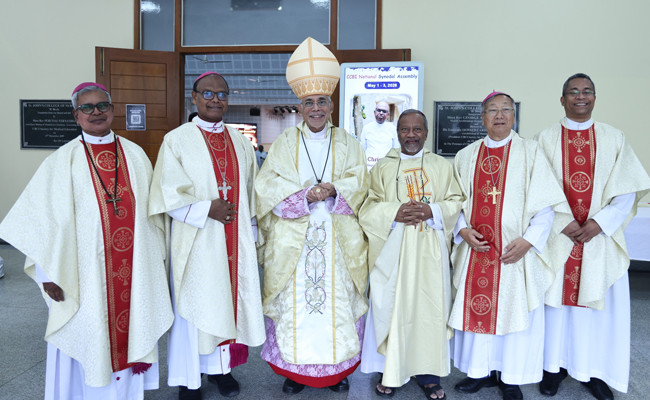
The gathering began with a Eucharistic celebration led by Filipe Neri Ferrão. In his homily, he described the assembly as a moment of grace and discernment and called on delegates to walk together in prayer, listening and missionary commitment.
He spoke about the importance of the Risen Christ in the mission of the Church and urged the faithful to be witnesses of the Gospel. Referring to the conversion of St Paul, he said every baptised person has a role in spreading the message of Christ. He also highlighted the example of St Joseph the Worker, stressing the dignity of labour and the call to holiness in everyday life.
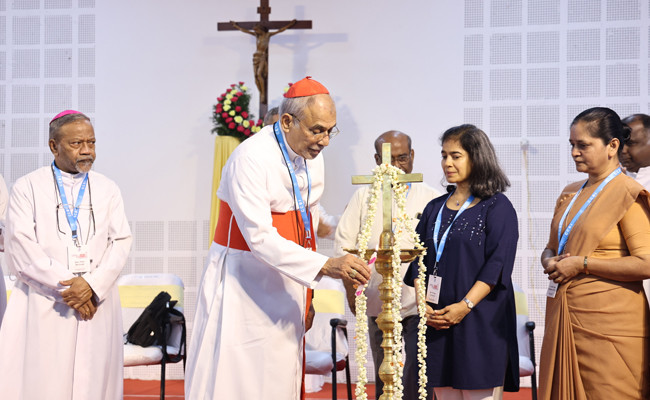
The formal inauguration included the invocation of the Holy Spirit through Veni Creator Spiritus and the lighting of the ceremonial lamp. Deputy Secretary General Fr. Stephen Alathara welcomed the delegates and described the gathering as a spiritual journey.
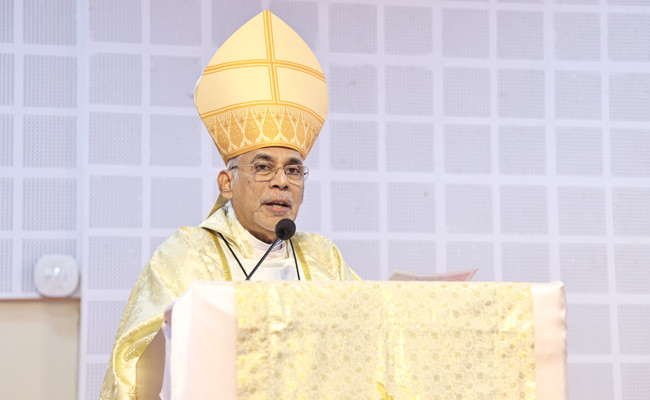
In his presidential address, Cardinal Ferrão referred to the CCBI pastoral plan titled Journeying Towards a Synodal Church: Mission 2033 and called on participants to build on the vision outlined at the 36th Plenary Assembly held in Bhubaneswar in 2025.
Delegates will reflect on four key themes identified from 16 pastoral priorities: interreligious dialogue and peacebuilding, inclusion of the excluded, poverty and integral ecology, and support for children and youth.
The discussions are being conducted through a method of spiritual conversation aimed at encouraging listening, dialogue and collective decision-making. The focus is on translating these discussions into practical actions within the Church.
The assembly also looks ahead to the Jubilee Year 2033, which will mark 2,000 years of the Redemption, and aims to strengthen the Church’s mission in the coming years.
Further consultations are scheduled for September 2026, with the process expected to conclude at the 38th Plenary Assembly of the CCBI in January 2027.
Organisers said the assembly seeks to strengthen unity within the Church and promote participation of all sections, including women and youth, in shaping its future direction.