Three more Rafale jets arrive in India from France

New Delhi, Mar 31: A fourth batch of three Rafale fighter jets landed in India on Wednesday evening after flying non-stop from France, in a further boost to the strike capability of the Indian Air Force.
The jets were provided mid-air refuelling by air force tankers of the United Arab Emirates (UAE), the IAF said.
The 4th batch of three IAF #Rafales landed on Indian soil after a direct ferry from #IstresAirBase France," it tweeted.
The IAF also thanked the UAE air force for refuelling the Rafale jets, describing it as yet another milestone in the strong relationship between the two air forces.
The IAF did not disclose the base where the Rafale jets landed.
"Another batch of #Rafale take to the skies on non stop flight to India with mid air refueling by UAE. Indian Air power grows further," the Indian Embassy in France tweeted earlier.
With the arrival of the three jets, the size of the Rafale fleet has increased to 14.
The first batch of five Rafale jets arrived in India on July 29, nearly four years after India signed an inter-governmental agreement with France to procure 36 of the aircraft at a cost of Rs 59,000 crore.
The formal induction ceremony of the fleet had taken place at Ambala on September 10 last.
A second batch of three Rafale jets arrived in India on November 3, while a third batch of another three jets joined the IAF on January 27.
The first Rafale squadron is based in Ambala air force station.
The Indian Air Force is set to raise the second squadron of the Rafale combat jets in mid-April and it will be based in Hasimara air base in West Bengal, according to military officials.
India is expected to get more Rafale jets from France in the next few months.
The Rafale jets, manufactured by French aerospace major Dassault Aviation, are India's first major acquisition of fighter planes in 23 years after the Sukhoi jets were imported from Russia.
The Rafale jets are capable of carrying a range of potent weapons. European missile maker MBDA's Meteor beyond visual range air-to-air missile, Scalp cruise missile and MICA weapons system will be the mainstay of the weapons package of the Rafale jets.
The 4th batch of three IAF #Rafales landed on Indian soil after a direct ferry from#IstresAirBase France. pic.twitter.com/Ch36dgptNF
— Indian Air Force (@IAF_MCC) March 31, 2021
Rafales were refueled in-flight by UAE Air Force tankers. This marks yet another milestone in the strong relationship between the two Air Forces.
— Indian Air Force (@IAF_MCC) March 31, 2021
Thank You UAE AF.@IndembAbuDhabi @Indian_Embassy pic.twitter.com/6gFwh0AnjR
Let the Truth be known. If you read VB and like VB, please be a VB Supporter and Help us deliver the Truth to one and all.
Allahabad HC orders probe into 'reinstatement' of teacher in UP's Barabanki
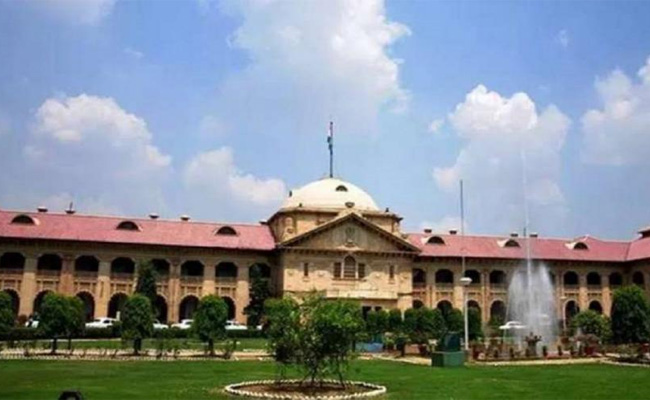
Lucknow (PTI): The Lucknow Bench of the Allahabad High Court on Friday ordered a probe by the special task force (STF) into alleged irregularities in the rejoining of a teacher at City Intermediate College in Barabanki, observing that the reinstatement appeared to be prima facie illegal.
The court also directed the recovery of the salary paid to the teacher during the disputed period.
A bench of Justice Rajeev Singh passed the order on a petition filed by the college management committee. The court expressed doubts over the roles of the District Inspector of Schools (DIOS), Barabanki, the college principal and the teacher concerned and hence, directed a detailed inquiry into the matter.
Taking note of alleged manipulation of records and misleading submissions, the court ordered the immediate transfer of the Barabanki DIOS to ensure a fair probe. It also directed the initiation of disciplinary proceedings against the then joint director of education of the Ayodhya division.
In its order, the court found that the teacher, Abhay Kumar, was initially appointed as an assistant teacher in 2018 but joined an Eklavya Model Residential School in Chhattisgarh as a lecturer in June 2024 without obtaining permission from the management. His subsequent request to retain the lien was rejected.
Despite this, he was allowed to rejoin the Barabanki College in September 2025 on the directions of the joint director of education and the DIOS, and was even paid the salary for October 2025. The court termed the rejoining "wholly illegal" and lacking any legal basis.
The bench also expressed concern over lapses in communication within the education department and directed the Uttar Pradesh chief secretary to ensure that official orders are communicated through email and WhatsApp as well, to prevent disputes.
The matter is next listed for hearing on May 28 when a compliance report is sought.