Toll in Japan floods rises to 141
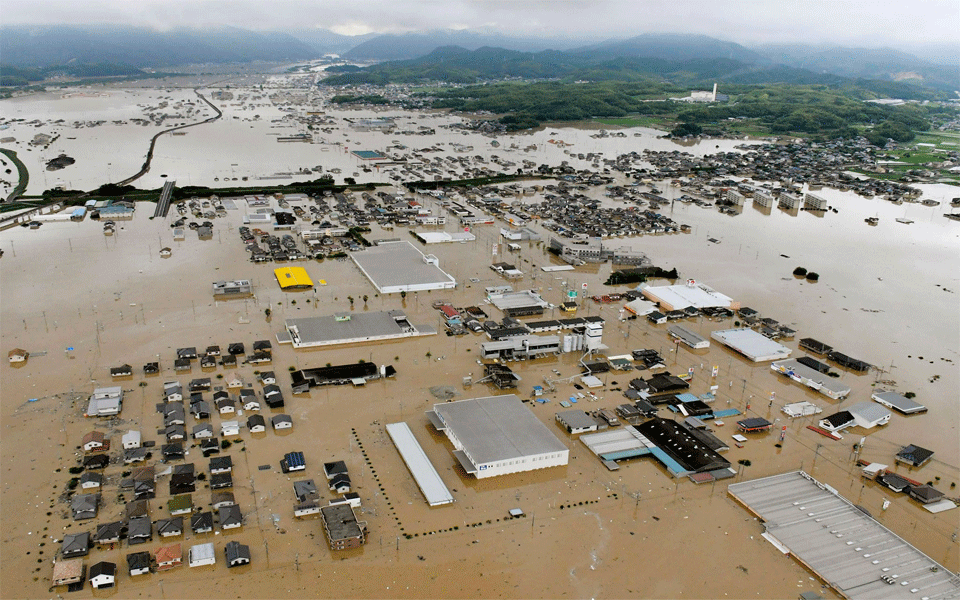
Tokyo, July 10 : At least 141 people are now known to have died in floods and landslides triggered by torrential rain in western Japan as rescuers are digging through mud and rubble in a race to find survivors, with dozens missing
It is the highest death toll caused by rainfall that Japan has seen in more than three decades. More than 70,000 rescue workers, including the fire service and the Army, were involved in the relief effort, the government said on Tuesday.
About two million people were evacuated from the region after rivers burst their banks. The rains started on July 5, the BBC reported.
Authorities opened up school halls and gymnasiums to those displaced by the rainfall. There remained a risk of landslides, with rain-sodden hilltops liable to collapse. Prime Minister Shinzo Abe cancelled an overseas trip to deal with the flood crisis.
"We will unite and move swiftly to deliver those necessities to the disaster victims by coordinating closely with local government," said Abe in a meeting with the disaster response task force.
Flood warnings were still in effect for some of the worst-hit areas, including the Okayama prefecture in the southern part of Japan. But more settled weather was expected over the next few days which will likely help with rescue efforts.
Police, fire departments and the military were scouring affected areas for those unaccounted for, reports said.
Thousands of houses were damaged and even the ones that stood intact were impacted. Nearly 17,000 households were still without power and phone lines were down across multiple prefectures.
Let the Truth be known. If you read VB and like VB, please be a VB Supporter and Help us deliver the Truth to one and all.
Fire at mass marriage event attended by Dy CM Shivakumar, nobody affected

Raichur (Karnataka) (PTI): Fire broke out near the stage of the mass marriage event that was attended by Deputy Chief Minister D K Shivakumar here, police said on Sunday.
Nobody was affected, and the fire was immediately put out, they said.
The fire was noticed shortly after Shivakumar and other dignitaries left the stage, and Forest Minister Eshwaran Khandre was speaking to the media at the venue in Sindhanur, officials said.
According to officials, wires, speakers, and cloth materials near the stage caught fire, allegedly due to a short circuit.
Police personnel present at the spot quickly swung into action and extinguished the fire.
The programme was halted for some time and resumed later, they said.
Several ministers, legislators and political leaders from the region, and actor Sudeep had attended the event.