Tory Islamophobia inquiry: Anti-Muslim sentiment 'remains a problem' within UK Conservative Party
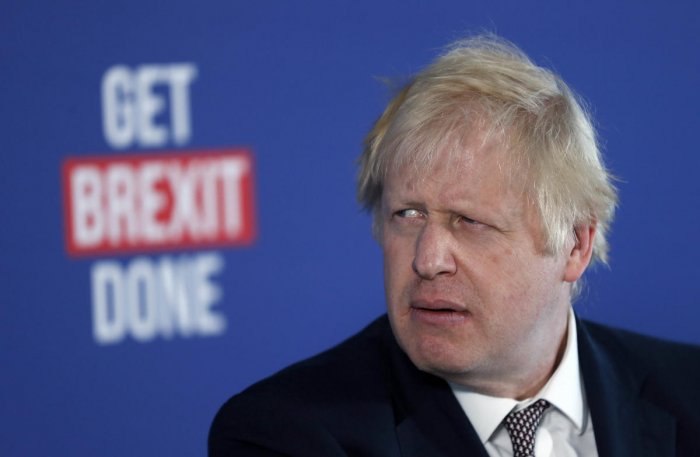
London, May 25: Anti-Muslim sentiment remains a problem within the UK's ruling Conservative Party, an independent inquiry concluded on Tuesday around two years after it was set up by Prime Minister Boris Johnson into whether the party he leads has procedures in place to tackle discrimination, including allegations of Islamophobia.
The inquiry, led by Indian-origin academic and former human rights commissioner Professor Swaran Singh, concluded that the party leadership claims a zero-tolerance approach to all forms of discrimination but discriminatory and insensitive incidents do occur.
In his foreword to the report, Prof Singh reflects on his personal experiences as a British Sikh and explains the reasoning behind the inquiry casting a wider net to include all forms of discrimination beyond "one exclusively concerned with Islam".
I have lived in the United Kingdom now for over 30 years, said Singh, who is Professor of Social and Community Psychiatry at the University of Warwick.
I used to wear a turban, which made many assume that I was a Muslim. In those early years, I experienced first-hand the pernicious manifestations of racism within certain parts of British society. I was spat at, assaulted, abused and denounced, once by a medical colleague who said I should go home' if I didn't like it here, he recalled, adding that much has changed for the better since then.
Britain is now my homeland and that of my children. But perhaps not enough has changed, and not everywhere I hope that those who questioned the credibility of the investigation even before it started are reassured that I have not shied away from reporting anti-Muslim discrimination where I have found it, he said.
He and his team analysed 1,418 complaints relating to 727 separate incidents as recorded in the Tories' complaints database between 2015 and 2020.
Judging by the extent of complaints and findings of misconduct by the Party itself that relate to anti-Muslim words and conduct, anti-Muslim sentiment remains a problem within the Party. This is damaging to the Party, and alienates a significant section of society, the report notes.
While the Party leadership claims a zero-tolerance approach' to all forms of discrimination, our findings show that discriminatory behaviours occur, especially in relation to people of the Islamic faith.
"The data collection of such incidents is weak and difficult to analyse, hampering early identification of problems and effective remedial action, it adds.
Among the incidents referenced is Johnson's controversial article in The Telegraph' in 2018, before he was the Prime Minister, when he likened Muslim women wearing burqas to "letter boxes".
The investigation noted that several interviewees considered Mr Johnson's language as discriminatory and unacceptable. Mr Johnson declined to add anything to his previously expressed regret that offence had been taken at his comments, the report notes.
The leadership of the Conservative Party ought to set a good example for appropriate behaviours and language as a guide for the rest of the Party to follow, it adds.
The inquiry report lays out a series of recommendations for the Tory party to tackle the issue, including publishing an action plan within the next six weeks and produce and implement a new code of conduct for party members over the course of the next six months.
Identifying, challenging and rooting out discrimination should be an active part of everyone's business' and the Party leadership should lead by example. This is not just a political imperative, but also a moral and ethical one, the report advises.
In commissioning this Report, the Conservative Party has taken the first step. It must now take the Report's recommendations seriously and implement these speedily. The foundations of our democracy depend upon our political parties being representative and inclusive. It is now for the Conservative Party to take the lead against discrimination of all kinds, it adds.
"The party is considering the recommendations set out by the report. We will respond later," a Conservative Party spokesperson said.
Let the Truth be known. If you read VB and like VB, please be a VB Supporter and Help us deliver the Truth to one and all.
Two injuries, one DNF, a DQ as India end messy World Relays campaign
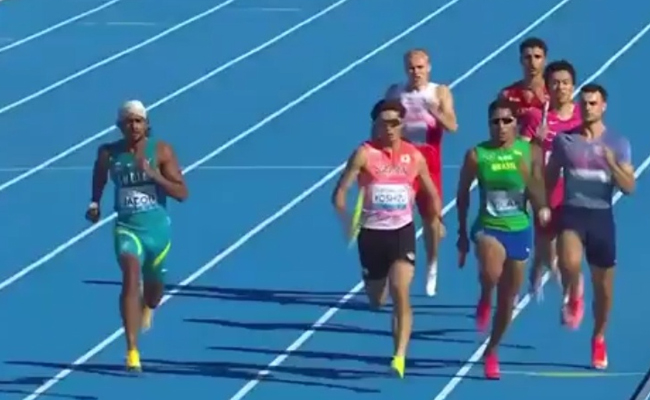
Gaborone (Botswana) (PTI): Amoj Jacob and Ragul Kumar got injured during the men's 4x400m and 4x100 races respectively as India ended their World Athletics Relays campaign in disappointment on the second day of competitions here on Sunday.
The Indian camp had high hopes of making the 2027 World Championships in the men's 4x400m relay but the team did not finish (DNF) the race as Jacob suffered cramps and pulled out of the race after taking the baton from the first leg runner Dharamveer Choudhary. Rajesh Ramesh and Vishal TK were to run in the third and fourth legs.
Those teams which could not qualify for the 2027 Beijing World Championships by reaching the final round of each of the six relay events on Saturday were given another chance in the second qualification round on Sunday.
The top two teams in each of the two heats (in all six relay events) booked the Beijing ticket on Sunday.
India will now have to try and qualify for the World Championships through the Top Lists of the World Athletics, which is a long and tedious process.
In the men's 4x100m race, third leg runner Ragul Kumar fell down the track after failing to hand over the baton inside the exchange zone to fourth leg runner Gurindervir Singh, which clearly showed the lack of coordination among the runners.
Harsh Santosh Raut and Animesh Kujur ran the first two legs.
The Indian quartet was disqualified and Kumar was seen being taken away from the Field of Play with the help of the volunteers.
It was a comedy of errors in the case of the women's 4x100m race, which saw the baton being dropped during an exchange between first leg runner Tamanna and second runner Nithya Gandhe, though the Indians finished the race in 53.09 seconds.
Gandhe started running quite a distance, but after realising that the baton was not in her hand, she turned and ran back to pick it up.
The only silver-lining for the Indian contingent was the national record time in the mixed 4x100m relay race, though the quartet of Ragul Kumar, Nithya Gandhe, Animesh Kujur and Sneha SS finished sixth in heat number two with a time of 41.35 seconds, bettering the previous national mark of 42.30 seconds set in March in Chandigarh.
The mixed 4x400m relay quartet of Theerthesh P Shetty, Kumari Saloni, Nihal William and Rashdeep Kaur ended at fifth in heat number one with a time of 3 minutes and 19.40 seconds.
On Saturday, all the five Indian relay teams had failed to make it to the respective final rounds and thus missed out on the 2027 World Championships berths.