Translation of Banu Mushtaq’s Kannada short stories wins English PEN Translates Award
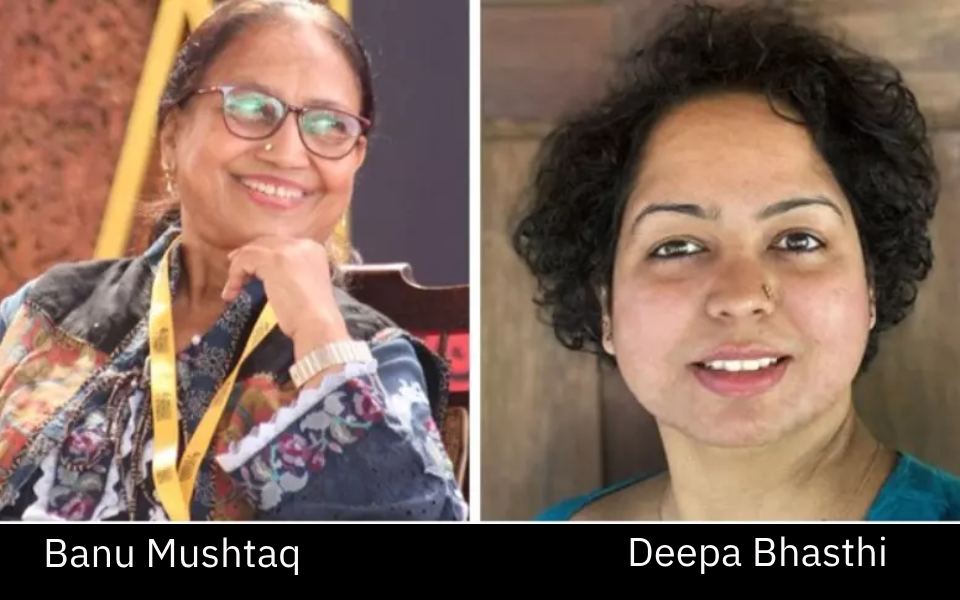
London: English PEN’s flagship grant program, PEN Translates, has announced its latest round of awards, recognizing 16 titles from 11 regions and 10 languages. For the first time in the award's history, a work translated from Kannada by Deepa Bhasthi has been honored. Bhasthi's translation of a collection of short stories by Banu Mushtaq has brought Kannada literature to the international stage, highlighting the growing global appreciation for this regional language.
The awards includes a wide variety of genres, including novels, short stories, non-fiction, poetry, prose drama, and young adult literature. This year's list notably includes works from Cameroon and Singapore, as well as translations from the Greenlandic and Mixe languages, reflecting PEN Translates' commitment to promoting diverse voices and stories.
Deepa Bhasthi, an accomplished writer and translator, who was also a journalist, has been honored for her translation of a collection of short stories by Banu Mushtaq. Bhasthi's translation project, supported through English PEN’s PEN Presents grant for sample translations, led to the acquisition of the work by the publishing house And Other Stories.
Bhasthi, who works in both Kannada and English, has a distinguished career in translating and writing. Her essays, columns, and journalism focus on the politics of culture and have been widely published in both national and international outlets. In 2022, she translated Kota Shivarama Karanth's novel "The Same Village, The Same Tree," and her translation of short stories by Kodagina Gouramma, one of the earliest feminist writers in Kannada, is set to be published in January 2023 by Yoda Press.
In addition to Bhasthi’s work, another title supported by PEN Presents and recognized in this year's awards is "The Aquatics" by Osvalde Lewat, translated from French by Maren Baudet-Lackner. This project was acquired by Cassava Republic Press, further exemplifying the impact of PEN’s support in bringing diverse narratives to a broader audience.
Other winners of the PEN Translates awards include:
PEN Translates award winners:
This Mouth Is Mine by Yásnaya Elena A. Gil (Mexico), translated from the Spanish and Mixe by Ellen Jones (Charco Press).
Reservoir Bitches by Dahlia de la Cerda (Mexico), translated from the Spanish by Heather Cleary and Julia Sanches (Scribe UK).
Delicious Hunger by Hai Fan (Singapore), translated from the Chinese by Jeremy Tiang (Tilted Axis Press).
The Weasel and the Whore by Martha Luisa Hernández Cadenas (Cuba), translated from the Spanish by Julia Sanches and Jennifer Shyue (Héloïse Press).
The Congress of the Disappeared by Bernardo Kucinski (Brazil), translated from the Portuguese by Tom Gatehouse (Latin America Bureau).
A Man with No Title by Xavier Le Clerc (France), translated from the French by William Rodarmor (Saqi Books).
The Aquatics by Osvalde Lewat (Cameroon), translated from the French by Maren Baudet-Lackner (Cassava Republic Press).
On the Greenwich Line by Shady Lewis (Egypt/UK), translated from the Arabic by Katharine Halls (Peirene Press).
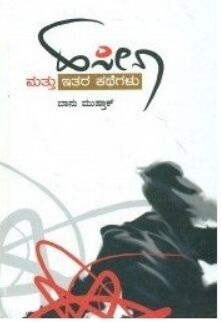
Short stories by Banu Mushtaq (India), translated from the Kannada by Deepa Bhasthi (And Other Stories).
Water: A Chronicle by Ngọc Tư Nguyễn (Vietnam), translated from the Vietnamese by Nguyễn An Lý (Major Books).
The Wild Ones by Antonio Ramos Revillas (Mexico), translated from the Spanish by Claire Storey (HopeRoad).
Jellyfish Have No Ears by Adèle Rosenfeld (France), translated from the French by Jeffrey Zuckerman (MacLehose Press).
Samahani by Abdel Aziz Baraka Sakin (Sudan/Austria), translated from the Arabic by Mayada Ibrahim and Adil Ibrahim Babikir (Foundry Editions).
Zombieland by Sørine Steenholdt (Greenland), translated from the Greenlandic by Charlotte Barslund (Norvik Press).
Elevator In Saigon by Thuận (Vietnam/France), translated from the Vietnamese by Nguyễn An Lý (Tilted Axis Press).
Iran + 100 by various authors, translated from the Farsi by various translators (Comma Press).
Since its inception, PEN Translates has supported 376 books translated from over 90 languages, awarding over £1.2 million in grants. The program has played a crucial role in bringing international literature to English-speaking audiences, with 19 PEN Translates-supported books appearing on International Booker Prize longlists. Recently, the program-supported "Kibogo" by Scholastique Mukasonga, translated from French by Mark Polizzotti (Daunt Books), won the 2024 Oxford-Weidenfeld Prize, and "Of Cattle and Men" by Ana Paula Maia, translated from Portuguese by Zoë Perry (Charco Press), won the 2024 Republic of Consciousness Prize.
Let the Truth be known. If you read VB and like VB, please be a VB Supporter and Help us deliver the Truth to one and all.
Akeal Hosein bosses powerplay overs with 'skill and mental fortitude'

New Delhi (PTI): For a spinner who bowls majority of his overs in the powerplay, Chennai Super Kings' West Indian import Akeal Hosein relies as much on mental fortitude as his skills to excel in the most unforgiving phase of the game.
With just two fielders in the deep in the first six overs, the margin for error is miniscule and the pressure is sky high.
However, Hosein thrives in that tense environment. The left-arm spinner returned with frugal figures of 3-0-15-1 in the powerplay to play a crucial role in his team's eight-wicket win over Delhi Capitals in an IPL match here on Tuesday.
"You need both of them (skill and mental toughness). Especially when you come upon pitches that aren't conducive to spin and it's just about being disciplined as well," he said.
"Having two fielders out in the power play. It's not a job that you can go searching for wickets or you can be too greedy. It's just about sticking to the plan," he explained.
Hosein got the all-important wicket of an in-form K L Rahul, who was foxed by the West Indian as he stepped out to smash him for an inside out six.
Hosein's inclusion in the playing eleven after not being picked in the initial phase of the tournament has allowed CSK to win more games. On Tuesday, the pitch offered him a bit of help and he ended up dominating the batters.
After the win over DC, Hosein was asked about his recipe for success in the powerplay.
"...it's a bit scripted because you only have two guys out so it's just about being disciplined and trying to do the job for the team. At the end of the day if you don't get wickets and you bowl economically in the power play, that's a damn good job you've done for the team," said Hosein.
He has taken seven wickets in five games at an impressive economy rate of 7.25.
Fully aware that the batter is a mere couple of hits away from putting the pressure back on him, Hosein says practising for high-pressure situations helps him stay in the present.
"I think homework is very important. You want to have that head-start when you come up against whichever batter you're going to face. And like I say it's just about making assessments as quickly as possible.
"You might come up on a pitch that is spinning. You might come up against one that isn't spinning. Thankfully I can spin the ball. So it's just about picking which deliveries will give you the most success on a particular day and against a particular batter," said Hosein.
He got rid of Rahul first ball from the other end, something that was decided by captain Ruturaj Gaikwad. Post powerplay, Noor Ahmad took over the mantle from Hosein and maintained the pressure on DC batters.
"Getting the opportunity to bowl first for me is just about again making that assessment as quickly as possible and then passing on that information to Noor or even to the seamers as well if it was a bit of spin or if it's gripping or whatever the case is.
"So conversations with myself and Noor have been fantastic. Really happy for him that he's getting some success," he added.