Truck bomb in Somalia's capital kills at least 73 people

Mogadishu: A truck bomb exploded at a busy security checkpoint in Somalia's capital Saturday morning, killing at least 73 people, authorities said.
It was one of the deadliest attacks in Mogadishu in recent memory, and witnesses said its force reminded them of the devastating 2017 bombing that killed hundreds of people.
The toll could rise as scores of people were rushed to hospitals, government spokesman Ismail Mukhtar told The Associated Press.
Dr Mohamed Yusuf, director of Madina hospital, said they had received 73 bodies. Abdiqadir Abdirahman, director of the Aamin Ambulance service, counted more than 50 wounded.
Most of those killed were university and other students returning to class, Mayor Omar Mohamud Mohamed said at the scene. Police said two Turkish nationals were dead. Capt Mohamed Hussein said the blast targeted a tax collection center during the morning rush hour as Somalia returned to work after its weekend. A large black plume of smoke rose above the capital.
Images from the scene showed the mangled frames of vehicles and bodies lying on the ground. At a hospital, families and friends picked through dozens of bodies.
"I saw many dead bodies lying on the ground," witness Mohamed Abdi Hakim said. "Some of those dead were police officers, but most of them were students."
There was no immediate claim of responsibility for the blast.
The al-Qaida-linked al-Shabab often carries out such attacks. The extremist group was pushed out of Mogadishu several years ago but continues to target high-profile areas such as checkpoints and hotels in the seaside city.
The extremist group is now able to make its own explosives, its "weapon of choice", United Nations experts monitoring sanctions on Somalia said earlier this year.
The group had previously relied on military-grade explosives captured during assaults on an African Union peacekeeping force.
Al-Shabab was blamed for the truck bombing in Mogadishu in October 2017 that killed more than 500 people. The group never claimed responsibility for the blast that led to widespread public outrage.
Some analysts said al-Shabab didn't dare claim credit as its strategy of trying to sway public opinion by exposing government weakness had badly backfired.
"This explosion is similar like the one...in 2017. This one occurred just a few steps away from where I am and it knocked me on the ground from its force. I have never seen such a explosion in my entire life," said witness Abdurrahman Yusuf.
The latest attack again raises concern about the readiness of Somali forces to take over responsibility for the Horn of Africa country's security in the coming months from the AU force.
Al-Shabab, the target of a growing number of US airstrikes since President Donald Trump took office, controls parts of Somalia's southern and central regions.
It funds itself with a "taxation" system that experts describe as extortion of businesses and travellers that brings in millions of dollars a year.
Let the Truth be known. If you read VB and like VB, please be a VB Supporter and Help us deliver the Truth to one and all.
Supreme Court grants anticipatory bail to Pawan Khera in Assam Police FIR
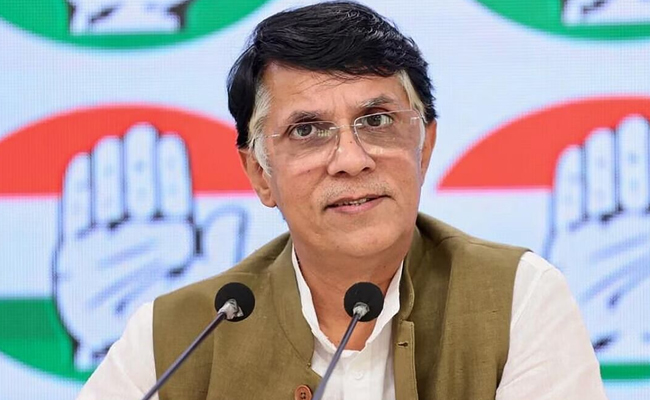
New Delhi: The Supreme Court of India on Friday granted anticipatory bail to Congress leader Pawan Khera in connection with an FIR registered by the Assam Police.
The case arose from a complaint filed by Riniki Bhuyan Sarma, wife of Assam Chief Minister Himanta Biswa Sarma, over allegations made by Khera that she possessed multiple passports.
A bench comprising Justice JK Maheshwari and Justice AS Chandurkar delivered the judgment after reserving orders on Khera’s petition challenging the dismissal of his anticipatory bail plea by the Gauhati High Court.
In its ruling, the Supreme Court observed that the High Court’s findings were not based on a proper appreciation of the material on record and appeared to be erroneous, particularly in shifting the burden onto the accused.
The bench further held that the High Court erred in making observations regarding an offence under Section 339 of the Bharatiya Nyaya Sanhita, noting that the FIR did not contain any such allegation. It stated that such conclusions could not have been drawn merely on the basis of submissions made by the Advocate General.