Trump administration says will exclude some electronics from reciprocal tariffs
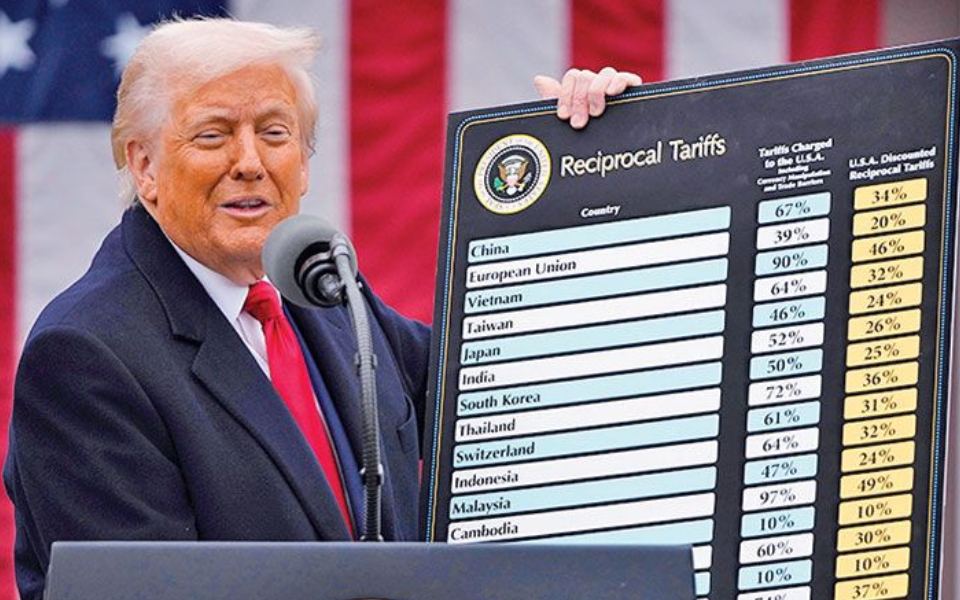
Nashville, Apr 12 (AP): The Trump administration late Friday said they would exclude electronics like smartphones and laptops from reciprocal tariffs, a move that could help keep the prices down for popular consumer electronics that aren't usually made in the US.
It would also benefit big tech companies like Apple and Samsung and chip makers like Nvidia and sets the stage for a likely tech stock rally on Monday.
US Customs and Border Protection said items like smartphones, laptops, hard drives, flat-panel monitors and some chips would qualify for the exemption. Machines used to make semiconductors are excluded too. That means they won't be subject to the current 145 per cent tariffs levied on China or the 10 per cent baseline tariffs elsewhere.
It's the latest tariff change by the Trump administration, which has made several U-turns in their massive plan to put tariffs in place on goods from most countries.
The exemption seemed to reflect the president's realization that his China tariffs are unlikely to shift more manufacturing of smartphones, computers and other gadgets to the US any time soon, if ever, despite the administration's predictions that the trade war prod Apple to make iPhones in the US for the first time.
But that was an unlikely scenario after Apple spent decades building up a finely calibrated supply chain in China. What's more, It would take several years and cost billions of dollars to build new plants in the US, and then confront Apple with economic forces that could triple the price of an iPhone, threatening to torpedo sales of its marquee product.
Trump's decision to exempt the iPhone and other popular electronics made in China mirrors the similar relief that he gave those products during the trade war of his first term in the White House. But Trump began his second term seemingly determined to impose the tariffs more broad this time, triggering a meltdown in the market values of Apple and other technology powerhouses.
The turmoil battered the stocks of tech's “Magnificent Seven” -- Apple, Microsoft, Nvidia, Amazon, Tesla, Google parent Alphabet and Facebook parent Meta Platforms. At one point earlier this week, the combined Magnificent Seven's combined market value had plunged by USD 2.1 trillion, or 14 per cent, from April 2 when Trump unveiled sweeping tariffs on a wide range of countries.
Some of the losses eased this past Wednesday when Trump paused the tariffs outside of China, paring the lost value in the Magnificent Seven to USD 644 billion, or a 4 per cent decline, from April 2. Now, the stage is set for another tech rally Monday when trading resumes in the US stock market, with Apple likely leading the way because the iPhones made in China remain the company's biggest money maker.
The electronics exemption also should relieve consumer worries that the China tariffs would result in hefty price hikes on smartphones and other devices that have become essential tools of modern living,
It's the kind of friendly treatment that industry was envisioning when Apple CEO Tim Cook, Tesla CEO Elon Musk, Google CEO Sundar Pichai, Facebook founder Mark Zuckerberg and Amazon founder Jeff Bezos assembled behind the president during his January 20 inauguration.
That united display of fealty reflected Big Tech's hopes that Trump would be more accommodating than President Joe Biden's administration's and help propel an already booming industry to even greater heights.
Apple won praise from Trump in late February when the Cupertino, California, company committed to invest USD 500 billion and add 20,000 jobs in the US during the next four years. The pledge was an echo of a USD 350 billion investment commitment in the US that Apple made during Trump's first term when the iPhone was exempted from China tariffs.
The move takes off “a huge black cloud overhang for now over the tech sector and the pressure facing US Big Tech,” said Wedbush analyst Dan Ives in a research note.
Neither Apple nor Samsung responded to a request for comment Saturday. Nvidia declined to comment. The White House did not immediately respond to a request for comment on Saturday.
Let the Truth be known. If you read VB and like VB, please be a VB Supporter and Help us deliver the Truth to one and all.
Heavy rain, hailstorms likely to lash Uttarakhand on Tuesday; IMD issues warning

Dehradun/Pithoragarh (PTI): The India Meteorological Department (IMD) has issued a warning for heavy rain and hailstorms across several districts of Uttarakhand on Tuesday, as temperatures remained markedly below normal in the region.
Heavy rainfall is likely at isolated places in Dehradun, Haridwar, Tehri, Pauri, Nainital, Champawat, and Udham Singh Nagar districts. Most places across all districts are expected to receive light to moderate rain or thunderstorms, while higher reaches are likely to witness snowfall, officials said on Monday.
The weather department warned of thunderstorms accompanied by lightning, hail and intense spells of rain in six districts, including Dehradun and Nainital. Gusty winds with speeds reaching 40-50 kmph are also expected at isolated locations in these areas and other hilly districts.
In the state capital, Dehradun, the sky is forecast to remain partly cloudy with light rain and thunderstorms accompanied by gusty winds of 30-40 kmph.
The maximum and minimum temperatures in the city are expected to hover around 31 degrees Celsius and 19 degrees Celsius, respectively.
Maximum temperatures during the past 24 hours remained markedly below normal in the hills and appreciably below normal in the plains. While no significant change in temperature is expected over the next 2-3 days, the IMD predicts a rise of 3-5 degrees Celsius during the subsequent 3-4 days.
Rainfall was recorded in several areas after 8.30 am today, with Ramnagar receiving 31.5 mm and Nainital recording 26.5 mm. Other areas, including Pithoragarh, Khatima and Champawat, also reported moderate precipitation.
Authorities have stopped a batch of 36 Adi Kailash pilgrims at the Dharchula base camp and placed the high-altitude yatra route on high alert following heavy rains and hailstorms in the district on Monday.
Dharchula SDM Ashish Joshi said the pilgrimage was halted due to adverse weather conditions. The issuance of new inner-line passes has been suspended until the weather normalises.
With 1,700 passes issued so far, pilgrims already at higher camps are being monitored for safety, the official added.