Trump considers strike on Iran as MAGA camp warns against another middle east war
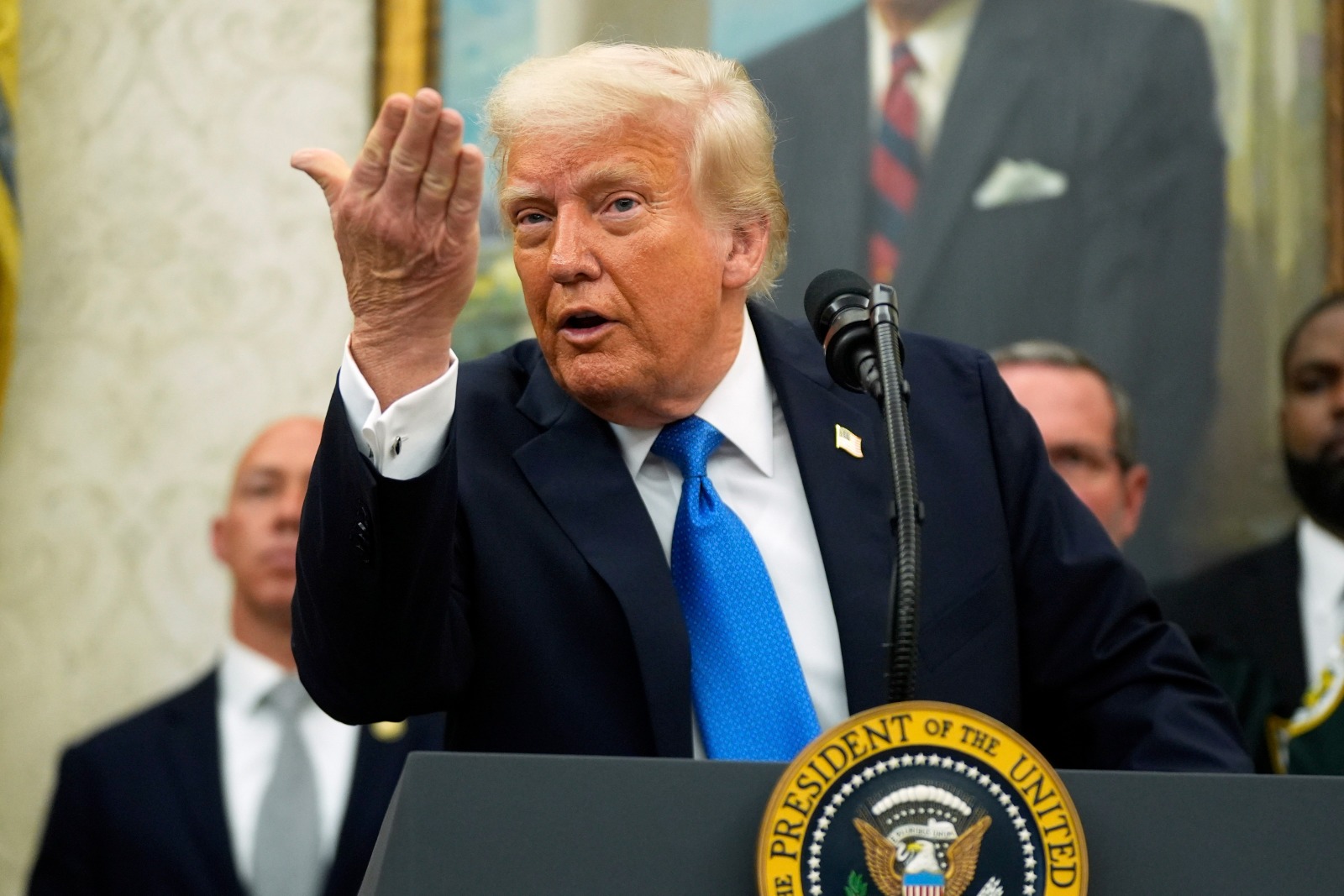
Washington D.C.: Senior U.S. officials are actively preparing for a possible military strike on Iran, indicating a potential escalation in Washington’s involvement in the ongoing conflict between Iran and Israel. According to sources familiar with internal deliberations, discussions are underway across key federal agencies, with some suggesting that a strike could occur as early as the coming weekend.
President Donald Trump, in recent public remarks, hinted at military action. “I may do it. I may not do it,” he said at the White House on Wednesday, adding that he prefers to make such decisions “one second before it’s due.” He also noted, “I have ideas as to what to do,” underscoring the high-stakes nature of the current standoff.
This marks a significant departure from Trump’s previous approach, which emphasised diplomacy and a nuclear agreement with Iran. However, amid rising concerns over Tehran’s nuclear ambitions, his stance has become markedly more hawkish. A senior U.S. official confirmed that “all options remain on the table.”
In response, Iranian Foreign Minister Abbas Araghchi reaffirmed Tehran’s commitment to diplomacy, posting on social media that Iran “had never sought and would never seek nuclear weapons.” Upcoming nuclear talks between Iran and foreign ministers of the UK, France, and Germany are scheduled for Friday in Geneva, offering a potential path to de-escalation.
Despite international calls for restraint, some voices in Washington are pressing for action. Senator Lindsey Graham, a close Trump ally, argued, “He gave them a chance for diplomacy. I think they made a miscalculation. The sooner we end this threat to mankind, the better.”
However, Trump’s shift toward potential military engagement has sparked significant backlash within his own MAGA base. Influential figures such as Steve Bannon and Representative Marjorie Taylor Greene have publicly criticised any move toward another Middle Eastern war.
“We can’t do this again,” Bannon said, recalling the toll of previous conflicts like Iraq. “We’ll tear the country apart.” He urged caution, warning that military decisions must have the support of the American public. “This is not something you play around with,” he added.
Greene echoed these sentiments, posting, “Anyone slobbering for the U.S. to become fully involved in the Israel-Iran war is not America First/MAGA. We are sick and tired of foreign wars. All of them.”
Even conservative commentator Tucker Carlson expressed strong opposition, confronting Senator Ted Cruz in a widely circulated exchange. Carlson accused Cruz of irresponsibly pushing for regime change in Iran, stating, “You don’t know anything about Iran!”
Amid the growing rift within the Republican Party, Vice President JD Vance attempted to strike a balance, acknowledging public anxiety over foreign entanglements. “People are right to be worried after 25 years of idiotic foreign policy. But I believe the president has earned some trust on this issue,” Vance said.
Responding to the criticism, Trump maintained that his actions are rooted in national security concerns. “My supporters are more in love with me today, and I’m in love with them more than they were even at election time,” he said. Acknowledging the dissatisfaction among parts of his base, he insisted, “I’m not looking to fight. But if it’s a choice between them fighting or having a nuclear weapon, you have to do what you have to do.”
The coming days may prove decisive as the United States weighs diplomacy against the prospect of open conflict in the Middle East.
Let the Truth be known. If you read VB and like VB, please be a VB Supporter and Help us deliver the Truth to one and all.
Two injuries, one DNF, a DQ as India end messy World Relays campaign
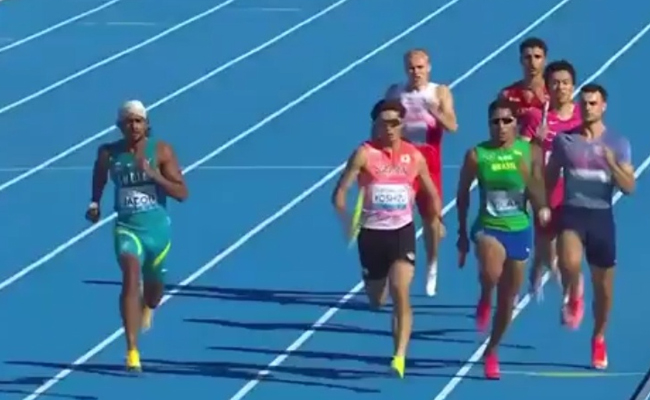
Gaborone (Botswana) (PTI): Amoj Jacob and Ragul Kumar got injured during the men's 4x400m and 4x100 races respectively as India ended their World Athletics Relays campaign in disappointment on the second day of competitions here on Sunday.
The Indian camp had high hopes of making the 2027 World Championships in the men's 4x400m relay but the team did not finish (DNF) the race as Jacob suffered cramps and pulled out of the race after taking the baton from the first leg runner Dharamveer Choudhary. Rajesh Ramesh and Vishal TK were to run in the third and fourth legs.
Those teams which could not qualify for the 2027 Beijing World Championships by reaching the final round of each of the six relay events on Saturday were given another chance in the second qualification round on Sunday.
The top two teams in each of the two heats (in all six relay events) booked the Beijing ticket on Sunday.
India will now have to try and qualify for the World Championships through the Top Lists of the World Athletics, which is a long and tedious process.
In the men's 4x100m race, third leg runner Ragul Kumar fell down the track after failing to hand over the baton inside the exchange zone to fourth leg runner Gurindervir Singh, which clearly showed the lack of coordination among the runners.
Harsh Santosh Raut and Animesh Kujur ran the first two legs.
The Indian quartet was disqualified and Kumar was seen being taken away from the Field of Play with the help of the volunteers.
It was a comedy of errors in the case of the women's 4x100m race, which saw the baton being dropped during an exchange between first leg runner Tamanna and second runner Nithya Gandhe, though the Indians finished the race in 53.09 seconds.
Gandhe started running quite a distance, but after realising that the baton was not in her hand, she turned and ran back to pick it up.
The only silver-lining for the Indian contingent was the national record time in the mixed 4x100m relay race, though the quartet of Ragul Kumar, Nithya Gandhe, Animesh Kujur and Sneha SS finished sixth in heat number two with a time of 41.35 seconds, bettering the previous national mark of 42.30 seconds set in March in Chandigarh.
The mixed 4x400m relay quartet of Theerthesh P Shetty, Kumari Saloni, Nihal William and Rashdeep Kaur ended at fifth in heat number one with a time of 3 minutes and 19.40 seconds.
On Saturday, all the five Indian relay teams had failed to make it to the respective final rounds and thus missed out on the 2027 World Championships berths.