Trump, EU's Juncker agree to work towards zero tariffs
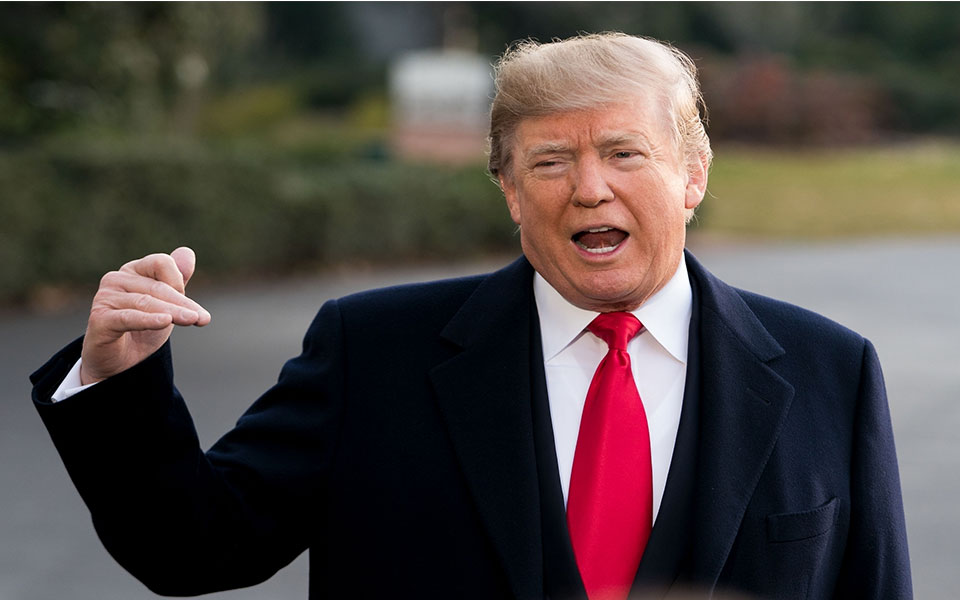
Washington, July 26 : US President Donald Trump has said that he has reached a deal with European Commission President Jean-Claude Juncker to work towards eliminating tariffs and barriers on trade, reducing tensions for now in a brewing trade war.
A pan-European Business Confederation on Thursday applauded the trade relations agreement.
The Confederation of European Business, also known as BusinessEurope, is a lobby organization based in Brussels, established in 34 European countries, advocating for Europe's business growth and competitiveness at both the continental and global level.
"Reason has prevailed. The agenda for talks between the EU and the US to de-escalate the current trade conflict is the right one," said BusinessEurope president Pierre Gataz.
On Wednesday, Trump said: "We are starting the negotiation right now, but we know where it is going and proclaiming 'a new phase' in US-EU trade relations."
While Juncker said that both Washington and Brussels will "hold off on other tariffs" while the talks are under way.
In a joint appearance before the press with Juncker, Trump said that the EU will begin importing soybeans from the US Midwest, as well as liquefied natural gas to "diversity" its energy sources, in addition to reducing some industrial tariffs.
The EC chief, meanwhile, hailed the trade agreement, which included reducing tariffs by both parties and easing the bilateral frictions that had arisen in recent months.
Juncker said that he had gone into his Oval Office meeting with Trump with both parties intending to reach an agreement.
He also said that the pact established the "resolution" of the US tariffs on European steel and aluminium that had sparked a trade brouhaha between Brussels and Washington, although neither Trump nor Juncker specified whether these would be immediately annulled.
Minutes later, at a conference at the Centre for Strategic and International Studies, Juncker said that the agreement emphasised the "special" nature of the alliance between the US and the EU going on to stress that trade between the two parties comprises half of all global commerce.
Juncker's visit to Washington aroused great expectations after the exchange of accusations and the imposition of tariffs by Trump on European steel and aluminium, to which Brussels had responded with identical measures on assorted US products, including motorcycles and jeans.
Trump has insisted in recent months on the need for the EU to agree to his demands to facilitate US access to the European market and has threatened to impose tariffs of up to 20 per cent on imports of European automobiles if the bloc did not make concessions to Washington.
Let the Truth be known. If you read VB and like VB, please be a VB Supporter and Help us deliver the Truth to one and all.
Tumakuru: Dalit family allegedly prevented from entering temple; accused arrested
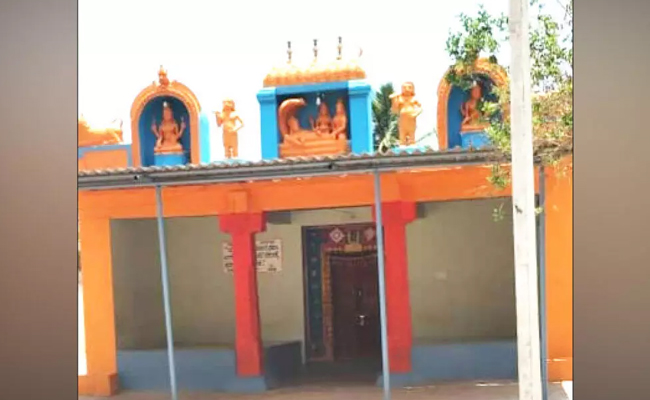
Tumakuru: Police in Turuvekere have arrested a 65-year-old man for allegedly obstructing a Dalit family from entering a temple and making caste-based remarks, officials said on Saturday.
The accused, identified as Rajanna, has been booked under provisions of the Scheduled Castes and Scheduled Tribes (Prevention of Atrocities) Act based on a complaint filed by Rangaramu T. of Thuyalahalli village.
According to the FIR, the incident took place on April 18 around 5:30 pm when Rangaramu T. and his family visited the Sri Ranganathaswamy temple in Mallur village to offer prayers. It states that the accused allegedly objected to their entry and made remarks referring to caste hierarchy and questioning their presence inside the temple premises.
The FIR further states that the accused made additional remarks asserting that such entry into the temple was not permitted and asked the family to leave. It also mentions that the complainant was subjected to mental harassment through these statements.
Following the complaint, DySP Om Prakash Gowda along with revenue officials and police visited the spot and conducted an inspection.
Further investigation is underway.