Trump floats 'closing country for a while'
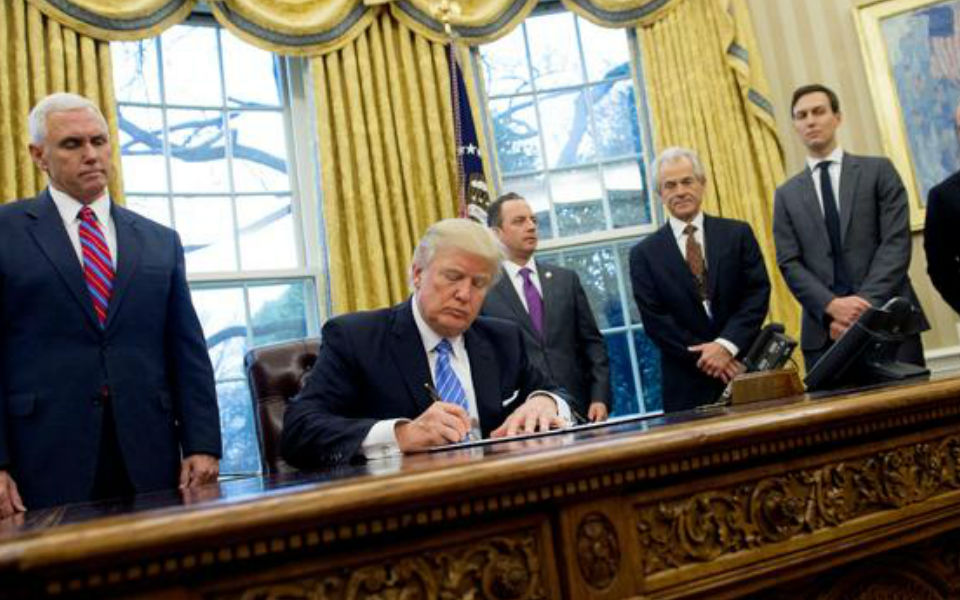
Washington, May 6: US President Donald Trump has floated a new idea about border security, saying that people might "have to think about closing up the country", the media reported.
"They don't want the wall but we're going to get the wall, even if we have to think about closing up the country for a while," CNN quoted Trump as saying during a tax reform roundtable in Ohio on Saturday.
"We're going to get the wall. We have no choice. We have absolutely no choice. And we're going to get tremendous security in our country.
"And we may have to close up our country to get this straight, because we either have a country or we don't. And you can't allow people to pour into our country the way they're doing," he added.
It was not immediately clear what Trump meant by the remarks. The White House has not commented.
Indian origin Democratic Representative Pramila Jayapal told CNN on Saturday that Trump "is absolutely out of his mind to think that is any kind of a reasonable solution for our economy or compassionate or in line with our values.
"This President has done everything he can every time he's in trouble to turn around and try to turn it against immigrants, and it really deeply saddens me," Jayapal said.
During the roundtable, the President sharply criticised Democrats, including Ohio's Democratic Senator Sherrod Brown, for their opposition to a border wall.
Trump has escalated his rhetoric against illegal immigration, especially in the wake of an annual migrant caravan that is seeking asylum in the US.
He has also ordered the National Guard to deploy troops to the border to address what the administration calls a "crisis" there.
Trump also told supporters at a speech in Michigan last weekend that if Congress did not meet his funding demands for border security, he may support a government shutdown this winter.
Let the Truth be known. If you read VB and like VB, please be a VB Supporter and Help us deliver the Truth to one and all.
Confident we are going to win Kerala: Shashi Tharoor
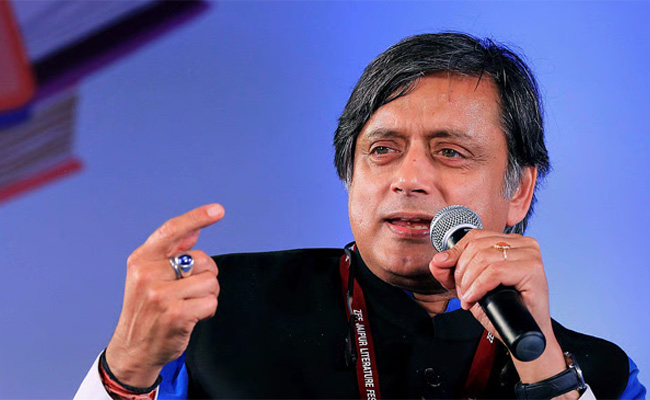
New Delhi (PTI): Congress leader Shashi Tharoor on Thursday expressed confidence in the victory of the United Democratic Front (UDF) in Kerala, saying the Congress-led alliance will win more than 75 seats out of the total 140 in the state.
Tharoor, who hails from Kerala, said he was not surprised to see the results of the exit polls, most of which predicted a victory for the UDF that has been out of power for 10 years in the state.
"We have been on the ground. I have campaigned in 59 constituencies across 12 districts out of 14. I was very confident we are going to win.
"Everything that I have picked up from not just my party colleagues and workers but also from other observers, media and others have always convinced me that we were going to score a comfortable win of above 75 seats. And all the (exit) polls have confirmed the same thing," he told reporters here.
The Thiruvananthapuram MP said he was not surprised to see the results of the exit polls but in general he was not a big fan of exit polls in India.
"Because ours is not purely a homogenous society. We have to take into account gender issue, caste issue, class issue, regional disparities. You never get a convincingly large enough sample to give an accurate poll and now there is the additional complication that we have heard about in West Bengal this year that many people are unwilling to answer the questions of the pollsters," he said.
The Congress leader said normally, it used to be below 10 per cent that people said that they would not answer.
"Even if you are a reputable exit pollster, in Bengal, one polling company has said 60 per cent of people refused to answer. So, what is the worth of a poll where 60 per cent of your respondents have not answered," he said.
Several exit polls on Wednesday predicted a comeback by the Congress-led UDF in Kerala after 10 years, dethroning the CPI(M)-led Left Democratic Front (LDF).
Polling for the 140-member Kerala assembly was held on April 9. Results of assembly elections in West Bengal, Tamil Nadu, Assam, Puducherry, besides Kerala, will be announced on May 4.