Trump meeting positive for Koreas: Kim Jong-un
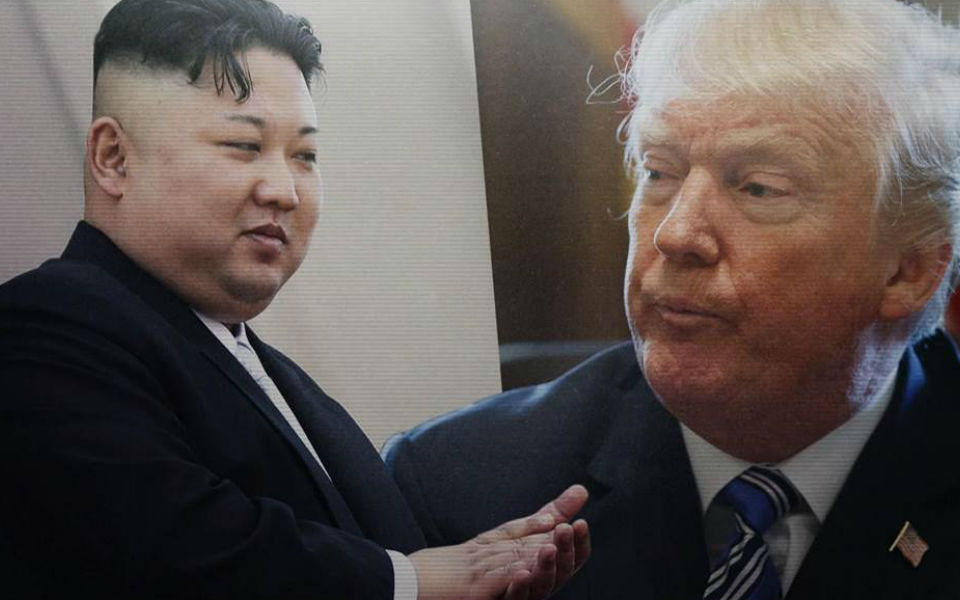
Pyongyang, May 10: North Korean leader Kim Jong-un said his upcoming meeting with US President Donald Trump will be positive towards easing tensions on the Korean Peninsula, Pyongyang state media reported on Thursday.
Kim made the remark to visiting US Secretary of State Mike Pompeo on Wednesday, the state run Korean Central News Agency (KCNA) reported.
During the meeting with Pompeo, Kim described the planned summit as "historic" and "the excellent first step toward promotion of the positive situation development in the Korean peninsula and building of a good future".
This was Pompeo's second visit to the Asian country after his secret trip over Easter, when he also met with Kim, to finalize preparations for the summit, reports Efe news.
"At the meeting, an in-depth discussion was made on the practical matters for holding the North Korea-US summit and its procedure and ways. Kim Jong-un reached a satisfactory consensus on the issues discussed with the U.S. state secretary," Yonhap News Agency quoted KCNA as saying.
This is the first time that the North Korean leader officially spoke of the meeting with Trump, which has been scheduled for the end of May or the beginning of June and will be the first meeting in history between the heads of government of the two countries.
KCNA said that Kim also "accepted an official suggestion of the US President for the release of Americans who have been detained" and gave an order "on granting amnesty to them for their repatriation".
The three Americans -- Kim Dong-chul, 64, Kim Sang-duk, 58, and Kim Hak-song, around 60 -- who had been held prisoners in North Korea, were all born in South Korea but later acquired US citizenship.
Pompeo also delivered Kim a "verbal message" from Trump, adding Kim highly appreciated that the US President has shown "deep interest in settling the issue through dialogue".
Details of Trump's message was not disclosed.
The North's media covered Wednesday's meeting extensively.
The Rodong Sinmun, the official newspaper of North Korea's Workers' Party, devoted the front page to the Kim-Pompeo meeting, with relevant photos including those showing the two shaking hands.
Let the Truth be known. If you read VB and like VB, please be a VB Supporter and Help us deliver the Truth to one and all.
Confident we are going to win Kerala: Shashi Tharoor
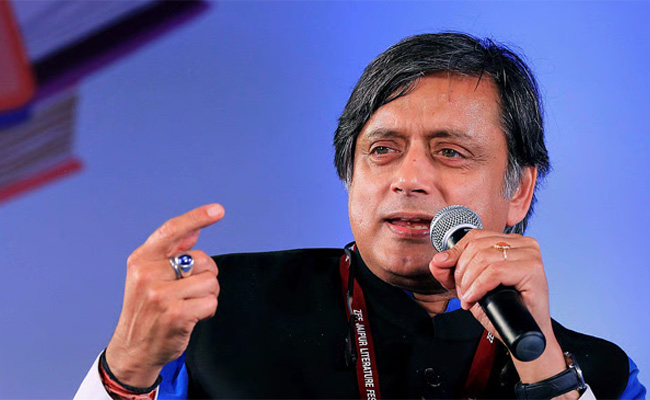
New Delhi (PTI): Congress leader Shashi Tharoor on Thursday expressed confidence in the victory of the United Democratic Front (UDF) in Kerala, saying the Congress-led alliance will win more than 75 seats out of the total 140 in the state.
Tharoor, who hails from Kerala, said he was not surprised to see the results of the exit polls, most of which predicted a victory for the UDF that has been out of power for 10 years in the state.
"We have been on the ground. I have campaigned in 59 constituencies across 12 districts out of 14. I was very confident we are going to win.
"Everything that I have picked up from not just my party colleagues and workers but also from other observers, media and others have always convinced me that we were going to score a comfortable win of above 75 seats. And all the (exit) polls have confirmed the same thing," he told reporters here.
The Thiruvananthapuram MP said he was not surprised to see the results of the exit polls but in general he was not a big fan of exit polls in India.
"Because ours is not purely a homogenous society. We have to take into account gender issue, caste issue, class issue, regional disparities. You never get a convincingly large enough sample to give an accurate poll and now there is the additional complication that we have heard about in West Bengal this year that many people are unwilling to answer the questions of the pollsters," he said.
The Congress leader said normally, it used to be below 10 per cent that people said that they would not answer.
"Even if you are a reputable exit pollster, in Bengal, one polling company has said 60 per cent of people refused to answer. So, what is the worth of a poll where 60 per cent of your respondents have not answered," he said.
Several exit polls on Wednesday predicted a comeback by the Congress-led UDF in Kerala after 10 years, dethroning the CPI(M)-led Left Democratic Front (LDF).
Polling for the 140-member Kerala assembly was held on April 9. Results of assembly elections in West Bengal, Tamil Nadu, Assam, Puducherry, besides Kerala, will be announced on May 4.