Trump officials texted Yemen bombing plans to group chat in secure app that included journalist
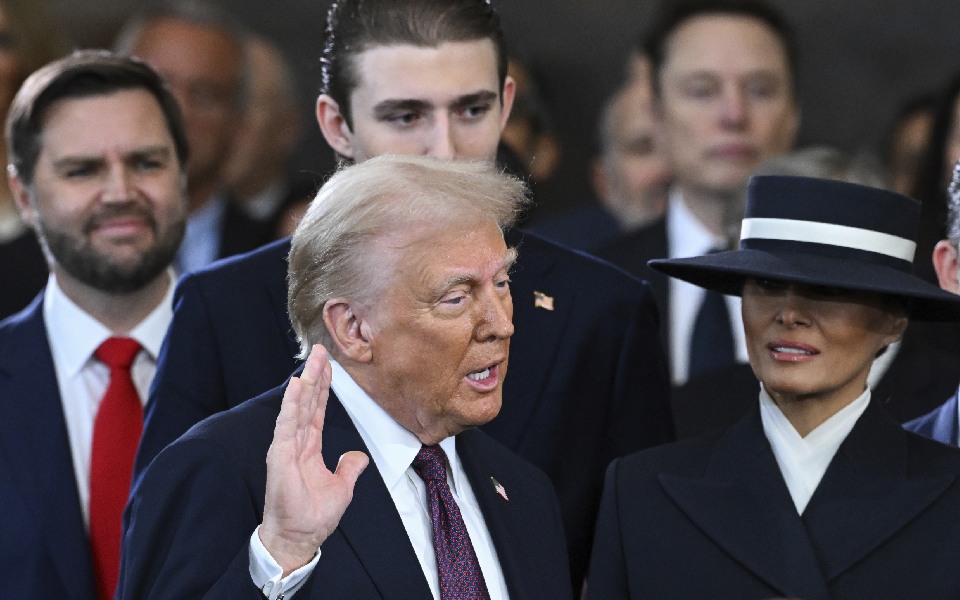
Washington, Mar 25 (AP): Top national security officials for US President Donald Trump, including his defence secretary, texted war plans for upcoming military strikes in Yemen to a group chat in a secure messaging app that included the editor-in-chief for The Atlantic, the magazine reported in a story posted online on Monday.
The National Security Council said the text chain "appears to be authentic".
Trump initially told reporters he was not aware that the highly sensitive information had been shared, two-and-a-half hours after it was reported. He later appeared to joke about the breach.
The material in the text chain “contained operational details of forthcoming strikes on Iran-backed Houthi-rebels in Yemen, including information about targets, weapons the US would be deploying, and attack sequencing", editor-in-chief Jeffrey Goldberg reported.
It was not immediately clear if the specifics of the military operation were classified, but they often are and at the least are kept secure to protect service members and operational security.
The US has conducted airstrikes against the Houthis since the group began targeting commercial and military vessels in the Red Sea in November 2023.
Just two hours after Goldberg received the details of the attack on March 15, the US began launching a series of airstrikes against Houthi targets in Yemen.
The National Security Council said in a statement that it was looking into how a journalist's number was added to the chain in the Signal group chat.
In addition to Defence Secretary Pete Hegseth, it included Vice-President J D Vance, Secretary of State Marco Rubio and Tulsi Gabbard, Trump's director of national intelligence.
Goldberg said he received the Signal invitation from Mike Waltz, Trump's national security advisor, who was also in the group chat.
Hegseth in his first comments on the matter attacked Goldberg as “deceitful” and a “discredited so-called journalist” without offering further explanation. He did not shed light on why Signal was being used to discuss the sensitive operation or how Goldberg ended up on the message chain.
“Nobody was texting war plans and that's all I have to say about that,” Hegseth said in an exchange with reporters after landing in Hawaii on Monday as he makes his way to the Asia Pacific on his first overseas travel as defense secretary.
In a statement late on Monday, White House spokeswoman Karoline Leavitt said the president still has the “utmost confidence” in Waltz and the national security team.
Earlier on Monday, Trump told reporters, “I don't know anything about it. You're telling me about it for the first time.” He added that The Atlantic was “not much of a magazine.”
By early evening, the president jokingly brushed it aside. He amplified a social media posting from Elon Musk spotlighting a conservative satirical news site article with the cutting headline: “4D Chess: Genius Trump Leaks War Plans to The Atlantic Where No One Will Ever See Them".
Government officials have used Signal for organisational correspondence, but it is not classified and can be hacked. Privacy and tech experts say the popular end-to-end encrypted messaging and voice call app is more secure than conventional texting.
The sharing of sensitive information comes as Hegseth's office has just announced a crackdown on leaks of sensitive information, including the potential use of polygraphs on defence personnel to determine how reporters have received information.
Sean Parnell, a spokesman for Hegseth, did not immediately respond to requests for comment on why the defence secretary posted war operational plans on an unclassified app.
The administration's handling of the highly sensitive information was swiftly condemned by Democratic lawmakers with Senate Democratic leader Chuck Schumer calling for a full investigation.
The handling of national defence information is strictly governed by law under the century-old Espionage Act, including provisions that make it a crime to remove such information from its “proper place of custody” even through an act of gross negligence.
The justice department in 2015 and 2016 investigated whether former secretary of state Hillary Clinton broke the law by communicating about classified information with her aides on a private email server she set up, though the FBI ultimately recommended against charges and none were brought.
In the Joe Biden administration, some officials were given permission to download Signal on their White House-issued phones, but were instructed to use the app sparingly, according to a former national security official who served in the Democratic administration.
The official, who requested anonymity to speak about methods used to share sensitive information, said Signal was most commonly used to communicate what they internally referred to as “tippers” to notify someone when they were away from the office or travelling overseas that they should check their “high side” inbox for a classified message.
The app was sometimes also used by officials during the Biden administration to communicate about scheduling of sensitive meetings or classified phone calls when they were outside the office, the official said.
Let the Truth be known. If you read VB and like VB, please be a VB Supporter and Help us deliver the Truth to one and all.
4 workers die after being buried under coal slurry in Jharkhand's Dhanbad
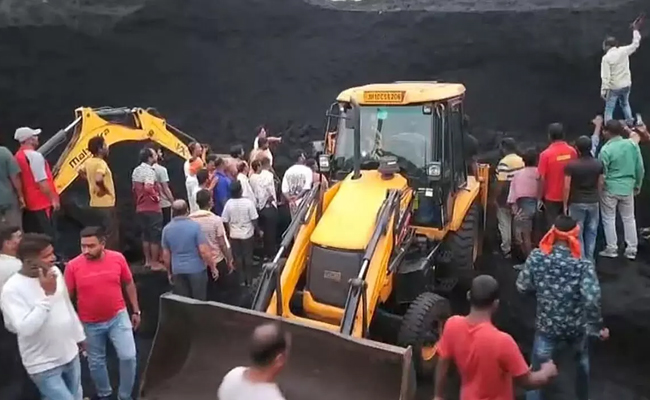
Dhanbad (Jharkhand) (PTI): At least four workers died after being buried under coal slurry in Jharkhand's Dhanbad district on Saturday, a police official said.
The incident took place at Moonidih coal washery in the command area of Bharat Coking Coal Limited (BCCL).
"Bodies of all four workers were dug out of debris during a rescue operation," Putki police station in-charge Waqar Hussain told PTI.
The incident took place when coal slurry was being loaded into trucks by workers, during which a large chunk of slurry fell and trapped several workers underneath, officials said.
The deceased have been identified as Manik Bauri, Dinesh Bauri, Deepak Bauri, and Hemlal Gope.
Meanwhile, the family members of the deceased and local villagers placed the bodies in front of the washery gate and began a protest.
They demanded compensation, jobs for dependents and action against those responsible for the incident.
Police and administration officials are trying to pacify the protesters, an official said.