Trump orders Chinese owner of TikTok to sell US assets
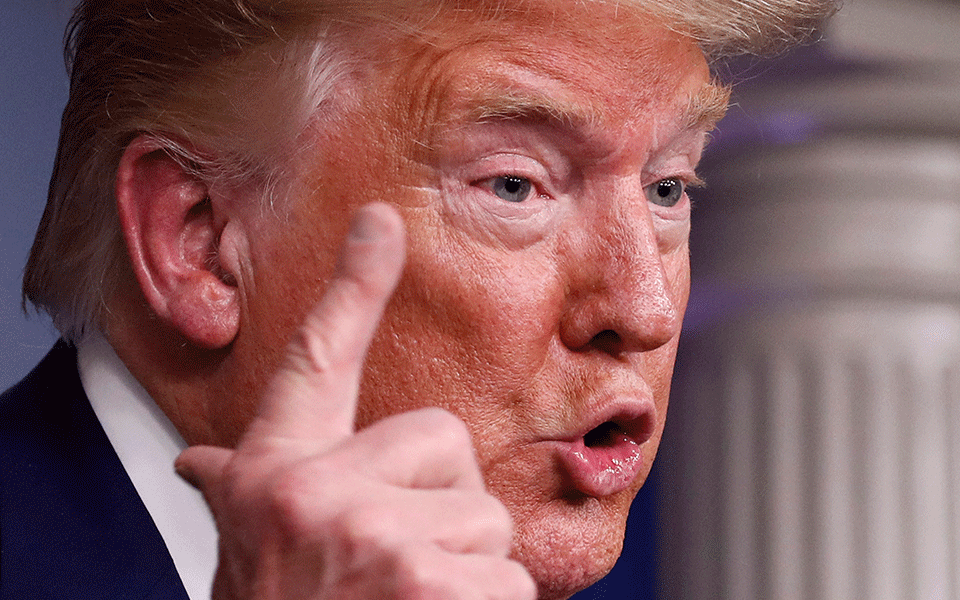
Washington: President Donald Trump on Friday gave the Chinese company ByteDance 90 days to divest itself of any assets used to support the popular TikTok app in the United States.
Trump's executive order said there is credible evidence that leads me to believe that ByteDance might take action that threatens to impair the national security of the United States.
Trump last week ordered sweeping but vague bans on dealings with the Chinese owners of TikTok and the messaging app WeChat, saying they are a threat to US national security, foreign policy and the economy.
It remains unclear what the TikTok orders mean for the app's 100 million US users, many of them teenagers or young adults who use it to post and watch short-form videos.
Trump on Friday also ordered ByteDance to divest itself of "any data obtained or derived" from TikTok users in the U.S. Microsoft is in talks to buy parts of TikTok.
White House press secretary Kayleigh McEnany defended Trump's earlier TikTok and WeChat orders Thursday, telling reporters he was exercising his emergency authority under a 1977 law enabling the president to regulate international commerce to address unusual threats.
The administration is committed to protecting the American people from all cyber threats and these apps collect significant amounts of private data on users, said McEnany, adding that the Chinese government can access and use such data.
TikTok said it spent nearly a year trying to engage in good faith with the US government to address these concerns.
What we encountered instead was that the Administration paid no attention to facts, dictated terms of an agreement without going through standard legal processes, and tried to insert itself into negotiations between private businesses, the company's statement said.
Let the Truth be known. If you read VB and like VB, please be a VB Supporter and Help us deliver the Truth to one and all.
India should create strategic buffers to navigate 'most difficult' energy shock: CEA Nageswaran
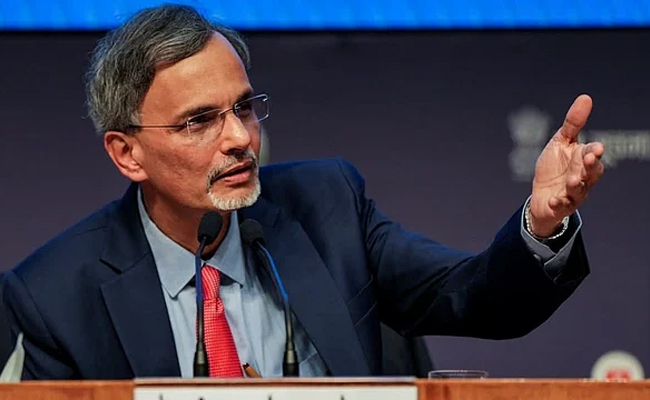
New Delhi (PTI): Chief Economic Advisor V Anantha Nageswaran on Saturday said India needs to create strategic buffers in the face of the "most difficult" energy shock that the country is facing amid the West Asia crisis.
Nageswaran also said the rising prices of fertiliser and petroleum products globally due to the crisis will make it challenging to achieve the 4.3 per cent fiscal deficit target for the current fiscal, while below normal monsoon and pass-through of higher energy prices could lead to "potential inflation spike".
He also said India has employment challenge emanating from AI, and there is a need to ensure that IT sector becomes more competitive and not lose jobs to AI, and instead create jobs that use AI within the IT sector or in other services.
Speaking at the ICPP Growth Conference organised by the Ashoka University, Nageswaran said the current account deficit (CAD) in the current fiscal could rise to over 2 per cent of GDP, from less than 1 per cent in FY'26.
"The ... priority for us is to create strategic buffers. This energy shock is the most difficult one compared to any other previous energy shock in terms of energy lost as a percentage of total global energy supply, not just oil, including gas.
"And we also need to use this occasion to think about other areas where we are vulnerable in terms of import dependence, nickel, tin, and copper. We need to build strategic buffers if we have to make a shot at manufacturing and becoming indispensable," Nageswaran said.
Since the beginning of the war in West Asia on February 28, crude oil prices soared to a four-year high of USD 126 per barrel on Thursday, from about USD 73 level before the war.
Stating that geopolitics will compel policymakers to be nimble and flexible and shed old model of thinking, Nageswaran said India is better prepared than many other countries to deal with the crisis because of the fiscal leeway that the country has due to lowering of fiscal deficit ratio to 4.4 per cent of GDP in FY'26.
Nageswaran said the West Asia conflict is more of a price shock than supply shock for India as the government is managing the supply side deftly.
"This particular conflict, which is going to be on a low simmer or a high flame situation, whatever it is, it is going to be there with us in some form or the other because the military conflict may be over, but the strategic conflict is well and truly alive. It will be so for some time," Nageswaran said.
He said the conflict has four channels of shock: price and supply shock, trade impact, sticky logistics costs and remittance shock.
India imports 60 per cent of its LPG usage and of that, 90 per cent flows through the now closed Strait of Hormuz.
Nageswaran said the pass-through of high global energy prices would have to be a "balancing act". He said some pass-through is already happening in commercial LPG, and the levy of export duty on diesel and ATF.
The government has cut excise duty on petrol and diesel to shield customers from the impact of the rise in petroleum prices. "We are coming around to arriving at a certain modus vivendi with respect to burden-sharing between the fiscal policy side, inflation, households and the oil marketing companies. So it has to be a balancing act," Nageswaran said.