Trump pressures Iran with tariffs that could raise prices in US
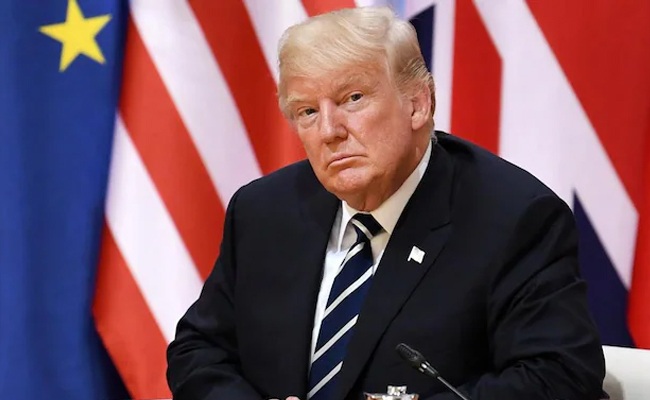
Washington (AP): President Donald Trump has once again drawn his go-to diplomatic weapon — tariffs, this time to coerce the Iranian government to end its bloody crackdown on nationwide protests.
Trump said in a social media post on Monday he would impose a 25% tax on imports to the United States from countries that do business with Iran. The sanctions could hurt the Islamic Republic by reducing its access to foreign goods and driving up prices, which would likely inflame tensions in a country where inflation is running above 40%.
But the tariffs could create blowback for the United States, too, potentially raising the prices Americans pay for imports from Iranian trade partners such as Turkish textiles and Indian gemstones and threatening an uneasy trade truce Trump reached last year with China.
The death toll from protests in Iran surpassed 2,000 people on Tuesday, activists said, as the hard-line Islamist government attempts to tamp down dissent against economic hardship and political repression.
The Trump administration has offered scant details since announcing the new tariffs targeting Iran. For instance, the White House has not said whether the taxes would be stacked on top of double-digit levies Trump imposed last year on almost every country on earth. Or whether he would exempt some energy imports as he has in the past.
It's also unclear what legal authority the president is relying on to impose the import taxes. He invoked the 1977 International Emergency Economic Powers Act to justify his most sweeping tariffs last year. But businesses and several states have gone to court arguing that Trump overstepped his authority in doing so.
The Supreme Court is hearing the case and could throw out Trump's tariffs and force him to send refunds to the U.S. importers that paid them.
Years of sanctions aimed at stopping Iran's nuclear program have left the country isolated. But it still did nearly $125 billion in international trade in 2024, including $32 billion with China, $28 billion with the United Arab Emirates and $17 billion with Turkey, according to the World Trade Organisation.
Iran bought more than $6 billion worth of imports from the European Union that year. Russia and India also do considerable business with Iran. Energy dominates Iran's exports. Its top imports include gold, grain and smartphones.
Trump's attempt to pressure Iran is likely to cause collateral damage. Most prominently, his tariffs could upend his attempts to maintain a trade peace with China.
Last spring, the United States and China hammered each other with triple-digit tariffs, threatening to end trade between the world's two biggest economies and briefly panicking global financial markets.
The two countries spent the rest of year trying to deescalate their trade conflict, reaching a truce in October that reined in tariffs, ended China's boycott of American soybeans and eased its restrictions on exports of rare-earth minerals and technologies critical for fighter jets, robots and other products.
The new tariffs, aimed at punishing Iran, would hit China because of its trade ties with Tehran.
“President Trump's threat to increase tariffs by 25% against China and other trading partners due to developments in Iran underscores just how fragile the US-China trade truce is,” said former US trade negotiator Wendy Cutler, now senior vice president at the Asia Society Policy Institute.
"Even if he does not actually implement the tariff hike, damage has already been done. This threat erodes trust between the US and China which is already at a low level."
Adnan Mazarei, a nonresident senior fellow at the Peterson Institute for International Economics, doubts that the tariffs would persuade the Iranian government to ease its crackdown on protesters.
“I do not think this is going to be very successful," said Mazarei, a former deputy director of the International Monetary Fund with crisis-fighting experience in the Middle East.
"They will not for this alone change their views or their practices. It is a repressive regime, and it is willing to pay a high cost in terms of people's blood to stay in power."
Let the Truth be known. If you read VB and like VB, please be a VB Supporter and Help us deliver the Truth to one and all.
Bengal: Over 55 pc turnout till 1 pm in repoll in 15 booths of 2 assembly seats
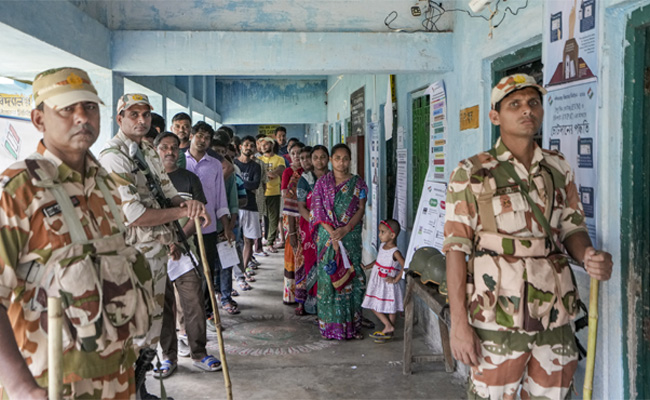
Kolkata (PTI): Over 55 per cent turnout was recorded till 1 pm in repoll in 15 booths of two assembly constituencies in West Bengal's South 24 Parganas district on Saturday, an official said.
Voting was underway more or less peacefully at 11 polling stations of Magrahat Paschim assembly constituency and four in Diamond Harbour, where the EC ordered repoll a day ago, following reports of electoral malpractices.
However, at booth number 179 at Chanda Primary School of Diamond Harbour seat, the Trinamool Congress alleged that a specially abled voter and his mother were harassed by central forces. The alleged incident sparked protests by party workers and locals.
The TMC claimed that the voter's mother, who had entered the booth to assist him, and her son were detained for a considerable time by central forces over alleged rule violations.
ALSO READ: Man arrested for duping Delhi resident of Rs 2 lakh in online car sale fraud
"TMC leaders Manmohini Biswas and Pratik Ur Rahman reached the spot and led the protests, with residents terming the action unwarranted harassment. The matter has been taken care of by our officials there," an official of the poll body said.
Polling was otherwise peaceful across 15 booths in the area, he added.
Voting began at 7 am and will continue till 6 pm, the official said, adding that till 1 pm, the turnout was 55.57 per cent.
Magrahat Paschim registered 56.33 per cent voter turnout, while in Diamond Harbour, it was 54.9 per cent, a poll official stated.
Voting in these two assembly constituencies was held in the second phase of the state elections on April 29.
The repoll order was based on reports received from returning officers and observers of the two constituencies and "material circumstances", the Election Commission official said.
In Magrahat Paschim, TMC's Md Samim Ahamed Molla is pitted against BJP nominee Goursundar Ghosh, while Abdul Majid Halder of the Congress and ISF candidate Abdul Aziz Al Hassan are also in the fray.
TMC candidate Panna Lal Halder is contesting against Dipak Kumar Halder of the BJP in the Diamond Harbour seat. Goutam Bhattacharya of the Congress and CPI(M)'s Samar Naiya are among other candidates.
The BJP had alleged rampant electoral malpractices in certain polling stations of both the assembly seats under the Diamond Harbour Lok Sabha constituency, which is represented by TMC national general secretary Abhishek Banerjee.
The EC had deputed its special observer, Subrata Gupta, to fact-check the allegations from the ground.
The poll panel will decide on repolling in the Falta assembly constituency on Saturday.
The West Bengal assembly elections were held in two phases -- April 23 and April 29 -- amid unprecedented security arrangements.
Counting of votes will take place on May 4.