Trump signs into law defence policy bill backing deeper engagement with India including via Quad
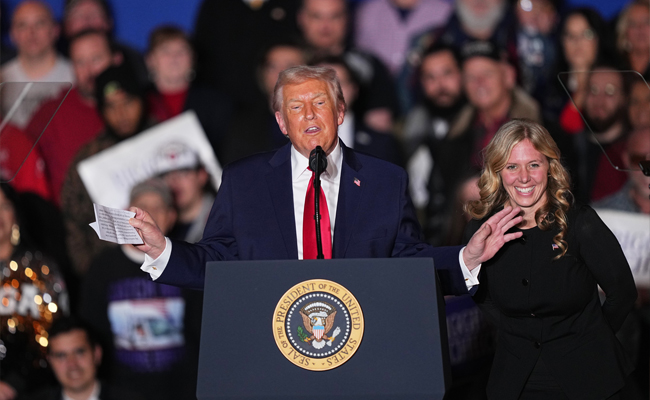
New York/Washington (PTI): US President Donald Trump has signed into law an annual defence policy bill that highlights broadening America’s engagement with India, including through the Quad to advance the shared objective of a free and open Indo-Pacific region and address the challenge posed by China.
The National Defence Authorisation Act for Fiscal Year 2026, signed into law Thursday, also states that the Secretary of State shall establish and maintain within the US-India Strategic Security Dialogue a joint consultative mechanism with the Indian government in connection with the Nuclear Liability Rules.
It authorises fiscal year appropriations for the Department of War (DoW), the Department of Energy national security programmes, the Department of State, the Department of Homeland Security, the Intelligence Community, and other executive departments and agencies.
ALSO READ: Tipra Motha youth wing stages protest near Bangladesh Assistant High Commission
“The Act will enable the DoW to carry out my Peace Through Strength agenda, protect the homeland from domestic and foreign threats, and strengthen the defence industrial base, while eliminating funding for wasteful and radical programmes that undermine the warfighting ethos of our Nation’s men and women in uniform,” Trump said in a statement.
The Act outlines ‘sense of Congress on Defence Alliances and Partnerships in the Indo-Pacific region’.
Under this, the Secretary of Defence should continue efforts that strengthen US defence alliances and partnerships in the Indo-Pacific region to "further the comparative advantage of the US in strategic competition with China".
This includes "broadening US engagement with India, including through the Quadrilateral Security Dialogue to advance the shared objective of a free and open Indo-Pacific region through bilateral and multilateral engagements and participation in military exercises, expanded defence trade, and collaboration on humanitarian aid and disaster response; and to enable greater cooperation on maritime security.”
The Quad or Quadrilateral Security Dialogue, comprising India, the US, Japan and Australia, was set up in 2017 to counter China’s aggressive behaviour in the Indo-Pacific region.
The Act states that the Secretary of Defence, in coordination with the Secretary of State, shall establish and maintain a security initiative to strengthen cooperation among the defence industrial bases of the US and allied and partner countries in the Indo-Pacific region.
This, it said, would strengthen the collective defence industrial base by expanding capability, capacity, and workforce, including enhanced supply chain security, interoperability, and resilience among participating countries.
The two Secretaries shall establish a process to determine which allies and partners of the US (including Australia, Japan, the Republic of Korea, India, the Philippines, and New Zealand) shall be invited to participate as member countries of the security initiative, it said.
In a section titled ‘Joint Assessment Between The United States And India On Nuclear Liability Rules’, it states that the Secretary of State shall establish and maintain within the US-India Strategic Security Dialogue a joint consultative mechanism with the Indian government.
This mechanism would convene regularly to "assess the implementation of the Agreement for Cooperation between the US Government and Government of India Concerning Peaceful Uses of Nuclear Energy, signed in Washington in 2008," it said.
The focus of this mechanism is to discuss opportunities for India “to align domestic nuclear liability rules with international norms; and to develop a strategy for the United States and the Republic of India to pursue bilateral and multilateral diplomatic engagements related to analysing and implementing those opportunities.”
It calls on the Secretary of State to submit a report describing the joint assessment about this not later than 180 days after the date of the enactment of the Act, and annually thereafter for five years.
In another section, the Act states that an “ally or partner nation" means the government of any country that is a member of the Organisation for Economic Cooperation and Development; “the Government of the Republic of India”, and the Government of any country designated as an ally or partner nation by the Secretary of State for purposes of this section.
Let the Truth be known. If you read VB and like VB, please be a VB Supporter and Help us deliver the Truth to one and all.
44 peacocks die of H5N1 in Karnataka’s Tumakuru; minister orders precautions
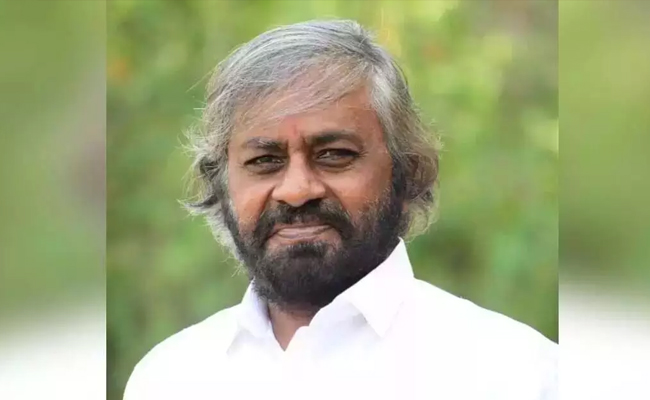
Bengaluru (PTI): After 44 peacocks died of the H5N1 virus in Tumakuru district, Karnataka Minister Eshwar Khandre on Saturday directed officials to implement strict precautionary measures to prevent its spread across forest areas, including zoos and bird sanctuaries.
The directive comes after laboratory reports from the ICAR–National Institute of High Security Animal Diseases in Bhopal recently confirmed H5N1 avian influenza as the cause of the deaths.
According to the state forest minister, the peacocks died between April 16 and 21 in and around Bommanahalli and Kolihalli villages in Urdigere hobli, and Bairasandra and Hullenahalli villages in Gulur hobli of Tumakuru district.
“In this context, instructions have been issued in line with the revised H5N1 Action Plan of the Central Government to prevent the spread of infection across all forest areas, including zoos, bird sanctuaries, Magadi Lake, and the community reserve at Kokkare Bellur,” Khandre said in a note addressed to the principal chief conservator of forests (wildlife) and chief wildlife warden.
He also directed that any deaths of birds, whether migratory or local, must be reported immediately, and that samples from carcasses should be collected and sent for testing.
If required, a nodal officer may be appointed to monitor the situation across the state, he added.
Authorities have established an infected zone within a 0–3 km radius and a surveillance zone extending from 3 to 10 km.
According to the Health Department, surveillance for fever, Influenza-Like Illness (ILI), and Severe Acute Respiratory Infection (SARI) will be carried out over the next 10 days, covering a population of 20,432 across 38 villages.
In light of the situation, the department has advised the public to follow precautionary measures to minimise the risk of infection by avoiding contact with sick or dead birds and maintaining hand hygiene by washing hands frequently with soap and water.
It has also suggested the use of personal protective equipment (PPE) while handling birds or their droppings, and advised ensuring that poultry and eggs are thoroughly cooked (above 80 degrees celcius) before consumption.
The health department has also recommended avoiding close contact with individuals exhibiting symptoms of respiratory illness.
The department said it is closely monitoring the situation and has put necessary precautionary measures in place.
The public has been advised to remain vigilant and report any unusual bird deaths or symptoms promptly, officials added.
Avian influenza (H5N1) is a subtype of the influenza virus that infects birds and mammals, including humans in rare instances, according to the World Health Organisation. Human cases reported so far have been mostly linked to close contact with infected birds or other animals, or with contaminated environments.