Trump suspends attacks as Iran agrees to two-week ceasefire
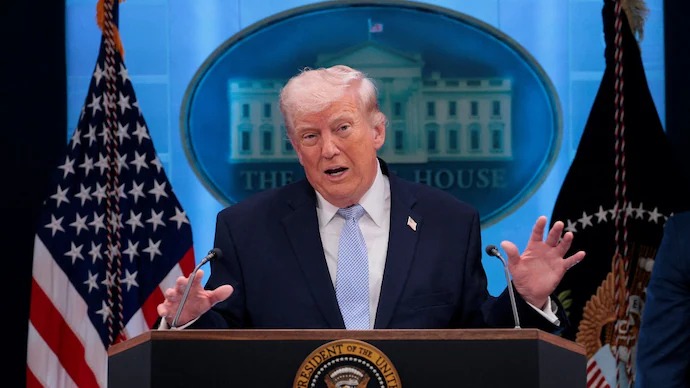
Washington/Tehran: A temporary pause in the ongoing conflict appears to be underway after the United States and Iran signalled a two-week ceasefire.
According to updates reported by Al Jazeera, Iran has agreed to a two-week ceasefire after US President Donald Trump said he would suspend attacks, subject to conditions including the reopening of the Strait of Hormuz.
The development came after Pakistan’s Prime Minister Shehbaz Sharif appealed to Trump to extend the deadline for a deal and urged Iran to fully reopen the key waterway.
In a related statement, Iran’s Foreign Minister Abbas Araghchi said Tehran would halt its defensive operations if attacks against the country are stopped.
Sharing a message on behalf of Iran’s Supreme National Security Council, Araghchi said, “if attacks against Iran are halted, our Powerful Armed Forces will cease their defensive operations.”
He also said that for a period of two weeks, safe passage through the Strait of Hormuz would be ensured through coordination with Iran’s armed forces, while noting there could be technical limitations.
The ceasefire announcement marks a significant pause in the conflict, though its continuation depends on both sides adhering to the conditions set out.
Let the Truth be known. If you read VB and like VB, please be a VB Supporter and Help us deliver the Truth to one and all.
AIITA welcomes Karnataka’s ban on obscene songs in school events
Bhatkal: The Karnataka unit of the All India Ideal Teachers Association (AIITA) has welcomed the Karnataka government’s decision to strictly ban school children from dancing to obscene songs during educational and cultural programmes in government, aided, and private schools across the state.
AIITA Karnataka State President M. R. Manvi congratulated the government for taking what he termed an important step to preserve the sanctity of education.
“Such decisions to safeguard the dignity of school children and uphold the values of education are the need of the hour. This rule should not be limited to government schools alone but must be strictly implemented in all private educational institutions as well,” he said.
He further urged the government to address other concerns within school programmes.
“The government should not only prohibit obscene dances in the name of school anniversaries, but also ensure that plays and dialogues that incite religious hatred are avoided. Schools should be centres of harmony, not platforms for spreading hatred,” he added.
According to a recent circular issued by the Department of School Education and Literacy, obscene dances are adversely affecting the mental health and moral values of students.
In this regard, schools have been advised to use songs that promote nationalism, positive thinking, the greatness of Kannada culture, and value-based traditions instead of inappropriate content during programmes.
The circular also emphasises that students should be dressed in decent attire.
AIITA also backed the department’s warning that disciplinary action would be taken against head teachers if such guidelines are violated. The association has further demanded that district Deputy Directors of Public Instruction strictly monitor the implementation of these rules.