Trump to impose tariffs on $200 bn in Chinese goods
Washington, Sep 18 : US President Donald Trump's administration will impose a 10 per cent tariff later this month on $200 billion worth of Chinese goods, increasing to 25 per cent at the end of the year, a move that will sharply escalate the American trade war with Beijing.
The administration announced on Monday that the additional tariffs which will take effect from September 24, are on top of penalties enacted earlier this year on $50 billion worth of Chinese goods, CNN reported.
Taken together, it means roughly half of the products that China sells to the US each year will be hit by American tariffs.
In July, the administration published a list of thousands of products that would be subject to the latest round of trade penalties. More than 300 products were removed from that list -- including smartwatches, health and safety devices and children's playpens.
Trump had urged his advisers to press forward with the $200 billion round, even as Washington and Beijing worked to restart trade talks.
The President's decision threatens to upend the possibility of a diplomatic breakthrough with Chinese negotiators.
"China has had many opportunities to fully address our concerns," Trump said in a statement released Monday evening by the White House.
"Once again, I urge China's leaders to take swift action to end their country's unfair trade practices."
Trump also threatened to inflict more economic pain in the form of additional tariffs if Beijing takes any retaliatory action. Treasury Secretary Steven Mnuchin had invited the negotiators to Washington this week to resume talks.
But China said it would turn down the offer if the US went ahead with more tariffs, CNN said.
Earlier Monday, Trump previewed the announcement at the White House: "It will be a lot of money coming into the coffers of the US. A lot of money coming in."
The President said he was confident an agreement could eventually be reached with China, but stressed such an accord must do right by American workers.
"They want to make a deal," Trump said. "But from our standpoint, it has to be fair. It has to take care of our workers." The tariffs are meant to punish China for alleged unfair trade practices, including intellectual property theft.
China has accused the US of trade bullying and, to this point, has responded dollar-for-dollar with tariffs of its own.
Let the Truth be known. If you read VB and like VB, please be a VB Supporter and Help us deliver the Truth to one and all.
4 workers die after being buried under coal slurry in Jharkhand's Dhanbad
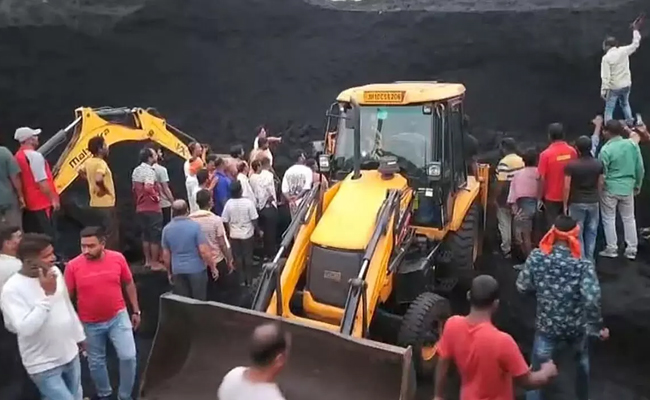
Dhanbad (Jharkhand) (PTI): At least four workers died after being buried under coal slurry in Jharkhand's Dhanbad district on Saturday, a police official said.
The incident took place at Moonidih coal washery in the command area of Bharat Coking Coal Limited (BCCL).
"Bodies of all four workers were dug out of debris during a rescue operation," Putki police station in-charge Waqar Hussain told PTI.
The incident took place when coal slurry was being loaded into trucks by workers, during which a large chunk of slurry fell and trapped several workers underneath, officials said.
The deceased have been identified as Manik Bauri, Dinesh Bauri, Deepak Bauri, and Hemlal Gope.
Meanwhile, the family members of the deceased and local villagers placed the bodies in front of the washery gate and began a protest.
They demanded compensation, jobs for dependents and action against those responsible for the incident.
Police and administration officials are trying to pacify the protesters, an official said.