Trump's reciprocal tariffs come into effect globally, including India
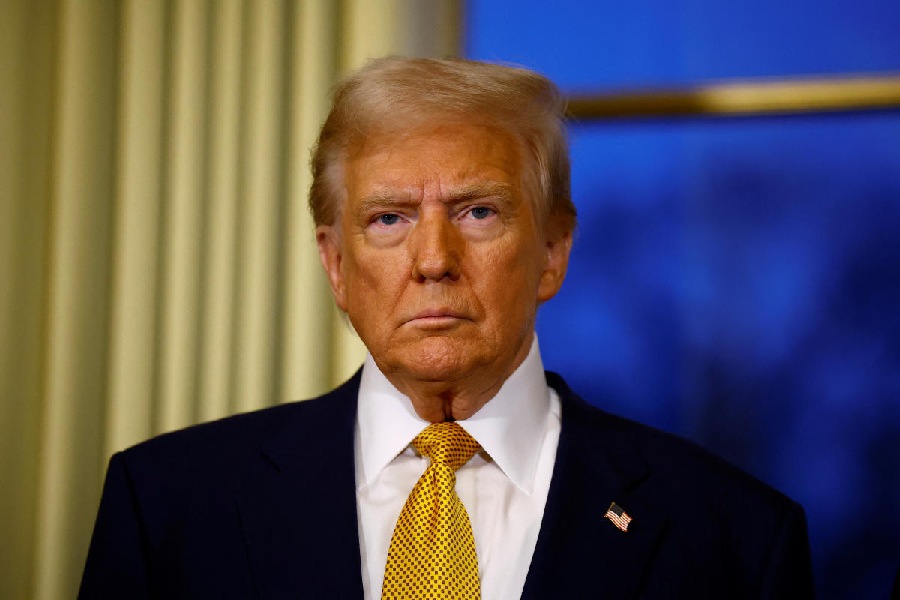
New York/Washington (PTI): The initial 25 per cent tariffs announced by the US on Indian imports came into effect Thursday, with President Donald Trump saying billions of dollars from countries that have taken advantage of America will now start flowing into the country.
“It’s Midnight!!! Billions of Dollars In Tariffs Are Now Flowing Into The United States Of America!” Trump said in a post on Truth Social as the clock struck 12 midnight in the US, ushering in the August 7 date when the reciprocal tariffs announced on nations by Trump last week come into effect.
"Reciprocal tariffs take effect at midnight tonight! Billions of dollars, largely from countries that have taken advantage of the United States for many years, laughing all the way, will start flowing into the USA. The only thing that can stop America’s greatness would be a radical left court that wants to see our country fail!” Trump said in another post.
Last week, the White House announced that India will face tariffs of 25 per cent after Trump issued an executive order listing the various duties that Washington will impose on exports from countries around the world.
In the Executive Order titled ‘Further Modifying The Reciprocal Tariff Rates’, Trump had announced tariff rates for nearly 70 nations.
The 25 per cent “Reciprocal Tariff, Adjusted” imposed on India came into effect on Thursday.
The tariffs in the list ranged from 10 per cent to 40 per cent, with Japan being charged 15 per cent, Laos and Myanmar (40 per cent each), Pakistan (19 per cent), Sri Lanka (20 per cent) and the United Kingdom (10 per cent).
In addition to the 25 per cent tariff announced last week, Trump on Wednesday imposed another 25 per cent levies on India for its purchases of Russian oil, bringing the total duties slapped on India to 50 per cent, among the highest imposed by the US on any country in the world.
The additional 25 per cent duty will come into effect after 21 days or August 27.
India, responding to the tariffs, said that the targeting of India is unjustified and unreasonable.
India said that, like any major economy, it will take all necessary measures to safeguard its national interests and economic security.
On an additional 25 per cent tariff on India for Russian purchases, Indiaspora, a nonprofit US-based organisation of global Indian diaspora leaders across diverse professions, said in a statement that it believes the “current setback" in what is otherwise an enduring, robust and broad-based people-to-people relationship will be temporary.
“We remain optimistic that the ongoing discussions, when concluded, will reflect the aspirations of both nations and the global Indian diaspora that believes in them,” Indiaspora said.
It stressed that with over five million Indian-Americans contributing meaningfully to the US economy, culture, and civic life, the diaspora serves as a living bridge between the world’s two largest democracies.
“We believe the US-India relationship is not just important—it is essential. As global dynamics shift, this economic partnership should stand as a cornerstone for stability, innovation, and progress in the 21st century,” it said.
Ajay Bhutoria, an Indian-American community leader and former advisor to President Joe Biden, said he strongly opposes Trump’s decision to impose a 50 per cent tariff on Indian goods.
“India supplies nearly half of America’s affordable generic drugs. These tariffs will inflate prescription prices, hitting families, seniors, and small businesses hard. Everyday items—spices, lentils, Diwali clothing—will become pricier, with reports estimating apparel and footwear costs could rise 37%,” he said.
Bhutoria noted that Trump granted China a 90-day tariff pause while targeting India, a key democratic ally, for its energy needs.
"This double standard risks undermining the robust USD 186 billion US-India trade partnership and our shared goal of reaching USD 500 billion by 2030.”
He underscored that the US and India share a strong, vibrant partnership built on mutual respect, economic ties, and shared values.
“We must work through these challenges together, not through divisive tariffs that hurt both nations. I urge both governments to prioritise dialogue and fair trade solutions that strengthen our alliance and keep costs affordable for our communities.”
Over the last few months, India and the US held several rounds of negotiations for a bilateral trade deal, but it could not be sealed in view of sharp divergences in certain critical areas, including agriculture and dairy.
Let the Truth be known. If you read VB and like VB, please be a VB Supporter and Help us deliver the Truth to one and all.
Over 1 lakh students appear for NEET across TN
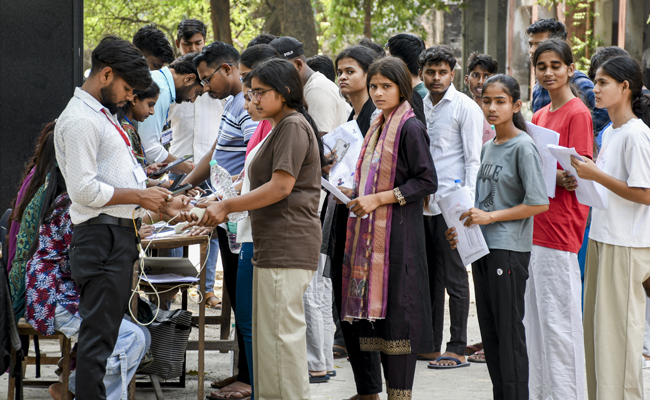
Chennai (PTI): About 1.4 lakh students appeared for the NEET 2026 exam for admission to medical degree courses across 31 centres in Tamil Nadu on Sunday.
Students claimed that the exam paper was easier than the previous year.
Organised by the National Testing Agency (NTA), 22.80 lakh students had registered for the National Eligibility cum Entrance Test (NEET) undergraduate exam nationwide.
NTA sources said that CCTV surveillance was installed at all examination centres, with feeds linked to centralised control rooms.
In view of the large candidate volume and prevailing summer conditions, the NTA ensured reliable power back-up, including generators at all centres, to ensure candidate comfort during the exam. Also, drinking water and on-site medical support were provided to students.
The sources further said that no malpractices were reported, especially in Chennai. The results of NEET are expected to be declared in June, 2026.