Tsunami hits Russia's islands, Japan after 8.8-magnitude earthquake off Russia
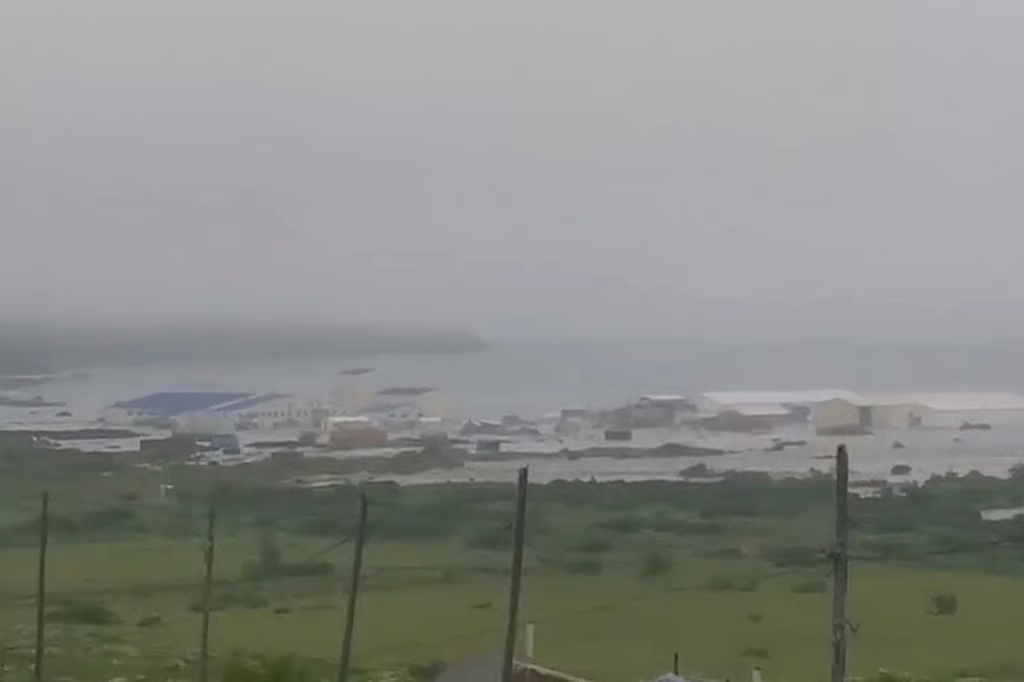
Tokyo (AP): A tsunami has hit coastal areas of Russia's Kuril Islands and Japan's large northern island of Hokkaido after a powerful, 8.8-magnitude earthquake struck off the coast of Russia early Wednesday. Warnings are also in place for Alaska, Hawaii and other coasts south toward New Zealand.
The Japan Meteorological Agency said a tsunami as high as 40 centimeters (1.3 feet) had been detected in 16 locations as the waves moved south along the Pacific coast from Hokkaido to just northeast of Tokyo. Officials urged caution, saying that bigger waves could come later.
Damage and evacuations were reported in the Russian regions nearest the quake's epicentre on the Kamchatka Peninsula.
900,000 people under evacuation advisories in Japan
Japan's Fire an Disaster Management Agency said so far no injuries or damage have been reported. The agency, in response to the tsunami alert, issued an evacuation advisory to more than 900,000 residents in 133 municipalities along Japan's Pacific coast, from Hokkaido to Okinawa. The number of people who actually took shelter was not available.
A tsunami of 50 centimeters (1.6 feet) was detected at the Ishinomaki, the highest detected so far in the aftermath of Wednesday's earthquake, according to the Japan Meteorological Agency.
The strongest quake in over a decade
The earthquake at 8:25 am Japan time had a preliminary magnitude of 8.0, Japan and US seismologists said.
The US Geological Survey later updated its measurement to 8.8 magnitude.
It appears to be the strongest anywhere in the world since the March 2011 quake off northeast Japan that was 9.0 magnitude and caused a massive tsunami that set off meltdowns at a nuclear power plant.
Only a few stronger earthquakes have ever been measured around the world.
Connections restored in Russian peninsula hit hard by the earthquake
Internet and phone connections have been restored in Kamchatka following the massive earthquake, according to the Russian news agency Tass.
Videos posted on social media showed the façade of a collapsed kindergarten in Petropavlovsk-Kamchatsky. No casualties were reported.
A port in Severo-Kurilsk, on the Kuril Islands in the Pacific, was flooded after a tsunami wave hit the area.
Russian news agencies quoting the regional Health Ministry said several people sought medical help in Kamchatka after the earthquake, but no serious injuries were reported.
Tsunami alert in Japan complicates transportation
Ferries connecting Hokkaido and Aomori on the northern tip of Japan's Honshu island were suspended, as well as those connecting Tokyo and nearby islands.
Some local train operations have been suspended or delayed as well, according to operators.
Sendai airport says its runway has been temporarily closed.
Tsunami waves detected at multiple points on Japan's Pacific coast
Japan Meteorological Agency says a tsunami as high as 40 centimeters (1.3 feet) has been detected at 16 locations as the waves have moved south along the Pacific coast from Hokkaido down to just northeast of Tokyo.
Officials urge residents to use caution as bigger waves could come later.
New Zealand warns of strong and unusual currents and unpredictable surges' along its coastlines
New Zealand authorities issued warnings of “strong and unusual currents and unpredictable surges” along coastlines throughout the country.
The alert by the government emergency management agency said people should move out of the water, off beaches and shore areas, and away from harbors, marinas, rivers and estuaries.
Japanese nuclear power plants stop work
Japanese nuclear power plants along the Pacific coasts have suspended their work schedule in response to the tsunami alert, but so far no abnormalities have been reported.
Tokyo Electric Power Company Holdings, which operates the tsunami-hit Fukushima Daiichi nuclear power plant, said about 4,000 workers are taking shelter at higher grounds on the plant complex while monitoring remotely to ensure plant safety.
Its release of treated radioactive wastewater into the sea is also temporarily suspended as a cautionary step.
Russian scientists call the earthquake a 'unique event'
The 8.8-magnitude earthquake was the strongest to hit that area in Kamchatka since 1952, according to the local branch of the Geophysical Survey of the Russian Academy of Sciences.
In a statement posted on their Telegram channel, they called the earthquake a “unique event.” They said the epicenter was near a recent earthquake that struck the peninsula on July 20.
While the situation “was under control,” they said there are risks of aftershocks, which could last for up to a month, and warned against visiting certain coastal areas.
Oregon officials say small tsunami expected to reach the state's coastline
The Oregon Department of Emergency Management said on Facebook that small tsunami waves were expected to reach parts of the state's coastline starting around 11:40 p.m. local time, with wave heights between 1 to 2 feet (30 to 60 centimeters).
It urged people to stay away from beaches, harbors and marinas and to remain in a safe location away from the coast until the advisory is lifted.
“This is not a major tsunami, but dangerous currents and strong waves may pose a risk to those near the water,” the department said.
Oregon is under a tsunami advisory, along with much of the US West Coast spanning British Columbia, Washington state and California.
Let the Truth be known. If you read VB and like VB, please be a VB Supporter and Help us deliver the Truth to one and all.
Double-decker electric bus gutted in fire at Kurla BEST depot
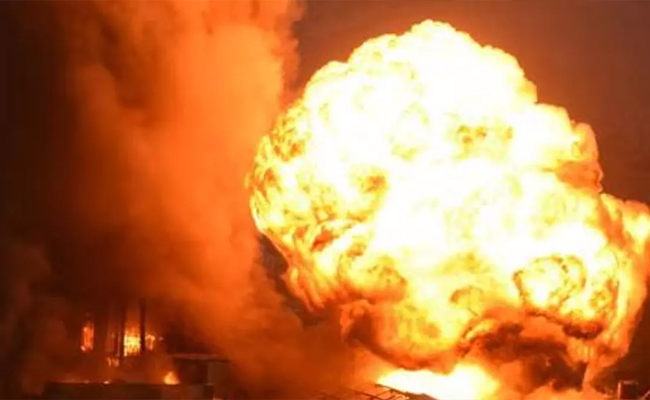
Mumbai (PTI): An empty double-decker electric bus was gutted in a fire during servicing at a BEST depot in Mumbai's Kurla area on Sunday, officials said, adding that nobody was injured.
The blaze broke out inside the Kurla BEST bus depot near Kanakia Building at 4.14 pm, according to preliminary information from the Mumbai Fire Brigade.
The parked bus was unoccupied at the time of the incident.
Fire brigade personnel rushed to the spot and brought the blaze under control. The exact cause of the fire was yet to be ascertained, they said.
No injuries were reported in the incident, officials added.
The Brihanmumbai Electricity Supply and Transport (BEST) Undertaking has hired 50 electric double-decker buses from Switch Mobility in its fleet of around 2,700 buses.