Turkish health minister: 4 dead, 120 injured in earthquake
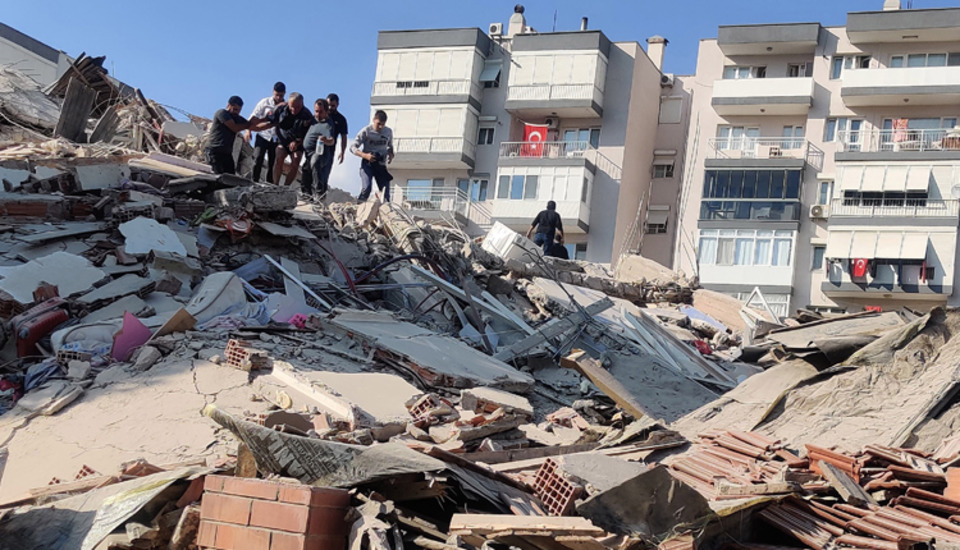
Istanbul: A strong earthquake struck Friday between the Turkish coast and the Greek island of Samos, collapsing several buildings in Turkey's western Izmir province and leaving at least four people dead.
Dozens more were injured, while some damage to buildings and the road network, and four light injuries were also reported on Samos.
Turkey's Health Minister Fahrettin Koca tweeted that four people were killed in Izmir and 120 were injured. He said 38 ambulances, two ambulance helicopters, and 35 medical rescue teams were working in Izmir.
The European-Mediterranean Seismological Centre said the quake had a preliminary magnitude of 6.9 with an epicenter 13 kilometers (8 miles) north northeast of the Greek island of Samos. The United States Geological Survey put the magnitude at 7.0. It is common for preliminary magnitudes to differ in the early hours and days after a quake. Multiple aftershocks struck the region.
A strong earthquake struck Friday between the Turkish coast and the Greek island of Samos, collapsing several buildings in Turkey's western Izmir province and causing some damage in Samos. There were reports of people trapped beneath rubble in Izmir.
Turkey's official Anadolu news agency said three injured people were pulled from the wreckage of a building in Izmir. Some damage was also reported on the Greek island of Samos, to buildings and the road network. The director of the hospital in Samos said four people were treated there for light injuries.
Turkey's Disaster and Emergency Management Presidency said the earthquake was centered in the Aegean at a depth of 16,5 kilometers (10.3 miles) and registered at a 6.6 magnitude. The emergency authority said it sent search and rescue teams to Izmir.
The European-Mediterranean Seismological Centre said the quake had a preliminary magnitude of 6.9, with an epicenter 13 kilometers (8 miles) north northeast of the Greek island of Samos. The United States Geological Survey put the magnitude at 7.0. It is common for preliminary magnitudes to differ in the early hours and days after a quake. Multiple aftershocks struck the region.
Izmir mayor Tunc Soyer told CNN Turk that about 20 buildings collapsed. The city is the third biggest in Turkey with about 4,5 million residents. Turkey's interior minister tweeted six buildings in Izmir were destroyed. He said there were small cracks in some buildings in six other provinces.
The environment and urban planning minister, Murat Kurum, said people were trapped under the wreckage, and rescue efforts were underway.
Videos posted on Twitter showed flooding in the immediate aftermath of the quake in Izmir's Seferhisar district. Turkish officials and broadcasters called on people to stay off the streets after reports of traffic congestion.
Turkish media showed wreckage of a multiple-story building in central Izmir, with people climbing it to start rescue efforts. Turkish media showed at least one woman being helped from the rubble of a collapsed building. Smoke was filmed in several spots in central Izmir.
Turkish media said the earthquake was felt across the regions of Aegean and Marmara, including Istanbul. Istanbul's governor said there were no reports of damage in the city, Turkey's largest.
Let the Truth be known. If you read VB and like VB, please be a VB Supporter and Help us deliver the Truth to one and all.
4 workers die after being buried under coal slurry in Jharkhand's Dhanbad
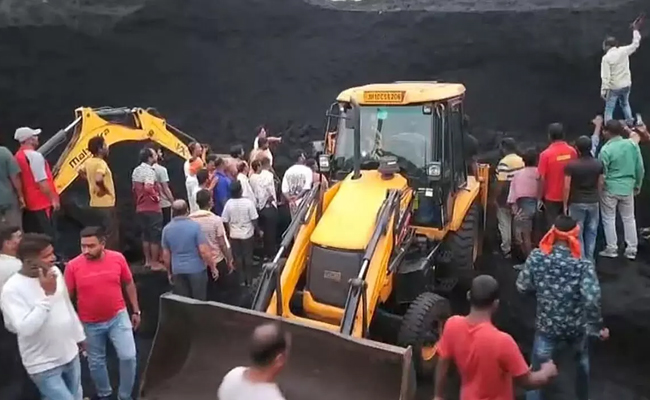
Dhanbad (Jharkhand) (PTI): At least four workers died after being buried under coal slurry in Jharkhand's Dhanbad district on Saturday, a police official said.
The incident took place at Moonidih coal washery in the command area of Bharat Coking Coal Limited (BCCL).
"Bodies of all four workers were dug out of debris during a rescue operation," Putki police station in-charge Waqar Hussain told PTI.
The incident took place when coal slurry was being loaded into trucks by workers, during which a large chunk of slurry fell and trapped several workers underneath, officials said.
The deceased have been identified as Manik Bauri, Dinesh Bauri, Deepak Bauri, and Hemlal Gope.
Meanwhile, the family members of the deceased and local villagers placed the bodies in front of the washery gate and began a protest.
They demanded compensation, jobs for dependents and action against those responsible for the incident.
Police and administration officials are trying to pacify the protesters, an official said.