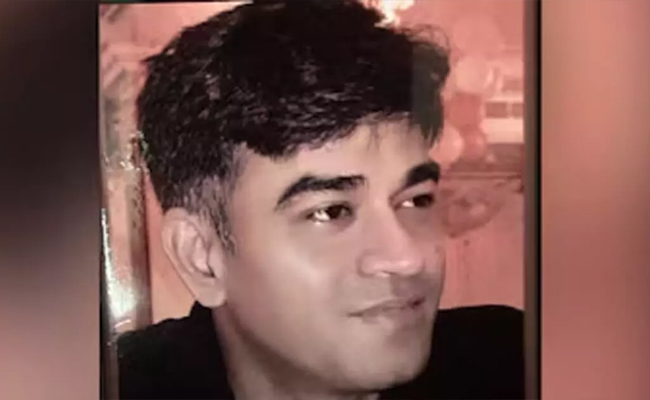
Two Indians, among 115 UN personnel, staff honoured for sacrifice in line of duty

United Nations: An Indian police officer deployed to the UN mission in Congo and a consultant with the UN development programme killed in the Ethiopian Airlines plane crash are among 115 UN peacekeepers and staff honoured by the global organisation for their sacrifice in the line of duty.
Police Officer Jitender Kumar serving in the UN Organisation Stabilisation Mission in the Democratic Republic of the Congo (MONUSCO) and Shikha Garg, United Nations Development Programme (UNDP) consultant attached with India's Ministry of Environment, Forest and Climate Change, along with 113 UN personnel and staff, lost their lives in the service of peace between January 2018 and March 2019.
Garg was among four Indians who died when the Nairobi-bound Ethiopian Airlines plane crashed after taking off from Addis Ababa in March this year. She was on her way to attend a United Nations Environment Programme (UNEP) meeting in Nairobi.
UN Secretary General Antonio Guterres, President of the General Assembly Maria Fernanda Espinosa, President of the Security Council, Indonesian Ambassador to the UN Dian Triansyah Djani and Under-Secretary-General for Operational Support Atul Khare along with top UN officials and Peacekeeping personnel paid tribute to those who sacrificed their lives in the line of duty at the solemn ceremony Monday.
Names of all the 115 UN personnel and staff members, 103 of them African peacekeepers, were read out during the service, which was attended by diplomats and family members of the fallen.
Guterres said that it was a "sad reminder of the often-perilous nature of our work" but also "testament to the commitment of the thousands of women and men from around the globe who are prepared to risk all to promote peace and provide assistance to some of the world's most vulnerable and needy people.
The UN chief lit a candle in honour of the 115 colleagues from 43 different nations. Espinosa expressed her profound respect and admiration for their dedication, passion and commitment to humanity. She said that their ultimate sacrifice will never be forgotten.
Guterres noted that most of the fallen came from the UN peacekeeping family, "which faces increasingly complex and deadly challenges," and the vast majority hailed from African nations, who have donned the 'blue helmet' to service in some of the most dangerous environments in the world
The commitment and sacrifice of African peacekeepers is "a stark testament to the commitment and sacrifices of our African partners to our joint endeavours toward global peace and security," he said.
He also noted the tragic loss of 21 colleagues who died in the Ethiopian air crash in March, and 19 civilians from agencies, funds and programmes. Our deepest condolences go to all their families and loved ones, many of whom are present here today with us.
People from 35 countries were on board flight ET 302 when the Boeing 737 max plane crashed into a field 60 kilometres southeast of Addis Ababa.
After a moment of silence, Guterres said the UN was working hard to mitigate the risks that colleagues face and promoting "better individual preparedness for crises" and providing "enhanced medical and psychological support."
"We are working to speedily settle claims and we are providing more comprehensive counselling, care and assistance to survivors and families," he said. "But I am aware that there is always more we can do, and I am committed to ensuring our Organization reviews and constantly improves our practices related to the safety and care of staff."
The UN chief said he was particularly outraged when our humanitarian and peacekeeping colleagues are directly targeted, adding that it was essential that we demand justice and accountability for what, in many instances, constitute war crimes.
He called on the world organisation to honour the memory of the fallen, by rededicating ourselves to the noble cause of promoting peace, prosperity and opportunity for every woman, man and child on the planet.
Let the Truth be known. If you read VB and like VB, please be a VB Supporter and Help us deliver the Truth to one and all.
Sujit Nair raises concerns over speculation of DMK-AIADMK understanding to block TVK
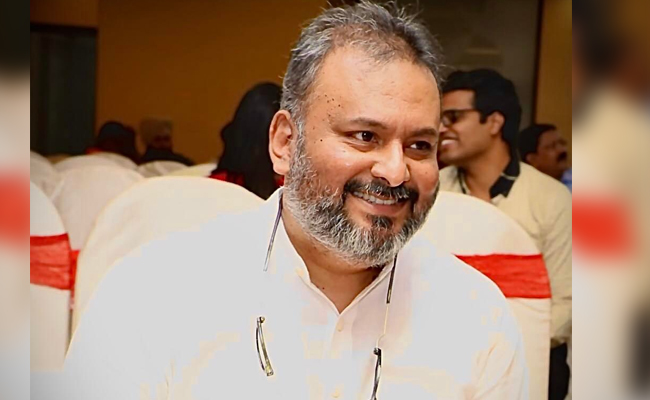
Chennai: Journalist and political commentator Sujit Nair has expressed concern over speculation that the Dravida Munnetra Kazhagam and the All India Anna Dravida Munnetra Kazhagam could explore a post-poll understanding to prevent Vijay-led Tamilaga Vettri Kazhagam from forming the government in Tamil Nadu.
In a social media post, Sujit Nair said the election verdict in Tamil Nadu reflected a clear public demand for political change and argued that the mandate should be respected irrespective of political preferences.
Referring to reports and political discussions surrounding a possible understanding between the DMK and AIADMK, he said he hoped such developments remained only speculative conversations and did not turn into reality.
Nair stated that if such an alliance were to take shape, it would raise serious questions about ideological politics in the country. He said TVK had emerged through a democratic electoral process and that the legitimacy to govern in a parliamentary democracy comes from the people’s verdict.
According to him, attempts to prevent an electoral winner from forming the government through unexpected political arrangements may be constitutionally valid, but many people could view them as politically opportunistic.
He further said that such a move could particularly affect the political image of the DMK, which has historically projected itself around ideology, social justice and opposition politics. Nair said that in ideological terms, the DMK appeared closer to TVK than to the AIADMK, and joining hands with its long-time political rival only to remain in power could weaken its broader political narrative.
He added that the same questions would apply to the AIADMK as well, as the party had spent decades positioning itself against the DMK and such an arrangement could create discomfort among its cadre and supporters.
Drawing a comparison with Maharashtra politics in 2019, Nair said he had expressed similar views when the Shiv Sena formed an alliance with the Indian National Congress and the Nationalist Congress Party after the Assembly elections.
He said post-poll alliances between long-standing political rivals often create a public perception that ideology and electoral mandates become secondary when political power equations come into play.
Nair also said such developments increase public cynicism towards politics and reinforce the belief among voters that ideology is often sidelined after elections.
He maintained that the Tamil Nadu verdict was emphatic and said respecting both the spirit and substance of the mandate was important for the credibility of democratic politics.