UK Court sentences Kerala man to 40 years imprisonment for killing wife and two children
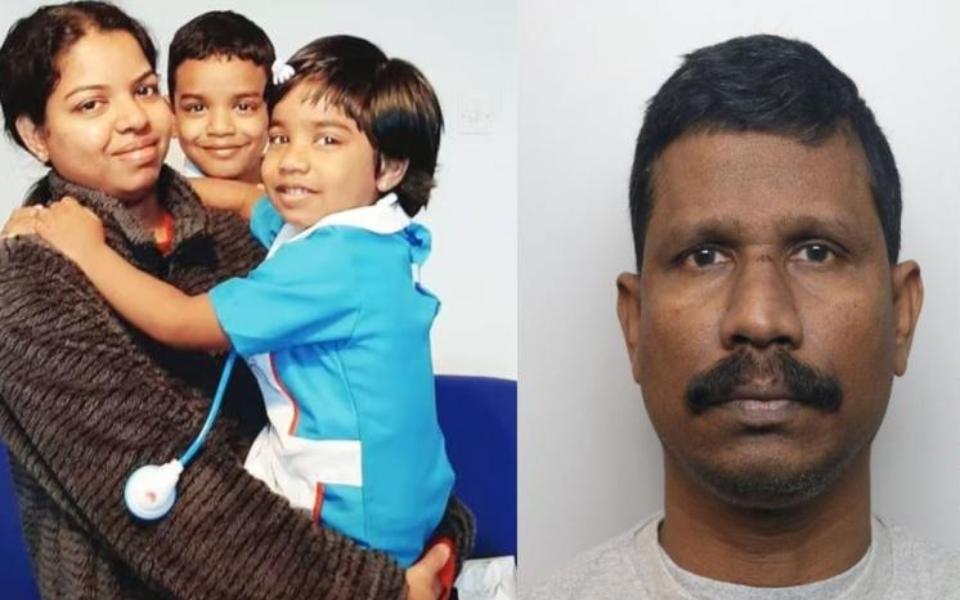
New Delhi: Saju Chelavalel, a 52-year-old native of Kannur district, of Kerala has been sentenced to 40 years in prison by the Northampton Crown Court in the Kettering triple murder case, reported The News Minute.
The court found Saju guilty of killing his wife, Anju Asok, 35, a nurse, along with their two young children, Jeeva Saju, 6, and Janvi Saju, 4, under the influence of alcohol. The incident reportedly happened on December 14, 2022, and the verdict was delivered on Monday, July 3.
Quoting an official statement from the Northampton police, The News Minute wrote, the forensic post-mortem examinations conducted at Leicester Royal Infirmary confirmed that all three victims died due to asphyxiation. Saju had previously pleaded guilty for the triple murder during an earlier hearing at the Northampton Crown Court in April. The court reconvened on July 3 to deliver the sentence, sentencing Saju a life term with a minimum of 40 years to be served in prison.
In reference to an audio recording taken at the time of Anju's death, Justice Pepperall made a comment during the trial: "While you were squeezing the life out of your wife, your children can be heard crying in the background for their mummy. It is clear that they heard what was going on and knew that she was being hurt by you," wrote The News Minute.
As per the report, during the trial, it was revealed that Saju had attempted to contact Anju's family while in prison, as said by a spokesperson representing Anju's family.
The incident happened in December; when the police reached the spot after they received an emergency call, they found Saju holding a knife to his neck, threatening to kill himself. He was brought under control by the police with a Taser. However, Anju and his children were pronounced dead as soon as the officers found them.
Quoting media reports, The News Minute stated that Anju's father expressed satisfaction with the UK court’s decision. During the court proceedings, the police had revealed that Saju committed the crime due to suspicions on Anju.
Saju Chelavalel had previously worked in Saudi Arabia before relocating to England when Anju secured a job there.
Let the Truth be known. If you read VB and like VB, please be a VB Supporter and Help us deliver the Truth to one and all.
Court can reject anticipatory bail but cannot direct accused to surrender: SC
New Delhi (PTI): A court can reject anticipatory bail of an accused but it has no jurisdiction to direct him to surrender before the trial court, the Supreme Court has said.
A bench of Justices J B Pardiwala and Ujjal Bhuyan made the observation while hearing a plea filed by a man accused of cheating and forgery.
"If the court wants to reject the anticipatory bail, it may do so, but the court has no jurisdiction to say that the petitioner should now surrender," the bench said.
The Jharkhand High Court had rejected anticipatory bail plea of the accused and asked him to surrender and seek regular bail.
In this case, a complaint had been filed before a magistrate alleging offences under Sections 323 (voluntarily causing hurt), 420 (cheating), 467 (forgery of valuable security), 468 (forgery for purpose of cheating), 471 (using forged document) and 120B read with 34 of the IPC, in connection with a land dispute.
The high court had dismissed the second anticipatory bail application of the accused on the ground that no new circumstances were shown.
It had relied on its earlier order rejecting his first anticipatory bail plea, in which the court directed the petitioner to surrender before the trial court and seek regular bail in terms of the decision in Satender Kumar Antil v. CBI.
The top court said such a direction was wholly without jurisdiction and said that if a court chooses to reject anticipatory bail, it may do so, but it cannot compel the accused to surrender.