UK may have sufficient herd immunity to COVID-19, says Indian-origin academic's study

London: The UK population may already have developed sufficient levels of herd immunity required to prevent a feared second wave of the coronavirus pandemic in the country, notes an Oxford University study involving Indian-origin academic Professor Sunetra Gupta.
In a paper titled The impact of host resistance on cumulative mortality and the threshold of herd immunity for SARS-CoV-2', Gupta along with three other Oxford University colleagues notes that the herd immunity threshold (HIT) required to prevent a resurgence of the deadly coronavirus may have already been built up due to exposure to seasonal coronaviruses, such as the common cold.
It is widely believed that the herd immunity threshold (HIT) required to prevent a resurgence of SARS-CoV-2 (COVID-19) is in excess of 50 per cent for any epidemiological setting.
Here, we demonstrate that HIT may be greatly reduced if a fraction of the population is unable to transmit the virus due to innate resistance or cross-protection from exposure to seasonal coronaviruses, notes the paper.
These results help to explain the large degree of regional variation observed in seroprevalence and cumulative deaths and suggest that sufficient herd immunity may already be in place to substantially mitigate a potential second wave, it says.
The new theory, which is yet to be peer-reviewed and analysed, suggests that when resistant people mix with non-resistant people, the herd immunity "threshold" drops sharply.
Gupta, a professor of theoretical epidemiology at Oxford University, has previously called on a focus on increased antibody testing to determine the levels of immunity already being built up in the UK population against the deadly virus.
"Given the mounting evidence that exposure to seasonal coronaviruses offers protection against clinical symptoms, it would be reasonable to assume that exposure to SARS-CoV-2 itself would confer a significant degree of clinical immunity," she and her colleagues, Jose Lourenco, Francesco Pinotti and Craig Thompson, note in their study.
"Thus, a second peak may result in far fewer deaths, particularly among those with comorbidities in the younger age classes," they add.
For diseases where a vaccine is available, herd immunity is often calculated with the assumption that everybody has the same level of immunity known as a homogenous model.
But a number of studies into the novel coronavirus, which has claimed over 45,000 lives in the UK, have been focussed on the differing levels of immunity within the population given the lack of a vaccine yet.
Let the Truth be known. If you read VB and like VB, please be a VB Supporter and Help us deliver the Truth to one and all.
Mumbai-Pune Expressway connecting link now fully operational
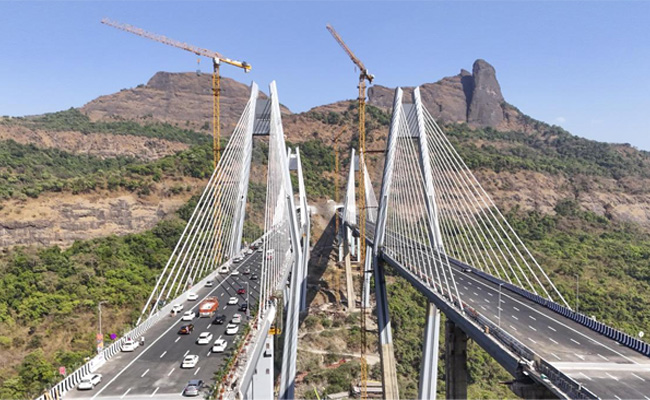
Mumbai (PTI): The Mumbai-bound carriageway of the Mumbai-Pune Expressway connecting link was opened to vehicular traffic on Saturday noon after a delay caused by the dismantling of inauguration infrastructure and cleaning work, a day after the Pune section became operational.
The 13.3 km-long "missing link", which bypasses a section of the Bhor Ghat stretch of the expressway and cuts travel time between Mumbai and Pune by 25 to 30 minutes, was inaugurated a day earlier by Chief Minister Devendra Fadnavis in the presence of Deputy CMs Eknath Shinde and Sunetra Pawar.
The Pune-bound carriageway of the corridor was opened to traffic immediately; however, the Mumbai-bound section remained closed to traffic for several hours after the inauguration.
An official of the Maharashtra State Road Development Corporation told PTI on Saturday that the opening of the Mumbai-bound carriageway was delayed mainly due to the dismantling of the inauguration infrastructure and cleaning work.
The removal of the stage and other decorations was completed in the morning. The work to load and transport the material slightly delayed the opening of the carriageway.
Vehicular movement on the carriageway began after all the remaining material was cleared and road cleaning was completed, the official added.
The expressway control room said that despite significant vehicular movement, the access-controlled highway has not witnessed any major traffic snarls since Friday evening, after the Pune-bound carriageway of the missing link was opened to traffic.
The Missing Link project connects Khopoli (in Raigad) on the Mumbai side to Kusgaon near Lonavala in Pune district and is expected to make the expressway fully access-controlled, easing congestion in the ghat section.
Developed by the MSRDC and dubbed an "engineering marvel", the project includes two tunnels, two viaducts and a cable-stayed bridge over Tiger Valley. It bypasses the steep, accident-prone ghat section, where frequent traffic snarls are reported during weekends and on public holidays.