UK patient 'free' of HIV after stem cell treatment
Second case of its kind in the world
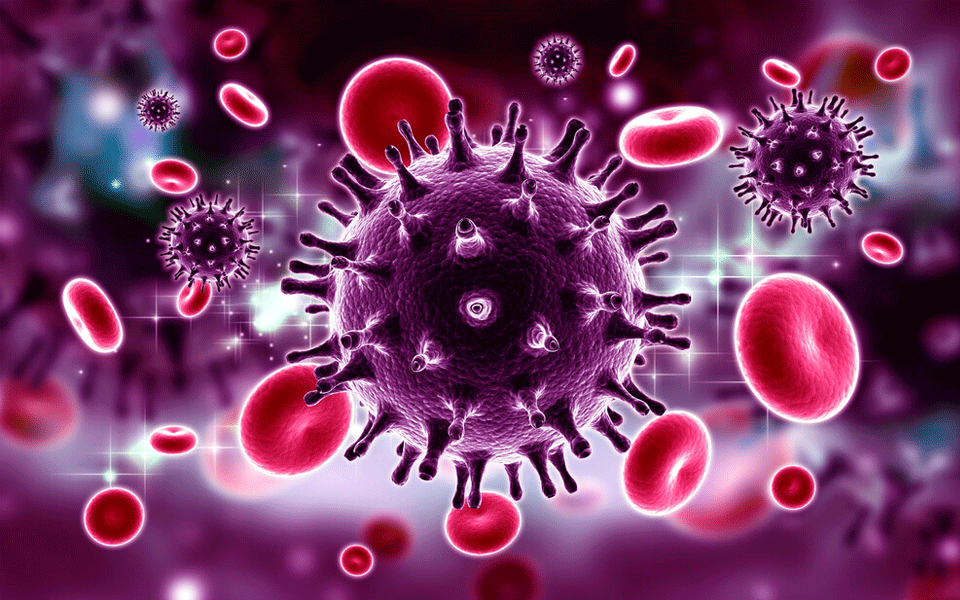
London, Mar 5: A UK-based male patient's HIV has become "undetectable" following a stem cell transplant in only the second case of its kind in the world, scientists led by an Indian-origin researcher reported Tuesday in a study published in the journal Nature.
The 'London patient', who has not been named, was diagnosed with HIV in 2003 and advanced Hodgkin's lymphoma in 2012.
Professor Ravindra Gupta said the patient was treated with stem cell transplants from donors carrying a genetic mutation that prevents expression of an HIV receptor CCR5.
The subject of the new study has been in remission for 18 months after his antiretroviral therapy (ARV) was discontinued, he said.
"At the moment the only way to treat HIV is with medications that suppress the virus, which people need to take for their entire lives, posing a particular challenge in developing countries," said Gupta from University College London (UCL), the study's lead author
"Finding a way to eliminate the virus entirely is an urgent global priority, but is particularly difficult because the virus integrates into the white blood cells of its host," he said in a statement.
The team, which comprised of researchers at UCL and Imperial College London as well as partners at the University of Cambridge and the University of Oxford, said the latest case is a proof of the concept that scientists will one day be able to end AIDS, caused by HIV, but does not mean a cure for HIV has been found.
The case report comes 10 years after the first such case known as the "Berlin Patient".
"By achieving remission in a second patient using a similar approach, we have shown that the Berlin Patient was not an anomaly, and that it really was the treatment approaches that eliminated HIV in these two people," said Gupta.
"Continuing our research, we need to understand if we could knock out this receptor in people with HIV, which may be possible with gene therapy," he added.
Close to 37 million people are living with HIV worldwide, but only 59 per cent are receiving ARV, and drug-resistant HIV is a growing concern.
Almost one million people die annually from HIV-related causes, researchers said.
The report describes a male patient in the UK, who prefers to remain anonymous, and was diagnosed with HIV infection in 2003 and on antiretroviral therapy since 2012.
In 2012, he was diagnosed with advanced Hodgkin's Lymphoma. In addition to chemotherapy, he underwent a haematopoietic stem cell transplant from a donor with two copies of the CCR5 allele in 2016.
CCR5 is the most commonly used receptor by HIV-1. People who have two mutated copies of the CCR5 allele are resistant to the HIV-1 virus strain that uses this receptor, as the virus cannot enter host cells.
Chemotherapy can be effective against HIV as it kills cells that are dividing. Replacing immune cells with those that do not have the CCR5 receptor appears to be key in preventing HIV from rebounding after the treatment.
The transplant was relatively uncomplicated, but with some side effects including mild graft-versus-host disease, a complication of transplants wherein the donor immune cells attack the recipient's immune cells.
The patient remained on ARV for 16 months after the transplant, at which point the clinical team and the patient decided to interrupt ARV therapy to test if the patient was truly in HIV-1 remission.
Regular testing confirmed that the patient's viral load remained undetectable, and he has been in remission for 18 months since ceasing ARV therapy (35 months post-transplant).
The patient's immune cells remain unable to express the CCR5 receptor. He is only the second person documented to be in sustained remission without ARV, the researchers said.
The first, the Berlin Patient, also received a stem cell transplant from a donor with two CCR5 alleles, but to treat leukaemia.
Notable differences were that the Berlin Patient was given two transplants, and underwent total body irradiation, while the UK patient received just one transplant and less intensive chemotherapy.
Both patients experienced mild graft-versus-host disease, which may also have played a role in the loss of HIV-infected cells.
The researchers caution that the approach is not appropriate as a standard HIV treatment due to the toxicity of chemotherapy, but it offers hope for new treatment strategies that might eliminate HIV altogether.
"The treatment we used was different from that used on the Berlin Patient, because it did not involve radiotherapy. Its effectiveness underlines the importance of developing new strategies based on preventing CCR5 expression, said co-author Ian Gabriel, of the Imperial College NHS Trust.
"While it is too early to say with certainty that our patient is now cured of HIV, and doctors will continue to monitor his condition, the apparent success of haematopoietic stem cell transplantation offers hope in the search for a long-awaited cure for HIV/AIDS," added Professor Eduardo Olavarria, from Imperial College London.
The team is presenting the findings at the annual Conference on Retroviruses and Opportunistic Infections (CROI) in Seattle, US this week.
Let the Truth be known. If you read VB and like VB, please be a VB Supporter and Help us deliver the Truth to one and all.
Centre spent Rs 76.13 lakh on print media ads for RSS centenary, reveals RTI

New Delhi: The Union Ministry of Culture allegedly spent Rs 76.13 lakh on print advertisements marking the 100-year celebrations of the Rashtriya Swayamsevak Sangh (RSS), according to a Right to Information (RTI) reply.
The information was sought by RTI activist Ajay Basudev Bose, who filed an application seeking details on expenditure incurred by the ministry for advertisements commemorating the RSS centenary.
Bose shared a picture of the reply from the ministry on his official ‘X’ handle.
“It is informed that an amount of Rs 76,13,129 has been spent on advertisement given in various print media by the Ministry of Culture on the occasion of the completion of 100 years of RSS,” the government’s reply stated.
RTI reply shows Min of Culture Govt of India spent a Whopping Rs 76L,13K,129 on Advertisement in Print Media on occasion of 100 yrs of #RSS
— AJAY Basudev Bose (@AjayBos93388306) April 16, 2026
When Everyone knows RSS is Not Registered & Does not Pay any Tax is it justified to spend Tax Payers Money on such Private event??@RSSorg… pic.twitter.com/dW4IUtdNCg
Bose questioned the expenditure in the post X, “when Everyone knows RSS is Not Registered & Does not Pay any Tax is it justified to spend Tax Payers Money on such Private event??”
Reacting to the development, Karnataka’s IT-BT and Panchayat Raj Minister Priyank Kharge also criticised the spending.
In a post on X, he asked why public money was being used for what he described as a “private ideological project.”
"Modi Sarkar spent Rs 76,13,129 of public money on newspaper advertisements to celebrate 100 years of the RSS. Why is Government spending taxpayers money on an unregistered, non-tax-paying organisation to celebrate their centenary?," he added.
Why is public money being used to serve a private ideological project?
— Priyank Kharge / ಪ್ರಿಯಾಂಕ್ ಖರ್ಗೆ (@PriyankKharge) April 16, 2026
Modi Sarkar spent ₹76,13,129 of public money on newspaper advertisements to celebrate 100 years of the RSS.
Why is Government spending taxpayers money on an unregistered, non-tax-paying organisation to… pic.twitter.com/EoZ6Pim3IM
According to reports, the RSS describes itself as a volunteer-based organisation and has stated that it functions as a body of individuals rather than a registered entity.
Founded by Keshav Baliram Hedgewar in 1925, the organisation is marking its centenary year beginning from Vijaydashami in 2025, with the milestone observed on October 2.