UK planning to offer cheaper, easier visas to clinch trade deal with India: Report
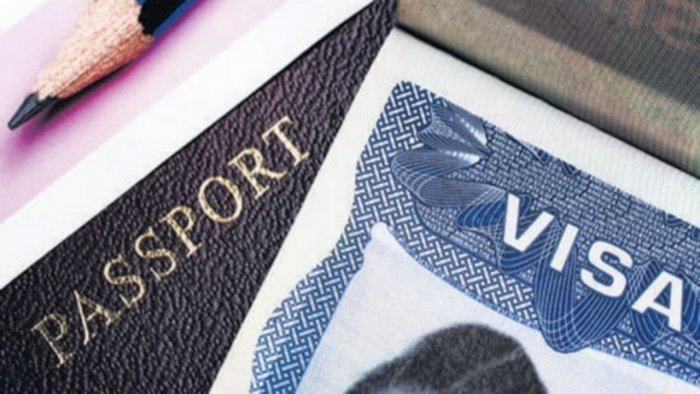
London, Jan 1: The UK is planning to relax immigration rules by offering cheaper and easier visas for Indian tourists, students and professionals, in an attempt to clinch a trade deal with India, a media report said on Saturday.
UK International Trade Secretary Anne-Marie Trevelyan is expected to travel to New Delhi this month, when formal negotiations on a proposed India-UK free trade agreement (FTA) are expected to begin.
Trevelyan is expected to use this visit to open the prospect of relaxing immigration rules for Indian citizens, a key demand from New Delhi, The Times newspaper reported.
While she has the backing of Liz Truss, the Foreign Secretary, who has put securing closer ties with India on top of the government's agenda to counter the growing influence of China, Home Secretary Priti Patel is opposed to this move, the report said.
In May last year, Patel had signed a bespoke' and reciprocal Migration and Mobility Partnership (MMP) with External Affairs Minister S. Jaishankar to have around 3,000 students and professionals a year access work experience benefits in either country.
Under the MMP, both sides have agreed to work towards an April 2022 timeline to bring the new system in place, with work underway in the High Commission in London and the Ministry of External Affairs in New Delhi.
However, under further immigration plans reportedly in the works, one option being looked at is a scheme similar to that agreed as part of the UK's FTA with Australia, which would allow young Indians the chance to come and work in the UK for up to three years.
Another option would be to cut visa fees for students, thereby allowing them to stay in the UK for a period after they graduate, possibly building upon the Graduate Route visa under the points-based immigration rules currently in place, the report said.
There could also be reductions in the fees for work and tourism visas.
At present, it can cost an Indian citizen up to GBP 1,400 for a work visa, while students pay GBP 348 and tourists GBP 95 respectively.
These are in sharp contrast with visa fees for countries such as China, who have to pay significantly less.
Indian-origin peer Lord Karan Bilimoria, the president of the Confederation of British Industry, has been among the most vocal advocates for lowering visa fees for Indians.
That FTA, I hope, will benefit in enhancing bilateral trade and be as comprehensive as possible. Movement of people; reduction of duties and tariffs the tariff on Scotch whisky is 150 per cent, that's got to be reduced drastically; academic collaborations and cross-border research is going to be huge between our countries and partnering on a Green industrial revolution. There is a vast array to really ramp up business and trade between our two countries, he had said.
A senior government source told 'The Times' that there was an acceptance by ministers that the price of a trade deal with India would be to make a generous offer on visas.
The tech and digital space in India are still hugely protectionist and if we could open up even a slither of access, it would put us ahead in the game, a government official was quoted as saying.
The UK government has repeatedly said it wants a deal that slashes barriers for doing business with India.
According to the Department for International Trade, preparations for the launch of negotiations for the UK-India FTA remains underway' since the conclusion of bilateral working groups.
Trevelyan and her Indian counterpart, Commerce and Industry Minister Piyush Goyal, had also held talks during the G-20 trade ministers meeting in Sorrento, Italy, last October to discuss final preparations for the launch of India-UK FTA negotiations this year.
We look forward to launching negotiations early this year. India is projected to become the world's third largest economy by 2050, and a trade deal will open huge opportunities for UK businesses to trade with India's GBP 2 trillion economy, a UK government spokesperson said.
Let the Truth be known. If you read VB and like VB, please be a VB Supporter and Help us deliver the Truth to one and all.
Vartha Bharati–Sankalp predictions align closely with Karnataka bypoll results
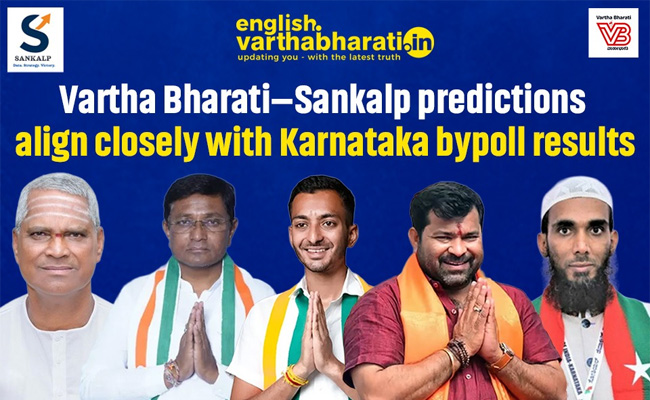
Bengaluru: The Vartha Bharati–Sankalp election analysis has shown a high level of accuracy in predicting the outcome of the recent Karnataka Assembly by-elections held in May 2026, correctly calling winners in both constituencies and closely estimating vote share trends.
The by-elections were held in Bagalkot and Davanagere South, drawing significant political attention as both seats were seen as key tests for the ruling Congress and opposition BJP.
According to the analysis, Vartha Bharati–Sankalp had made three major projections ahead of the results the winning party, vote share percentages, and margin of victory.
In both constituencies, the platform accurately predicted that the Congress would emerge victorious. The outcome matched the projections, with Congress candidates winning in Bagalkot and Davanagere South.
In terms of vote share, the predictions were largely in line with the final results. In Bagalkot, the BJP’s vote share was forecast in the range of 40 to 46 per cent, while the actual figure stood at 42.9 per cent. The Congress vote share, however, exceeded expectations, with the party securing 55.4 per cent against a projected range of 43 to 48 per cent.
The margin of victory in Bagalkot turned out to be significantly higher than anticipated. While the projection had placed the margin between 2,000 and 3,500 votes, the final margin was around 22,332 votes.
In Davanagere South, the predictions also remained largely accurate. The Congress vote share was projected between 43 and 51 per cent, and the final figure stood at 43.9 per cent. The BJP was expected to secure between 42 and 50 per cent but ended with 40.3 per cent.
The analysis had also identified the role of SDPI as a potential spoiler in the constituency. While its vote share was estimated around 6 per cent, the party eventually secured around 12 per cent of the vote.
The margin of victory in Davanagere South was predicted to be between 1,500 and 2,600 votes. The actual margin was higher at around 5,708 votes, though the contest remained relatively close as anticipated.
Overall, the performance of Vartha Bharati–Sankalp stood out for correctly identifying the winning parties in both seats and maintaining close accuracy in vote share estimates, with only limited deviations in specific cases.