UK PM Keir Starmer takes ‘China matters’ message on first Beijing visit
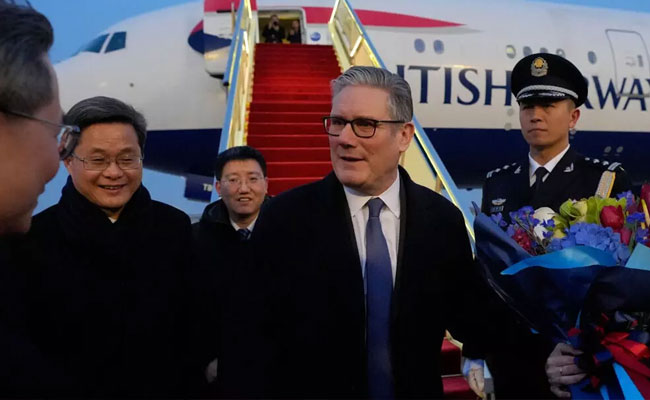
London (PTI): “Like it or not, China matters to the UK,” is the message British Prime Minister Keir Starmer is taking on his visit to Beijing on Wednesday, accompanied by a 60-strong business and cultural delegation.
Downing Street said the visit, which will also cover Shanghai, reflects the UK’s “clear-eyed and realistic” approach to China in terms of opportunities and challenges they pose by continuing to pursue cooperation while “maintaining guardrails” when it comes to the country’s national security.
The Labour Party government is keen to highlight its re-engagement with China with this first visit in eight years, coming close on the heels of a ministerial go-ahead for its controversial new “mega embassy” in London.
“For years, our approach to China has been dogged by inconsistency – blowing hot and cold, from Golden Age to Ice Age. But like it or not, China matters for the UK,” Starmer said in a pre-visit statement.
“As one of the world’s biggest economic players, a strategic and consistent relationship with them is firmly in our national interest. That does not mean turning a blind eye to the challenges they pose – but engaging even where we disagree.
“This is what our allies do, and what I will do: delivering for the public, putting more money in their pockets and keeping them safe through pragmatic, consistent cooperation abroad,” he said.
The UK PM is set to meet President Xi Jinping and Premier Li Qiang in Beijing on Thursday for talks on trade, investment and national security, before travelling to Shanghai for a range of engagements with British and Chinese businesses.
Accompanied by a delegation of leading UK-based businesses, including Tata Motors owned Jaguar Land Rover, sporting institutions, museums and theatre groups, Starmer is expected to push for access in areas such as the financial services sector, creative industries and life sciences.
“However, he will be clear that we will not trade economic cooperation for our national security. He will raise the areas where we disagree with China – being clear that we will always defend our national security and where viewpoints differ, frank and open dialogue is of vital importance,” Downing Street said.
Describing China as the world’s second largest economy, a crucial player in global supply chains and a growing military power, the UK said it is important to engage with its third-largest trading partner which supports 3,70,000 British jobs.
“We want to see trade flourish between us. From financial services to advanced manufacturing and the global energy transition, the UK’s strengths increasingly align with the rapidly evolving Chinese economy,” said Peter Kyle, the Business and Trade Secretary travelling with Starmer.
“The first duty of government is security, and we protect ourselves best through active engagement and pragmatic cooperation, not by shutting the door,” he said.
The visit follows the 2025 Economic and Financial Dialogue (EFD) that the UK’s Department for Business and Trade (DBT) claimed secured 600 million pounds in immediate benefits and the first UK-China Joint Economic and Trade Commission (JETCO) since 2018.
“The UK’s world-leading financial services sector is a cornerstone of our economy. With deep and liquid markets, and the FTSE hitting all-time highs, there are real opportunities for mutually beneficial cooperation with China which supports jobs for working people and growth for businesses across Britain,” said Lucy Rigby, Economic Secretary to the Treasury, also part of the ministerial delegation.
The Opposition Conservatives have criticised Starmer’s approach to China, amid human rights concerns and espionage fears. “Starmer has already surrendered to the Chinese Communist Party over their plan for a spy-hub super embassy in the heart of our capital,” said shadow foreign secretary Priti Patel.
“The evidence is overwhelming that China poses a serious threat to our national security and it is clear Starmer is going to China without any leverage. He lacks the backbone to stand up for Britain and is bending over backwards to appease Beijing,” she said.
Following his trip to China, Starmer is set to travel to Tokyo to meet with Japanese Prime Minister Sanae Takaichi to reinforce the UK-Japan partnership, said to be worth over 100 billion pounds and supporting 2,00,000 UK jobs.
Let the Truth be known. If you read VB and like VB, please be a VB Supporter and Help us deliver the Truth to one and all.
Mamata visits Bhabanipur EVM strong room, warns against counting irregularities
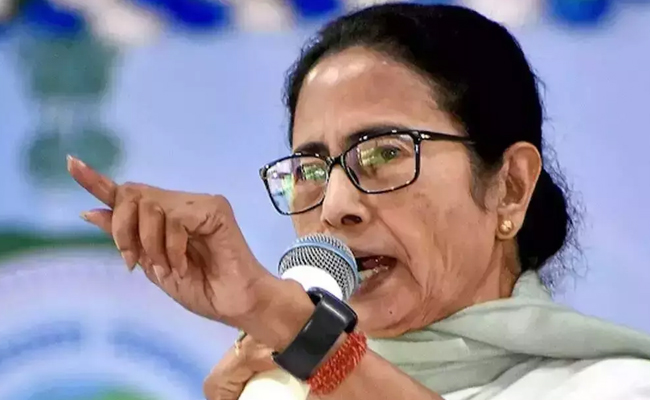
Kolkata (PTI): West Bengal Chief Minister and TMC supremo Mamata Banerjee early Friday warned against any attempt to tamper with the counting process, hours after she visited an EVM strong room in Bhabanipur, alleging possible malpractice.
Banerjee, who emerged around 12:07 am after spending nearly four hours at the counting centre for her Bhabanipur constituency housed in Sakhawat Memorial School in south Kolkata, said only one person would be allowed inside the designated counting area.
"Either the candidate or one agent can stay upstairs. I have also suggested installation of a CCTV camera for the media," she told reporters.
Stressing the need for transparency, she said, "It is essential to maintain transparency. People’s votes must be protected. I rushed here after receiving complaints. The central forces initially did not allow me to enter."
Sounding a stern note ahead of the May 4 counting, she added, "If there is any plan to tamper with the counting process, it will not be tolerated."
On Thursday evening, Banerjee had reached the Bhabanipur Assembly segment counting centre, which houses the strong room for EVMs used in the April 29 polling, citing suspicion of tampering with the machines.
She entered the premises along with her election agent and remained inside for hours, even as Kolkata Mayor and TMC candidate from the Kolkata Port segment Firhad Hakim reached the spot but could not meet her.
"I reached here upon learning that the chief minister has arrived. But I couldn’t meet her since she was already inside the premises, exercising her right as a candidate to visit strong rooms. I wasn’t allowed there. I will not be able to confirm what exactly is transpiring inside," Hakim said.
The development coincided with protests by TMC candidates Kunal Ghosh and Shashi Panja outside the Khudiram Anushilan Kendra in north Kolkata, where they staged a sit-in alleging irregularities and possible tampering of EVMs stored in strong rooms, leading to face-offs between TMC and BJP supporters.
Earlier in a video message, Banerjee had urged party leaders, workers and polling agents to maintain a 24-hour vigil on EVM strong rooms, alleging that the BJP could attempt to tamper with the machines before counting begins.
Her remarks come amid heightened political tension in the state following a fiercely contested Assembly election, with parties closely monitoring arrangements and raising concerns over transparency.