UK says it will buy F-35 jets capable of carrying nuclear bombs
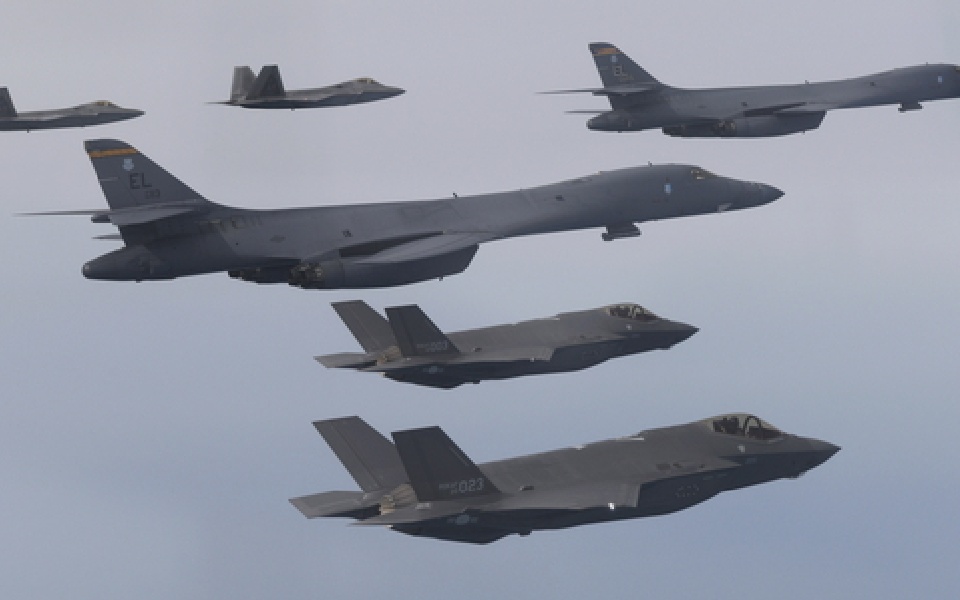
London, Jun 25 (PTI): Prime Minister Keir Starmer on Wednesday announced that the UK will purchase 12 new F-35A fighter jets capable of carrying nuclear warheads after a government defence review warned that Britain must "actively prepare” for a direct attack on the country in a “wartime scenario”.
Starmer informed the ongoing North Atlantic Treaty Organisation (NATO) summit in The Hague of the UK’s plans to acquire the dual-capable aircraft, which can carry both nuclear and conventional weapons.
The UK said it will deploy the jets as part of NATO’s nuclear "Dual Capable Aircraft" mission in support of the alliance’s nuclear deterrence posture.
“In an era of radical uncertainty we can no longer take peace for granted, which is why my government is investing in our national security, ensuring our Armed Forces have the equipment they need and communities up and down the country reap the benefits from our defence dividend,” said Starmer.
“Supporting 100 businesses across the country and more than 20,000 jobs, these F35 dual-capable aircraft will herald a new era for our world-leading Royal Air Force (RAF) and deter hostile threats that threaten the UK and our Allies,” he said.
The Prime Minister reiterated that his commitment to NATO is “unquestionable… but we must all step up to protect the Euro-Atlantic area for generations to come”.
UK-based firms such as BAE Systems, Cobham, GE Aviation, Honeywell, Martin Baker, MBDA, QinetiQ, Rolls Royce, Leonardo UK, Ultra Electronics and EDM Limited all play a vital role in the supply of stealth fighter jets.
The new fast jets will be based at RAF Marham, with the government expected to procure 138 F35s over the lifetime of the programme. The procurement of 12 F-35A rather than 12 F-35B as part of the next procurement package will deliver a saving of up to 25 per cent per aircraft for the taxpayer, Downing Street said.
The announcement came as Britain’s newly published national security strategy warned of the “growing” threat to the UK from nuclear weapons, adding that the “proliferation of nuclear and disruptive technology” meant the UK needed to adapt its approach to national security.
“The Strategic Defence Review recognised that the UK is confronting a new era of threat, including rising nuclear risks. It recommended that the UK further strengthen our commitment to effective deterrence and our partnership with our NATO Allies, building on our unique role as the only European power to pledge our nuclear deterrent to defend our NATO allies,” the Downing Street statement said.
The purchase of a new fleet marks the first time since the retirement of the Tornado fleet in 1998 that the UK will have a plane capable of dropping tactical nuclear weapons on the enemy.
UK Defence Secretary John Healey MP said: “The Strategic Defence Review confirmed we face new nuclear risks, with other states increasing, modernising and diversifying their nuclear arsenals. And it recommended a new UK role in our collective defence and deterrence through a NATO-first approach.
“This commitment is an embodiment of NATO first, strengthening the alliance while at the same time using defence as an engine for growth to create jobs across in the UK.”
The UK's defence review also flagged that threats from other countries were on the rise, and that the UK had been "directly threatened by hostile activities including assassination, intimidation, espionage, sabotage, cyber-attacks and other forms of democratic interference".
Let the Truth be known. If you read VB and like VB, please be a VB Supporter and Help us deliver the Truth to one and all.
Two injuries, one DNF, a DQ as India end messy World Relays campaign
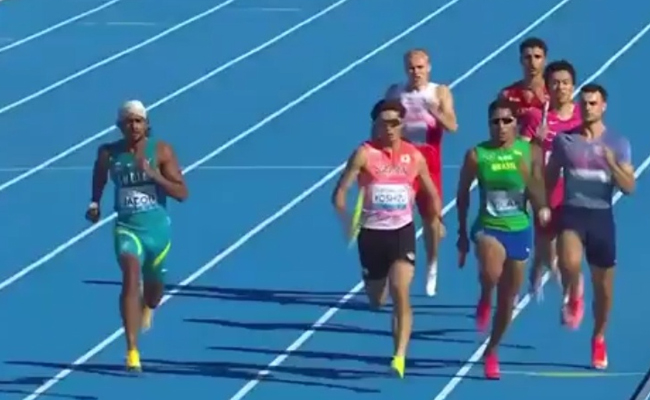
Gaborone (Botswana) (PTI): Amoj Jacob and Ragul Kumar got injured during the men's 4x400m and 4x100 races respectively as India ended their World Athletics Relays campaign in disappointment on the second day of competitions here on Sunday.
The Indian camp had high hopes of making the 2027 World Championships in the men's 4x400m relay but the team did not finish (DNF) the race as Jacob suffered cramps and pulled out of the race after taking the baton from the first leg runner Dharamveer Choudhary. Rajesh Ramesh and Vishal TK were to run in the third and fourth legs.
Those teams which could not qualify for the 2027 Beijing World Championships by reaching the final round of each of the six relay events on Saturday were given another chance in the second qualification round on Sunday.
The top two teams in each of the two heats (in all six relay events) booked the Beijing ticket on Sunday.
India will now have to try and qualify for the World Championships through the Top Lists of the World Athletics, which is a long and tedious process.
In the men's 4x100m race, third leg runner Ragul Kumar fell down the track after failing to hand over the baton inside the exchange zone to fourth leg runner Gurindervir Singh, which clearly showed the lack of coordination among the runners.
Harsh Santosh Raut and Animesh Kujur ran the first two legs.
The Indian quartet was disqualified and Kumar was seen being taken away from the Field of Play with the help of the volunteers.
It was a comedy of errors in the case of the women's 4x100m race, which saw the baton being dropped during an exchange between first leg runner Tamanna and second runner Nithya Gandhe, though the Indians finished the race in 53.09 seconds.
Gandhe started running quite a distance, but after realising that the baton was not in her hand, she turned and ran back to pick it up.
The only silver-lining for the Indian contingent was the national record time in the mixed 4x100m relay race, though the quartet of Ragul Kumar, Nithya Gandhe, Animesh Kujur and Sneha SS finished sixth in heat number two with a time of 41.35 seconds, bettering the previous national mark of 42.30 seconds set in March in Chandigarh.
The mixed 4x400m relay quartet of Theerthesh P Shetty, Kumari Saloni, Nihal William and Rashdeep Kaur ended at fifth in heat number one with a time of 3 minutes and 19.40 seconds.
On Saturday, all the five Indian relay teams had failed to make it to the respective final rounds and thus missed out on the 2027 World Championships berths.