Ukraine retakes key Kyiv suburb; battle for Mariupol rages
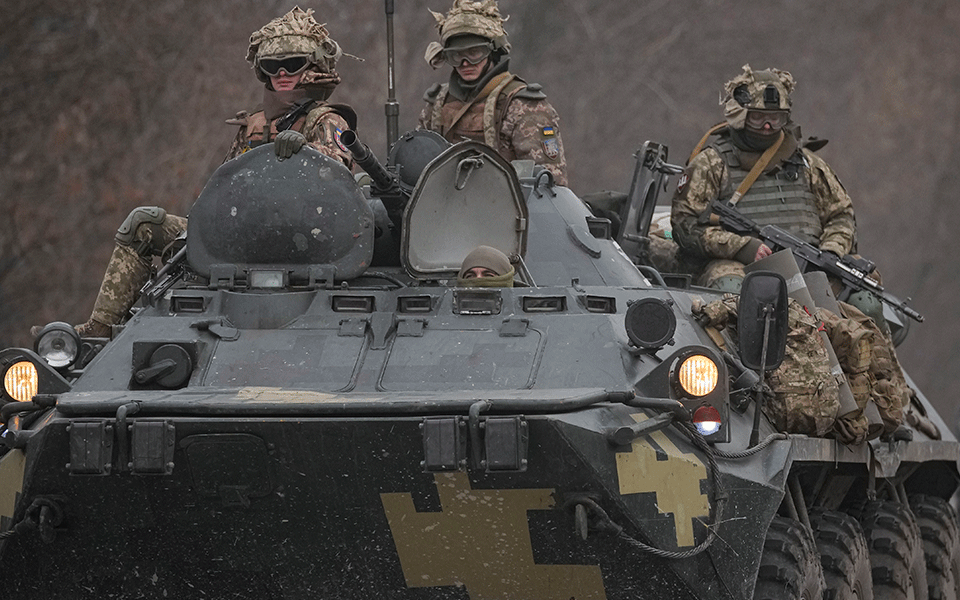
Kyiv (AP): Ukraine said it retook a strategically important suburb of Kyiv on Tuesday, as Russian forces squeezed other areas near the capital and pressed their attack on the embattled southern port of Mariupol.
Explosions and bursts of gunfire shook Kyiv, and black smoke rose from a spot in the north. Intensified artillery fire could be heard from the northwest, where Russia has sought to encircle and capture several suburban areas of the capital, a crucial target.
Residents sheltered at home or underground under a 35-hour curfew imposed by city authorities that runs to Wednesday morning.
Russian forces also continued their siege of Mariupol after the southern port city's defenders refused demands to surrender, with fleeing civilians describing relentless bombardments and corpses lying in the streets. But the Kremlin's ground offensive in other parts of the country advanced slowly or not at all, knocked back by lethal hit-and-run attacks by the Ukrainians.
Early Tuesday, Ukrainian troops drove Russian forces out of the Kyiv suburb of Makariv after a fierce battle, Ukraine's Defense Ministry said. The regained territory allowed Ukrainian forces to retake control of a key highway and block Russian troops from surrounding Kyiv from the northwest.
Still, the Defense Ministry said Russian forces were able to partially take other northwest suburbs, Bucha, Hostomel and Irpin, some of which had been under attack almost since Russia's military invaded almost a month ago.
Russia's invasion has driven more than 10 million people from their homes, almost a quarter of Ukraine's pre-war population, according to the United Nations. The U.N. has confirmed 953 civilian deaths while saying the real toll is probably much higher.
Estimates of Russian military casualties in the grinding war have been hard to come by and vary, but even conservative figures by Western officials are in the low thousands.
Russia has not given an update since it said March 2 that 498 soldiers had been killed in action in Ukraine. Russia's pro-Kremlin Komsomolskaya Pravda newspaper, citing the Defense Ministry, briefly reported Monday that almost 10,000 Russian soldiers had been killed. The report was quickly removed, and newspaper blamed hackers. The Kremlin refused to comment on Tuesday.
Beyond the terrible human toll, the war has shaken the post-Cold War global security consensus, imperiled the global supply of key crops including wheat, and repeatedly raised worries it could set off a nuclear accident. Ukraine's natural resources minister said wildfires near the Chernobyl nuclear power plant have been extinguished and radiation levels in the area are within norms. Fires are not uncommon in the area, but raise concern about the potential release of radiation from fallout from the 1986 explosion and fire at the plant.
Concerns have been expressed for safety at the decommissioned plant since it was seized by Russian forces last month. The power supply was temporarily cut amid fighting earlier this month, and Ukraine's nuclear regulatory agency said Monday that radiation monitors around the plant had stopped working.
Facing unexpectedly stiff resistance, Russian President Vladimir Putin's forces are increasingly concentrating their air power and artillery on Ukraine's cities and the civilians living there. A senior U.S. defense official, speaking on condition of anonymity to discuss the military's assessment, said Russia had increased its air sorties, carrying out as many as 300 over a 24-hour period.
US and British officials say Kyiv remains Russia's primary objective. The bulk of Moscow's forces remain miles from the center, but missiles and artillery have destroyed apartment buildings and a large shopping mall, which was left a smoking ruin after being hit late Sunday by strikes that killed eight people, according to emergency officials.
US President Joe Biden, who is heading to Europe later in the week to meet with allies, suggested Monday evening that worse may be still to come.
Putin's back is against the wall, Biden said. He wasn't anticipating the extent or the strength of our unity. And the more his back is against the wall, the greater the severity of the tactics he may employ."
Biden reiterated accusations that Putin is considering resorting to using chemical or biological weapons, though Pentagon spokesman John Kirby said Tuesday that the United States has seen no evidence to suggest that use of such weapons was imminent.
Talks to end the fighting have continued by video but failed to bridge the chasm between the two sides. Ukrainian President Volodymyr Zelenskyy told Ukrainian television late Monday that he would be prepared to consider waiving any bid by Ukraine to join NATO - a key Russian demand - in exchange for a cease-fire, the withdrawal of Russian troops and a guarantee of Ukraine's security.
Zelenskyy also suggested Kyiv would be open to future discussions on the status of Crimea, which Russia seized in 2014, and areas of the eastern Donbas region held by Russian-backed separatists. But he said that was a topic for another time.
As part of a series of addresses to foreign legislatures to drum up support for Ukraine, Zelenskyy spoke to Italian lawmakers on Tuesday, telling them that the besieged port of Mariupol had been utterly destroyed in the Russian onslaught. He also spoke to Pope Francis.
Imagine a Genoa completely burned down, he said to rapt lawmakers, citing an Italian port city of a similar size. Mariupol officials said on March 15 that at least 2,300 people had died in the siege, and they have not given an update since. Zelenskyy said 117 children had been killed in the war so far.
Some people managed to flee Mariupol, where weeks of Russian bombardment has cut off electricity, water and food supplies and severed communication with the outside world. The city council said Tuesday that more than 1,100 people who had escaped the besieged city were on their way in a convoy of buses to another city to Mariupol's northwest.
But the Red Cross said a humanitarian aid convoy trying to reach the embattled city with desperately needed supplies still had not been able to enter.
Perched on the Sea of Azov, Mariupol is a crucial port for Ukraine and lies along a stretch of territory between Russia and Crimea. The siege of Mariupol has cut the city off from the sea and allowed Russia to establish a land corridor to Crimea.
But it's not clear how much of the city it holds, with fleeing residents saying fighting continues street by street. Ukraine's Defense Ministry said Tuesday that their forces were still defending the city and had destroyed a Russian patrol boat and electronic warfare complex. Britain's Defense Ministry said its intelligence showed that Ukrainian forces continue to repulse Russian attempts to occupy the city.
Those who have made it out of Mariupol told of a devastated city.
Mariupol is almost 99% destroyed, said 39-year-old Viktoria Totsen, who managed to escape the city and cross into Poland. They bombed us for the past 20 days. During the last five days the planes were flying over us every five seconds and dropped bombs everywhere - on residential buildings, kindergartens, art schools, everywhere.
In all, more than 8,000 people escaped to safer areas Monday through humanitarian corridors, including about 3,000 from Mariupol, Deputy Prime Minister Iryna Vereshchuk said.
Overall, more than 3.5 million people have fled Ukraine, while another 6.5 million have been displaced inside the country.
Matthew Saltmarsh, a spokesperson for the U.N. refugee agency, called the speed and scale of people fleeing danger in Ukraine "unprecedented in recent memory. (AP)
Let the Truth be known. If you read VB and like VB, please be a VB Supporter and Help us deliver the Truth to one and all.
India bans sugar exports till Sept 30
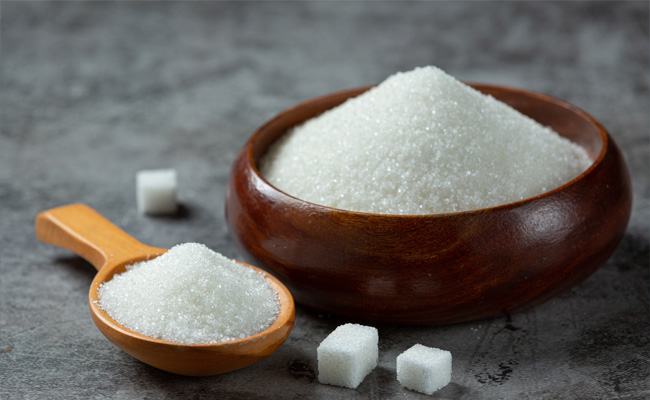
New Delhi (PTI): India has banned the export of sugar till September 30 this year, according to a government notification.
The notification issued by the Directorate General of Foreign Trade (DGFT) on May 13 said this order does not apply to sugar being exported to the European Union and the US under the tariff rate quota scheme.
The order is also not applicable to the shipments under the advance authorisation scheme, government-to-government exports and consignments already in the physical export pipeline.
"The export policy of Sugar (Raw Sugar, White Sugar and Refined Sugar)... is amended from 'Restricted' to 'Prohibited' with immediate effect till September 30, 2026, or until further orders, whichever is earlier," the DGFT said.