Ukrainian refugee fatally stabbed on Charlotte light rail by homeless ex-convict
CCTV footage sparks outrage

Charlotte: A chilling CCTV video has emerged showing the fatal stabbing of a 23-year-old Ukrainian refugee, Iryna Zarutska, aboard a Charlotte light rail train. The disturbing footage, widely circulated on social media, captures the random and unprovoked attack by a homeless ex-convict, 34-year-old Decarlos Brown Jr.
The incident occurred on the Lynx Blue Line on the night of August 22, as Zarutska, dressed in her pizzeria uniform, boarded the train at 9:46 p.m. According to the Charlotte-Mecklenburg Police Department (CMPD), she sat down and appeared focused on her phone, unaware of the danger lurking behind her.
Just four minutes later, Brown pulled out a folding knife and stabbed Zarutska three times, including once in the neck. The video reportedly shows him calmly walking through the train car, removing his sweatshirt, and standing near the exit doors as blood dripped from his hands. Zarutska collapsed in her seat, clutching her neck. She was later pronounced dead on the train.
Brown exited at the next station, where police recovered the weapon near the platform. He was treated for a hand injury at a hospital before being arrested and charged with first-degree murder.
Court records reveal that Brown has a lengthy criminal history, including prior arrests for robbery with a dangerous weapon, larceny, and communicating threats. He served five years in prison for a previous armed robbery. In January, he was also charged with misusing 911 after allegedly claiming he was being controlled by “man-made material” inside his body.
The Charlotte Area Transit System (CATS) has since responded by announcing a series of safety upgrades, including:
1. Hiring a chief safety and security officer
2. Tripling the public transit safety budget
3. Upgrading surveillance cameras throughout the system
The Charlotte City Council is scheduled to review additional safety measures, including expanded police presence on public transit, at a meeting on September 22.
Zarutska had recently arrived in the United States after fleeing war-torn Ukraine, seeking a safe and hopeful future. Her family has set up a GoFundMe campaign, which has already raised over $38,000, to help with funeral expenses and support during this tragedy.
The CMPD investigation remains ongoing as authorities work to determine a motive for the attack.
She came to this country to be safe.
— Jennifer Coffindaffer (@CoffindafferFBI) September 7, 2025
She came here to escape war.
In a twisted irony, Iryna Zarutska was fatally stabbed, including once in the neck, as she commuted aboard a North Carolina train.
She was so very beautiful.
Please, if it can be avoided, don't sit with… pic.twitter.com/PMGEWn8vPx
Let the Truth be known. If you read VB and like VB, please be a VB Supporter and Help us deliver the Truth to one and all.
Austrian police detain suspect in case of rat poison found in baby food jars on supermarket shelves
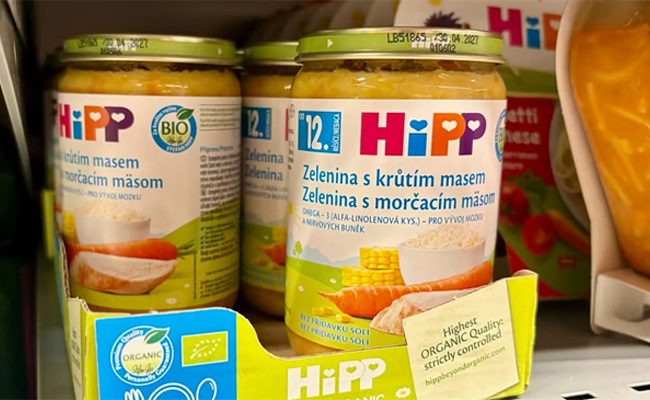
Vienna (AP): Police in eastern Austria say a 39-year-old suspect has been arrested after rat poison turned up in some HiPP baby food jars on supermarket shelves in central Europe.
HiPP, which recalled some of its baby food jars in Austria, Slovakia and the Czech Republic after the case came to light last month, said in a statement Saturday it was “greatly relieved” by the arrest, and would provide further updates as verified details come in.
The Burgenland State Criminal Police Office, under the direction of prosecutors, said a probe was launched after poison turned up in a baby food jar purchased at a supermarket in the city of Eisenstadt on April 18.
It said the suspect was being questioned, and that no further details would be immediately provided. The Burgenland public prosecutor's office has announced an investigation into suspected “intentional endangerment of the public.”
The Austrian Press Agency reported that an expert report on the toxicity of the poison was pending. A total of five tampered baby food jars were seized before they could be consumed, APA reported.
Authorities said previously they believe the tampering occurred in 190-gram (6.7-ounce) jars of baby food made with carrots and potatoes for 5-month-olds that were sold from SPAR supermarkets in Austria.
HiPP responded by recalling all of its baby food jars sold at SPAR supermarkets — which include SPAR, EUROSPAR, INTERSPAR and Maximarkt stores — in Austria as a precaution. Vendors in Slovakia and the Czech Republic also removed all of the brand's baby jars from sale.
The company said the recall was not due to any product or quality defect on its part, and said the jars left its facility in “perfect condition.”
Police said a customer at the time of the discovery had reported that a jar appeared to have been tampered with, but no one had consumed the baby food.