UN body says Israeli forces killed over 1,000 aid-seekers in Gaza since May, as hunger worsens
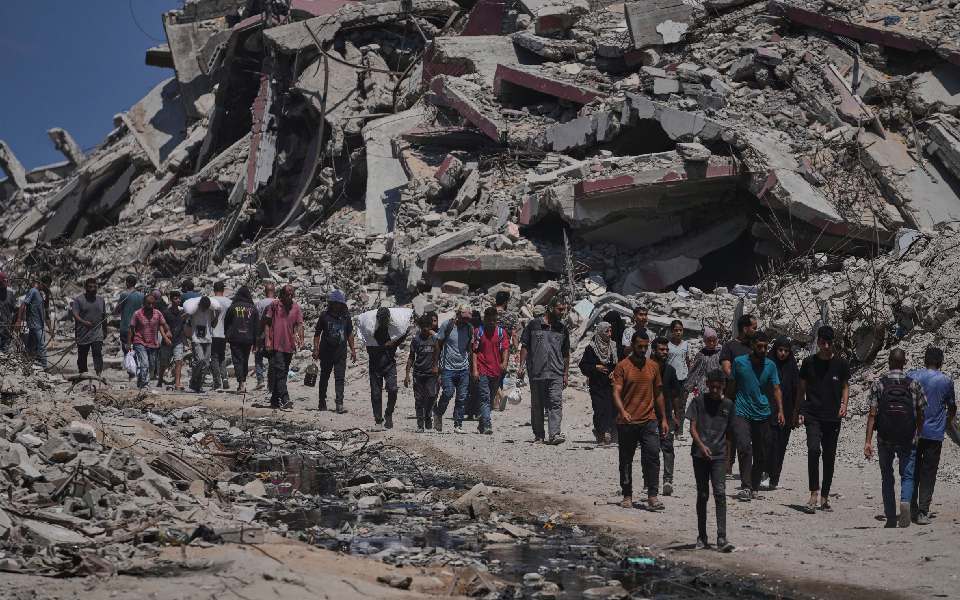
Deir al-Balah (Gaza Strip), Jul 22 (AP): More than 1,000 Palestinians have been killed by Israeli forces since May while trying to get food in the Gaza Strip, mostly near aid sites run by an American contractor, the UN human rights office said Tuesday. Israeli strikes killed 25 people across Gaza, according to local health officials.
Desperation is mounting in the territory of more than 2 million, which experts say is at risk of famine because of Israel's blockade and nearly two-year offensive. A breakdown of law and order has led to widespread looting and contributed to chaos and violence around aid deliveries.
Israel accuses Hamas of siphoning off aid — without providing evidence of widespread diversion — and blames UN agencies for failing to deliver food it has allowed in. The military says it has only fired warning shots near aid sites. The Gaza Humanitarian Foundation, an Israeli-backed American contractor, rejected what it said were “false and exaggerated statistics” from the United Nations.
Gaza's Health Ministry, which is part of the Hamas-run government and staffed by medical professionals, said Tuesday that 101 people, including 80 children, have died in recent days from starvation. During hunger crises, people often die from a combination of malnutrition, illness and deprivation.
Israel eased a 2½ month blockade in May, allowing a trickle of aid in through the long-standing UN-run system and the newly created GHF. Aid groups say it's not nearly enough.
'I do it for my children'
Dozens of Palestinians lined up on Tuesday outside a charity kitchen in Gaza City, hoping for a bowl of watery tomato soup. The lucky ones got small chunks of eggplant. As supplies ran out, people holding pots pushed and shoved to get to the front.
Nadia Mdoukh, a pregnant woman who was displaced from her home and lives in a tent with her husband and three children, said that she worries about being shoved or trampled on, and about heat stroke as daytime temperatures hover above 90 F (32 C).
“I do it for my children," she said. “This is famine — there is no bread or flour.”
The UN World Food Programme says Gaza's hunger crisis has reached “new and astonishing levels of desperation”. Ross Smith, the agency's director for emergencies, told reporters Monday that nearly 100,000 women and children are suffering from severe acute malnutrition, and a third of Gaza's population isn't eating for multiple days in a row.
MedGlobal, a charity working in Gaza, said that five children as young as three months had died from starvation in the past three days.
“This is a deliberate and human-made disaster," said Joseph Belliveau, its executive director. "Those children died because there is not enough food in Gaza and not enough medicines, including IV fluids and therapeutic formula, to revive them.”
The charity said that food is in such short supply that its own staff suffer dizziness and headaches.
Aid delivery model criticised
Of the 1,054 people killed while trying to get food since late May, 766 were killed while heading to sites run by the Israeli- and US-backed Gaza Humanitarian Foundation, according to the UN human rights office. The others were killed when gunfire erupted around UN convoys or aid sites.
Thameen al-Kheetan, a spokesperson for the UN rights office, says its figures come from “multiple reliable sources on the ground,” including medics, humanitarian and human rights organisations. He said the numbers were still being verified according to the office's strict methodology.
Palestinian witnesses and health officials say Israeli forces regularly fire toward crowds of thousands of people heading to the GHF sites. The military says it has only fired warning shots, and GHF says its armed contractors have only fired into the air on a few occasions to try to prevent stampedes.
A joint statement from 28 Western-aligned countries on Monday condemned the “the drip feeding of aid and the inhumane killing of civilians”.
“The Israeli government's aid delivery model is dangerous, fuels instability and deprives Gazans of human dignity,” read the statement, which was signed by the United Kingdom, France and other countries friendly to Israel. “The Israeli government's denial of essential humanitarian assistance to the civilian population is unacceptable.”
Israel and the United States rejected the statement, blaming Hamas for prolonging the war by not accepting Israeli terms for a ceasefire and the release of hostages abducted in the fighter-led attack on southern Israel on Oct 7, 2023, which triggered the fighting.
Hamas has said it will only release the remaining hostages in return for a lasting ceasefire and an Israeli withdrawal. Israel says it will keep fighting until Hamas has been defeated or disarmed.
Strikes on tents sheltering the displaced
Israeli strikes killed at least 25 people across Gaza on Tuesday, according to local health officials.
One strike hit tents sheltering displaced people in the built-up seaside Shati refugee camp in Gaza City, killing at least 12 people, according to Shifa Hospital, which received the casualties. The Israeli military said that it wasn't aware of such a strike by its forces.
The dead included three women and three children, hospital director Dr Mohamed Abu Selmiya told The Associated Press. Thirty-eight other Palestinians were wounded, he said.
An overnight strike that hit crowds of Palestinians waiting for aid trucks in Gaza City killed eight, hospitals said. At least 118 were wounded, according to the Palestinian Red Crescent.
“A bag of flour covered in blood and death," said Mohammed Issam, who was in the crowd and said some people were run over by trucks in the chaos. "How long will this humiliation continue?”
The Israeli military had no immediate comment on that strike. Israel blames the deaths of Palestinian civilians on Hamas, because the fighters operate in densely populated areas.
Israel renewed its offensive in March with a surprise bombardment after ending an earlier ceasefire. Talks on another truce have dragged on for weeks despite pressure from US President Donald Trump.
Hamas-led fighters abducted 251 people in the Oct 7 attack, and killed around 1,200 people. Fewer than half of the 50 hostages still in Gaza are believed to be alive.
More than 59,000 Palestinians have been killed during the war, according to Gaza's Health Ministry. Its count doesn't distinguish between fighters and civilians, but the ministry says that more than half of the dead are women and children. The UN and other international organisations see it as the most reliable source of data on casualties.
Let the Truth be known. If you read VB and like VB, please be a VB Supporter and Help us deliver the Truth to one and all.
India-bound LPG tanker clears Hormuz
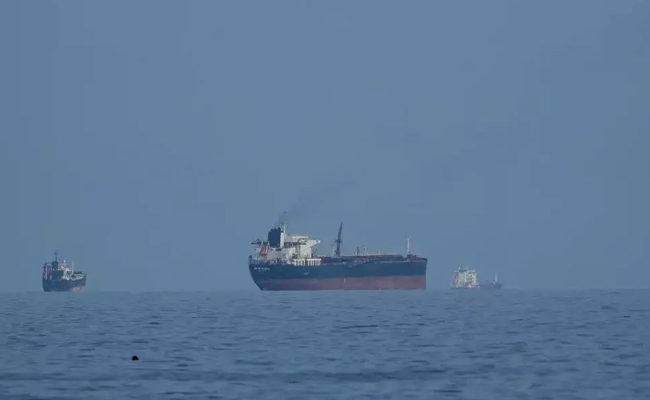
New Delhi (PTI): A tanker carrying liquefied petroleum gas (LPG) for India has sailed out of the Strait of Hormuz and is now headed towards the country, an official statement said on Sunday.
The Marshall Islands-flagged LPG carrier MT Sarv Shakti, loaded with 46,313 tonnes of LPG and staffed by 20 crew, including 18 Indians, cleared the key shipping chokepoint on May 2 and is expected to reach Visakhapatnam on May 13, it said.
The cargo -- enough to meet half a days requirement of the country -- will partly tide over supply constraints being faced since the start of the West Asia conflict more than two months back.
Ship-tracking data showed its position in Oman Gulf on Sunday evening.
The very large gas carrier has previously made runs between the Persian Gulf and Indian ports, has been chartered by state-owned Indian Oil Corporation (IOC).
Sarv Shakti is the first India-linked tanker to cross the war zone since a weeks-old US blockade of ships tied to Iran began, pushing transits through Hormuz back down to almost zero.
There are as many as 14 Indian flagged or India-owned vessels still stranded on the west side of the Strait of Hormuz.
The statement said no incident involving Indian-flagged vessels has been reported in the past 24 hours. The Ministry of Ports, Shipping and Waterways is working closely with the Ministry of External Affairs, Indian missions and maritime stakeholders to ensure crew welfare and uninterrupted operations.
The Directorate General of Shipping (DG Shipping) control room has handled 8,373 calls and more than 17,965 emails since activation, including 38 calls and 127 emails in the last 24 hours.
India has also facilitated the repatriation of more than 2,953 seafarers so far, including 31 in the past day from across the Gulf region.
Port operations across the country remain normal with no congestion reported, the statement added.