UN: India calls on international community to act together against ISIS, Al Qaeda
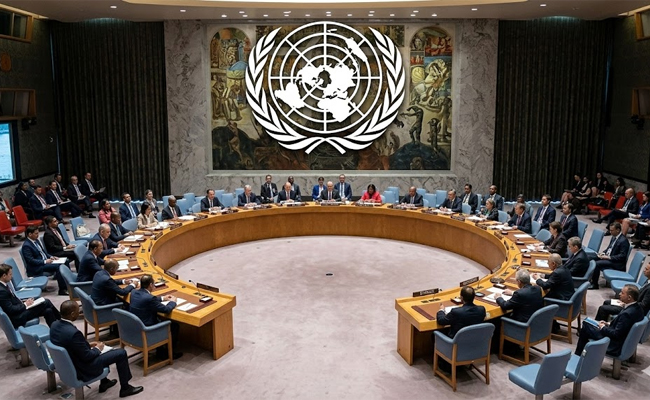
United Nations (PTI): India has called on the international community to act together against ISIS and Al Qaeda and their proxies, underlining that terrorism is an “existential threat” to international peace and security.
“Terrorism is an existential threat to international peace and security. It knows no borders, nationality, or race, and is a challenge that the international community must combat collectively,” First Secretary in the Permanent Mission of India to the UN Raghoo Puri said on Wednesday.
In remarks to the United Nations Office of Counter-Terrorism (UNOCT) annual ambassadorial level briefing to Member States, Puri recalled the April 2025 terror attack in Jammu and Kashmir’s Pahalgam, carried out by The Resistance Front, a proxy of Pakistan-based Lashkar-e-Taiba, a UN listed terror organisation. The terror attack led to the loss of lives of 26 tourists.
ALSO READ: 'Father didn't know minor son took car', says court, grants bail to businessman in accident case
“We must act together against ISIS and Al Qaeda and their proxies,” he said, adding that as a country which itself has been a victim of cross-border terrorism for the past nearly three decades, “India is acutely aware of the socio-economic and human cost of terrorism, especially for its victims.”
India added its voice in stressing on the importance of the Global Counter Terrorism Strategy (GCTS) as a central instrument for multilateral cooperation.
Puri said India will remain steadfast and engaged in the consultations for the 9th review of the GCTS, assuring full cooperation to co-facilitators Finland and Morocco during negotiations in the process.
Puri also highlighted that as Chair of the Counter Terrorism Committee in 2022, India has striven to bring these principles into the counter-terrorism architecture of the UN and into the debate on terrorism at the United Nations.
“Our follow up initiatives both in New York and around the world stand testimony to our commitment,” including the ‘Delhi Declaration’ - a landmark document to deal with the issue of countering the use of new and emerging technologies for terrorist purposes, an issue Puri said is of acute importance for several Member States.
In October 2022, the Security Council Counter-Terrorism Committee (CTC), chaired by India that year, had organised a special meeting in New Delhi and Mumbai on the overarching theme of ‘Countering the use of new and emerging technologies for terrorist purposes’.
As an outcome of the special meeting, the committee had adopted the ‘Delhi Declaration’ on countering the use of new and emerging technologies for terrorist purposes.
India continues to work closely with the UN via its various entities to build capacity and make its partners future ready to take on the ever-evolving scourge of terrorism, he said.
Let the Truth be known. If you read VB and like VB, please be a VB Supporter and Help us deliver the Truth to one and all.
Rupee settles 1 paisa higher to close at 94.15 against US dollar

Mumbai (PTI): The rupee settled with gains of just one paisa to close at 94.15 against the US dollar on Monday, as rising global uncertainty, escalating tensions in West Asia and soaring crude oil prices weighed on investor sentiments.
Forex traders said the INR/USD pair pared its initial losses, but the overall bias remains negative as FII sell-off and elevated crude oil prices restricted the gains for the local unit.
At the interbank foreign exchange market, the rupee opened at 94.25 against the US dollar, and touched an intraday high of 94.11 and a low of 94.28 against the greenback during the day.
At the end of Monday's trading session, the rupee was quoted at 94.15, registering a gain of just 1 paisa over its previous close.
On Friday, the rupee extended its losing streak for the fifth day in a row, depreciating 15 paise to close at 94.16 against the US dollar.
"The rupee snapped a five-session losing streak, rebounding in tandem with a rally across regional currencies. However, the mood remains apprehensive as the market braces for a potential RBI intervention around 94.30 and higher crude oil prices," said Dilip Parmar – Senior Research Analyst, HDFC Securities.
On the charts, the USDINR pair has reclaimed its upward momentum, carving out a classic bullish structure of higher highs and lows on the daily time frame, he said, adding that for the coming sessions, 93.80 serves as a support, with 94.40 acting as the primary hurdle.
Meanwhile, the dollar index, which gauges the greenback's strength against a basket of six currencies, was down 0.21 per cent at 98.32.
Brent crude, the global oil benchmark, was trading higher by 2.36 per cent at USD 107.82 per barrel in futures trade.
On the domestic equity market front, Sensex jumped 639.42 points to settle at 77,303.63, while the Nifty surged 194.75 points to 24,092.70.
Foreign Institutional Investors offloaded equities worth Rs 1,151.48 crore on Monday, according to exchange data.
Meanwhile, India's forex reserves jumped by USD 2.362 billion to USD 703.308 billion during the week ended April 17, the Reserve Bank of India (RBI) said on Friday.
In the previous reporting week, the forex kitty had increased by USD 3.825 billion to USD 700.946 billion.