UN peacekeeper killed, four wounded in Mali
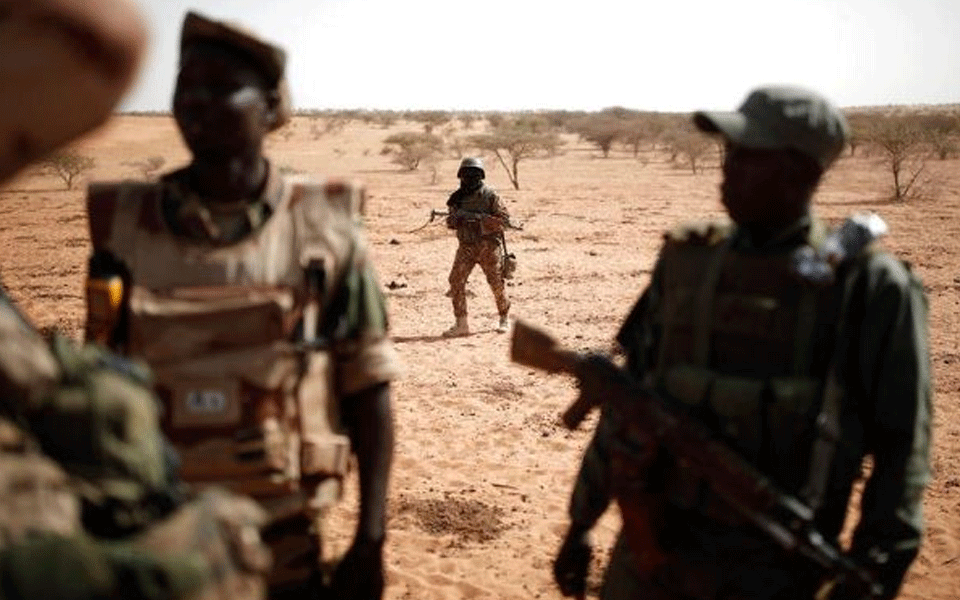
Bamako: One peacekeeper was killed and four others were wounded Sunday when a roadside bomb exploded in strife-torn northeastern Mali, the UN mission MINUSMA said.
The peacekeepers were carrying out a security patrol near the town of Aguelhok when the device detonated, spokesman Olivier Salgado said on Twitter. In January 11 Chadian members of MINUSMA were killed in an attack by jihadists in Aguelhok.
That attack was claimed by the Group to Support Islam and Muslims (GSIM), which has sworn allegiance to Al-Qaeda in the Islamic Maghreb (AQIM).
MINUSMA has lost more than 200 peacekeepers since it was set up in 2013, according to its website.
Salgado said unidentified gunmen on Sunday targeted UN peacekeepers near the central town of Bandiagara in a separate attack, with no casualties. Northern Mali fell into the hands of jihadists in 2012 before the militants were forced out by a French-led military intervention.
But much of the region remains chronically unstable and jihadist-led violence has spread to the centre of the country, often sparking bloodshed between ethnic groups.
Let the Truth be known. If you read VB and like VB, please be a VB Supporter and Help us deliver the Truth to one and all.
AIITA welcomes Karnataka’s ban on obscene songs in school events
Bhatkal: The Karnataka unit of the All India Ideal Teachers Association (AIITA) has welcomed the Karnataka government’s decision to strictly ban school children from dancing to obscene songs during educational and cultural programmes in government, aided, and private schools across the state.
AIITA Karnataka State President M. R. Manvi congratulated the government for taking what he termed an important step to preserve the sanctity of education.
“Such decisions to safeguard the dignity of school children and uphold the values of education are the need of the hour. This rule should not be limited to government schools alone but must be strictly implemented in all private educational institutions as well,” he said.
He further urged the government to address other concerns within school programmes.
“The government should not only prohibit obscene dances in the name of school anniversaries, but also ensure that plays and dialogues that incite religious hatred are avoided. Schools should be centres of harmony, not platforms for spreading hatred,” he added.
According to a recent circular issued by the Department of School Education and Literacy, obscene dances are adversely affecting the mental health and moral values of students.
In this regard, schools have been advised to use songs that promote nationalism, positive thinking, the greatness of Kannada culture, and value-based traditions instead of inappropriate content during programmes.
The circular also emphasises that students should be dressed in decent attire.
AIITA also backed the department’s warning that disciplinary action would be taken against head teachers if such guidelines are violated. The association has further demanded that district Deputy Directors of Public Instruction strictly monitor the implementation of these rules.