UN rights body rejects Western bid to debate Xinjiang abuses Geneva
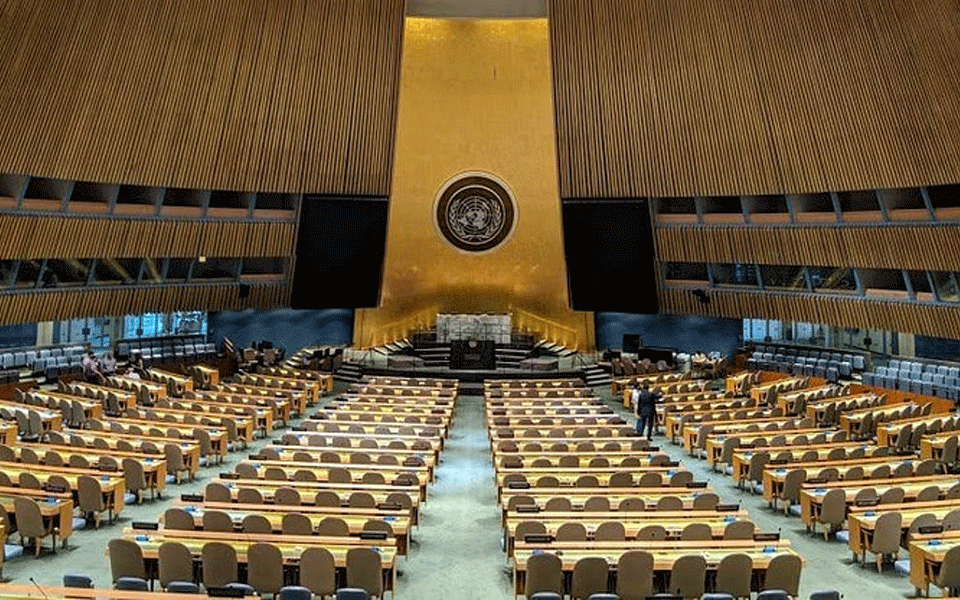
Geneva(AP:) At the 47-member state Human Rights Council, 17 countries voted in favor, 19 were against, and 11 abstained in a vote to hold a debate on Xinjiang at its next session in March.
The vote amounted to a test of political and diplomatic clout between the West and Beijing and would have marked the first time that China's record on human rights would merit a specific agenda item at the council.
The result, prompting a smattering of applause in the chamber, followed days of diplomatic arm-twisting in Geneva and in many national capitals as leading Western countries tried to build momentum on a report from former UN human rights chief Michelle Bachelet's office, released on August 31, which found that possible crimes against humanity had occurred in Xinjiang.
A simple majority of voting countries was required.
China locked down no votes among its usual allies, plus many African countries and the Persian Gulf states Qatar and the United Arab Emirates.
Somalia was the only African country, and the only member state of the Organisation of Islamic Cooperation, to vote yes.
Turkey is in the OIC but doesn't have a council seat right now. Argentina, Brazil, India, Malaysia, Mexico, and Ukraine were among the countries that abstained.
The make-up of the council rotates among UN member states each year, and China a powerful country with a permanent seat on the Security Council has never been the subject of a country-specific resolution at the council since it was founded more than 16 years ago.
It's always difficult for countries to vote against a permanent member of the Security Council," said one Western diplomat, speaking on condition of anonymity because of the sensitivity of the matter.
He acknowledged it was a genuinely difficult call for some countries notably those with economic or political ties to China to sign on to the measure.
The proposal was just to hold a debate, with no consistent monitoring of the rights situation, and amounted to just about the least intrusive form of scrutiny that the council could seek.
The call stopped short of creating a team of investigators to look into possible crimes in Xinjiang, or appointing a special rapporteur a tacit acknowledgment by the Western countries that going after increasingly influential China would be a tall order.
Before the vote, Chinese ambassador Chen Xu said Beijing firmly opposes and categorically rejects the proposal.
He accused Western countries of seeking to turn a blind eye to their own issues on human rights and point a finger at others. He insisted that China never gave its support to Bachelet's report, and warned of a bad precedent.
Today China is targeted, Chen said. Tomorrow any other developing country could be targeted.
Michele Taylor, the US ambassador, said the request for the debate aimed simply to provide a neutral forum for discussion that would give China a chance to put its views on record and hear the views of others.
No country represented here today has a perfect human rights record, she said. No country, no matter how powerful, should be excluded from council discussions. This includes my country the United States and it includes the People's Republic of China.
On Friday, as part of dozens of proposals before the council, member states are also to consider a proposal from 26 European Union countries to appoint a special rapporteur on Russia, citing a string of concerns about mass arrests and detentions; harassment of journalists, opposition politicians, activists and rights defenders; and crackdowns at times violent on protesters against President Vladimir Putin's war in Ukraine.
It's part of a rare push against two permanent members of the Security Council: China and Russia. Some Western diplomats have insisted the two-pronged effort needed attention now.
The council has already commissioned a team of investigators who are looking into human rights violations and abuses in Ukraine following Putin's order for a military invasion of Ukraine in late February.
Let the Truth be known. If you read VB and like VB, please be a VB Supporter and Help us deliver the Truth to one and all.
TVK falls short within touching distance; what next to ensure majority
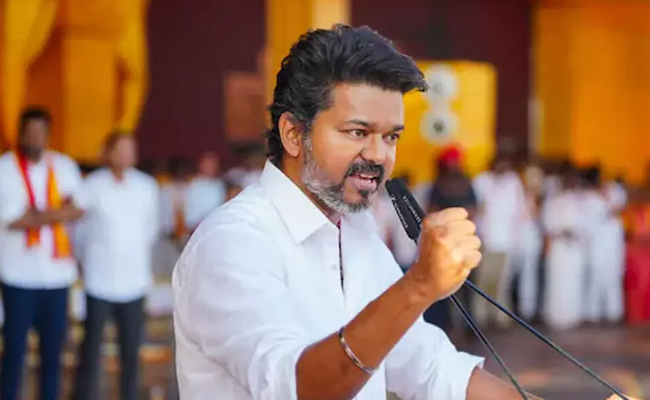
Chennai (PIT): With TVK falling 10 short of a majority, its leader Vijay has the option of forming a minority government in Tamil Nadu without any outside support, analysts said on Tuesday.
Senior political analyst Sumanth Raman told PTI that the TVK is likely to opt to be a minority government with outside support.
"Since it is the single largest party, TVK has the option to go for that. I don't think he (Vijay) will opt for official support from other political party's MLAs", he said.
"If he opts for minority government, the only thing is that, Vijay will have to prove the support once again after six months".
Raman also pointed out that in 2006 when DMK won only 92 seats, the then party president, the late M Karunanidhi formed a minority government with outside support.
In a completely unexpected turn of events in the Tamil Nadu Assembly elections, the TVK has emerged victorious, putting an end to the almost six decade-long dominance of the two major Dravidian parties--DMK and AIADMK.
By clinching victory in its debut electoral contest, the party has elevated its status to that of a recognised political entity. However, the Vijay-led TVK did not secure a mandate large enough to form a government with an absolute majority on its own, requiring another 10 to cross the finish line. Experts have varied opinions.
Specifically, to attain a simple majority, a political party must win at least 118 out of the total 234 constituencies. The TVK, however, secured victory in 108 constituencies. Given that the TVK fell short of the majority mark, what might unfold next?
TVK leader Vijay has won in both constituencies he contested--Perambur in Chennai and Tiruchirappalli East. As per the election commission rule, he will have to resign from one of these seats. TVK sources said that the leader is likely to surrender the Tiruchirappalli assembly seat.
If Vijay does so, the party's total tally of seats will decrease by one. Then it will be 107. Adding to the number games, TVK appointed Speaker of the Assembly will be ineligible to cast a vote during a confidence motion and the party's effective voting strength will be reduced by yet another seat, which comes to 106.
Accordingly, the TVK requires the support of an additional 12 members to demonstrate its majority. As of now, within the DMK alliance, the Congress party has secured five seats, the two Communist parties have won two seats each (totaling four), while the DMDK has secured one seat, the Indian Union Muslim League (IUML) has won two seats and the VCK has secured two seats.
Within the AIADMK alliance, the PMK has grabbed four seats, the BJP has won one seat, and the AMMK has secured one seat. Going by the calculations, if TVK gets the support of other parties within both alliances, it would gain an additional 21 seats.
TVK could potentially secure a total of 129 seats (108 + 21). However, the TVK does not require the support of all those parties, and the backing of just 12 members would suffice.
As Vijay is expected to visit Lok Bhavan on Wednesday (May 6) to meet the governor Rajendra Vishwanath Arlekar to stake claim to form government, the governor is expected to offer the TVK two options.
First, he may summon the TVK chief and instruct him to demonstrate his majority on the floor of the legislative assembly. Alternatively, he might ask Vijay to gather letters of support from "allied" parties and submit them to him.
If the TVK secures support exceeding 118 seats, the governor would invite the party form the government. If TVK fails to garner support from other political parties, it will be denied the opportunity to form the government.
In such a scenario, the governor has the option to invite the DMK, the party holding the second-highest number of seats to form the government.
If DMK too is unable to form a government, the state of Tamil Nadu will come under governor's rule for the subsequent six months. Following this period, fresh legislative Assembly elections will be once again held across all 234 constituencies.
Another political analyst Durai Karuna ruled out that TVK will go for a minority government.
"If he (Vijay) gives an appeal, many political parties including Congress, VCK and left parties will join TVK", he claimed. "In addition, the AIADMK, which has decided to organise MLAs meeting on Wednesday, might also announce that it would support TVK unconditionally".
He said a clear picture on Vijay's decision will emerge in a couple of days.
Tharasu Shyam, political critic, claimed that Congress was "holding talks with Vijay."
"From now on, the DMK must change its approach and this applies equally to the AIADMK," he said in an apparent reference to some reported difference of opinion between allies DMK and Congress over seat-sharing and power-sharing ahead of the April 23 polls.
Incidentally, AICC in-charge for Tamil Nadu, Girish Chodankar, on Tuesday admitted that the Congress party leadership's decision to stick with the DMK alliance went against strong grassroots sentiment favouring the TVK.
"The local leaders, the grassroots level leaders, were suggesting if Rahul Gandhi, who has a large acceptance in Tamil Nadu, joins the campaign with Vijay, it will create a big impact and we can sweep the Tamil Nadu polls, and get somewhere around 180-190 seats," Chodankar told PTI Videos.