UN rights chief asks India to ease current lockdowns in Kashmir
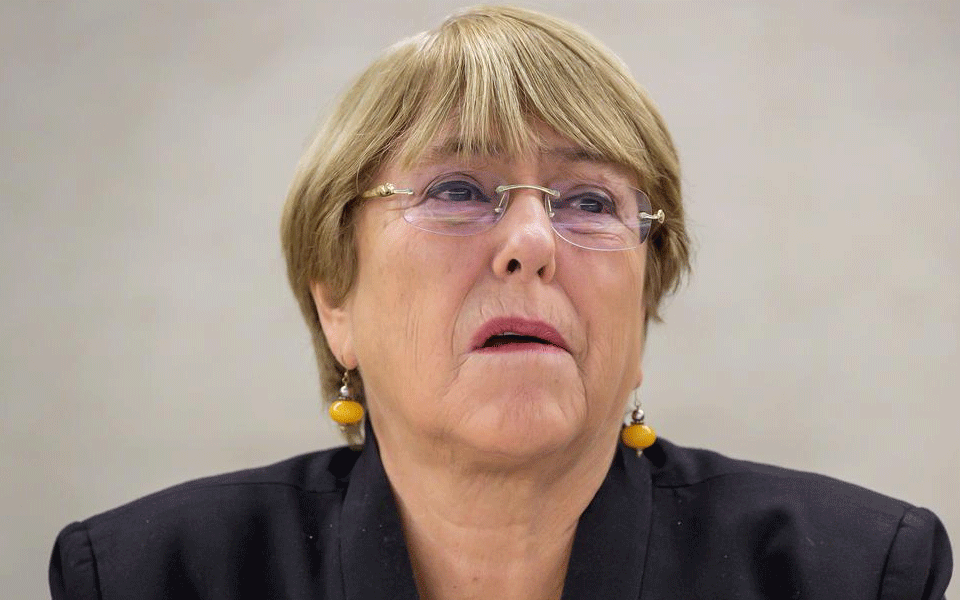
Geneva: UN human rights chief Michelle Bachelet on Monday expressed "deep concern" over the impact of restrictions in Kashmir, and asked India to ease the current lockdowns to ensure people's access to basic services.
Bachelet, the UN High Commissioner for Human Rights, also asked Pakistan and India to ensure that the human rights of the Kashmiri people are respected and protected, amid tensions between the two neighbours after the abrogation of special status of Jammu and Kashmir by New Delhi.
In her opening statement at the 42st session of the Human Rights Council, she also asked India to ensure that the National Register of Citizens (NRC) verification in Assam does not leave the people stateless.
On Kashmir, she said her office continues to receive reports on the human rights situation on both sides of the Line of Control.
"I am deeply concerned about the impact of recent actions by the Government of India on the human rights of Kashmiris, including restrictions on internet communications and peaceful assembly, and the detention of local political leaders and activists," she said.
"While I continue to urge the Governments of India and Pakistan to ensure that human rights are respected and protected, I have appealed particularly to India to ease the current lockdowns or curfews; to ensure people's access to basic services; and that all due process rights are respected for those who have been detained," she said.
Asserting that the abrogation of Article 370 of its Constitution to withdraw J&K's special status was its "internal matter", India has defended imposition of restrictions in the Kashmir Valley on the grounds that they were put to prevent Pakistan from creating more mischief through proxies and terrorists.
On Saturday, National Security Advisor Ajit Doval said mobile phone and Internet services can easily be used by Pakistan and terrorists for subversive activities, but the denial of these services should not prevent people from going about their lives.
"Even before Internet came into our lives people were going about their lives doing business," he said, while acknowledging that people are unhappy with these restrictions.
"In any society, people always want more than what they have. But to us their life is more important," Doval said adding that 92.5 per cent of the geographical area of Jammu & Kashmir is now without restrictions.
The government last month decided to abrogate provisions of Article 370 in J&K, and bifurcate it into two Union Territories, evoking strong reactions from Pakistan with its Prime Minister Imran Khan making provocative anti-India rhetoric, which India dubbed as "irresponsible statements".
Bachelet also said it was important that the people of Kashmir are consulted and engaged in any decision-making processes that have an impact on their future.
On India's NRC exercise, she said the recent verification process in Assam has caused great uncertainty and anxiety, with some 1.9 million people excluded from the final list published on August 31.
She appealed to the Indian government to ensure due process during the appeals process, prevent deportation or detention, and ensure people are protected from statelessness.
India says updating of the NRC is a statutory, transparent, legal process mandated by the Supreme Court of India. It maintains that the exclusion from the NRC has no implication on the rights of an individual resident in Assam.
"For those who are not in the final list will not be detained and will continue to enjoy all the rights as before till they have exhausted all the remedies available under the law. It does not make the excluded person "Stateless'," the External Affairs Ministry said in a statement last week.
"It also does not make him or her 'a Foreigner', within the legal meaning of the term. They will not be deprived of any rights or entitlements which they have enjoyed before," the statement said.
Let the Truth be known. If you read VB and like VB, please be a VB Supporter and Help us deliver the Truth to one and all.
Centre spent Rs 76.13 lakh on print media ads for RSS centenary, reveals RTI
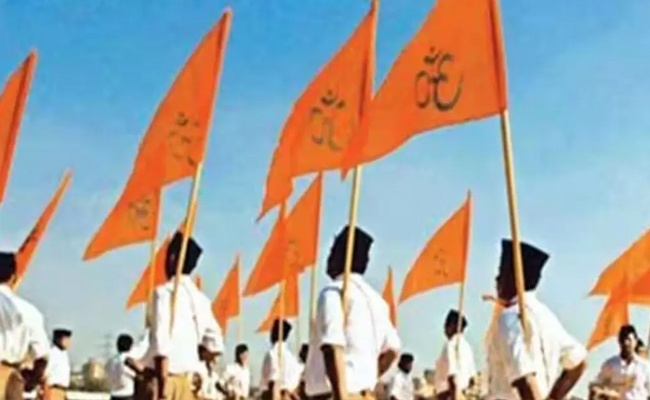
New Delhi: The Union Ministry of Culture allegedly spent Rs 76.13 lakh on print advertisements marking the 100-year celebrations of the Rashtriya Swayamsevak Sangh (RSS), according to a Right to Information (RTI) reply.
The information was sought by RTI activist Ajay Basudev Bose, who filed an application seeking details on expenditure incurred by the ministry for advertisements commemorating the RSS centenary.
Bose shared a picture of the reply from the ministry on his official ‘X’ handle.
“It is informed that an amount of Rs 76,13,129 has been spent on advertisement given in various print media by the Ministry of Culture on the occasion of the completion of 100 years of RSS,” the government’s reply stated.
RTI reply shows Min of Culture Govt of India spent a Whopping Rs 76L,13K,129 on Advertisement in Print Media on occasion of 100 yrs of #RSS
— AJAY Basudev Bose (@AjayBos93388306) April 16, 2026
When Everyone knows RSS is Not Registered & Does not Pay any Tax is it justified to spend Tax Payers Money on such Private event??@RSSorg… pic.twitter.com/dW4IUtdNCg
Bose questioned the expenditure in the post X, “when Everyone knows RSS is Not Registered & Does not Pay any Tax is it justified to spend Tax Payers Money on such Private event??”
Reacting to the development, Karnataka’s IT-BT and Panchayat Raj Minister Priyank Kharge also criticised the spending.
In a post on X, he asked why public money was being used for what he described as a “private ideological project.”
"Modi Sarkar spent Rs 76,13,129 of public money on newspaper advertisements to celebrate 100 years of the RSS. Why is Government spending taxpayers money on an unregistered, non-tax-paying organisation to celebrate their centenary?," he added.
Why is public money being used to serve a private ideological project?
— Priyank Kharge / ಪ್ರಿಯಾಂಕ್ ಖರ್ಗೆ (@PriyankKharge) April 16, 2026
Modi Sarkar spent ₹76,13,129 of public money on newspaper advertisements to celebrate 100 years of the RSS.
Why is Government spending taxpayers money on an unregistered, non-tax-paying organisation to… pic.twitter.com/EoZ6Pim3IM
According to reports, the RSS describes itself as a volunteer-based organisation and has stated that it functions as a body of individuals rather than a registered entity.
Founded by Keshav Baliram Hedgewar in 1925, the organisation is marking its centenary year beginning from Vijaydashami in 2025, with the milestone observed on October 2.