UN says verdict against Hasina 'important' step for victims but regrets death penalty
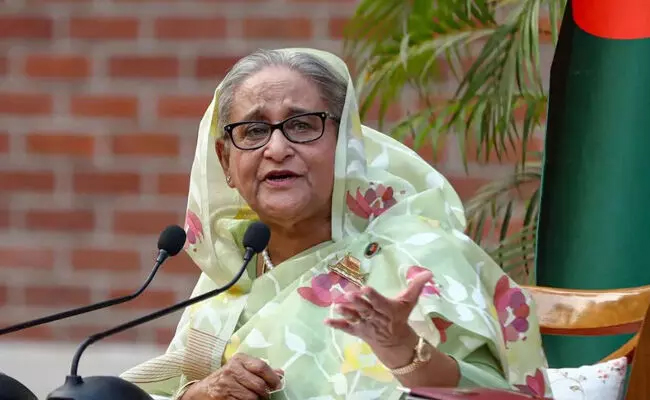
United Nations (PTI): The United Nations has said that the verdict against Bangladesh's ousted prime minister Sheikh Hasina on charges of crimes against humanity is an “important moment” for the victims, but expressed regret over the imposition of the death penalty.
UN Secretary General Antonio Guterres “fully” agrees with UN High Commissioner for Human Rights Volker Turk on the position that “we stand against the use of the death penalty in all circumstances,” the UN chief's spokesperson Stephane Dujarric said at the daily press briefing here on Monday.
Dujarric was responding to a question on the Secretary-General's reaction to a Bangladeshi court sentencing Hasina to death in absentia.
Bangladesh's International Crimes Tribunal on Monday found Hasina guilty of crimes against humanity committed during the widespread protests against her government in July last year.
Hasina, 78, who has been living in India since her government was toppled on August 5 last year, was sentenced to death in absentia by the tribunal. Hasina's aide and former home minister Asaduzzaman Khan Kamal was also sentenced to death on similar charges.
Dujarric referred to a statement issued by Turk's office on the verdict, noting that UN human rights officials have been calling “diligently for perpetrators, including individuals in positions of command and leadership, to be held accountable".
"Accountability is critical. It is, of course, very important that people remain calm in Bangladesh following the assurance of the verdict and for all to exercise restraint in response to these developments,” he said.
Geneva-based UN Human Rights Spokesperson Ravina Shamdasani said in a statement that the verdicts delivered by the tribunal against Hasina and the former home minister mark “an important moment for victims of the grave violations committed during the suppression of protests last year”.
"We also regret the imposition of the death penalty, which we oppose in all circumstances," she said.
Shamdasani noted that since the UN fact-finding report was published in February, "we have been calling for perpetrators, including individuals in positions of command and leadership, to be held accountable in accordance with international standards. We have also called for victims to have access to effective remedies and reparations.”
The UN rights office report estimated that up to 1,400 people were killed between July 15 and August 15 during the student-led mass protests as the Hasina-led government ordered a sweeping security crackdown.
Shamdasani said while the UN Human Rights office was not privy to the conduct of Hasina's trial, "we have consistently advocated for all accountability proceedings, especially on charges of international crimes, to unquestionably meet international standards of due process and fair trial. This is particularly vital when, as was the case here, the trials have been conducted in absentia and led to a capital punishment sentence”.
Underlining Turk's call for calm and restraint, she said the High Commissioner hopes Bangladesh will move forward with a comprehensive process of truth-telling, reparation and justice as the pathway to national reconciliation and healing.
“This should include meaningful and transformative security sector reform, which respects international standards, to ensure that these violations and abuses are never repeated,” Shamdasani said, adding that the UN stands ready to support the government and people of Bangladesh in these endeavours.
Let the Truth be known. If you read VB and like VB, please be a VB Supporter and Help us deliver the Truth to one and all.
4 workers die after being buried under coal slurry in Jharkhand's Dhanbad
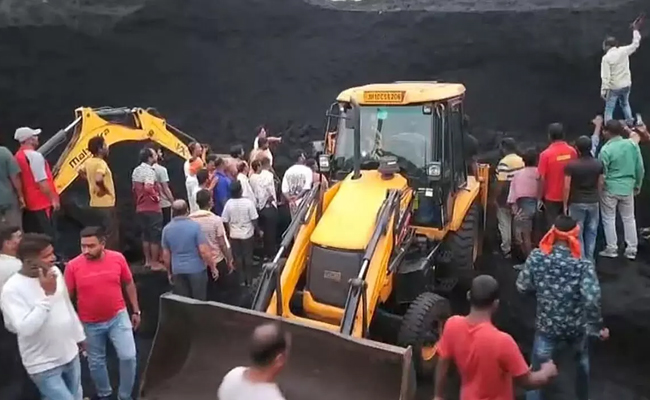
Dhanbad (Jharkhand) (PTI): At least four workers died after being buried under coal slurry in Jharkhand's Dhanbad district on Saturday, a police official said.
The incident took place at Moonidih coal washery in the command area of Bharat Coking Coal Limited (BCCL).
"Bodies of all four workers were dug out of debris during a rescue operation," Putki police station in-charge Waqar Hussain told PTI.
The incident took place when coal slurry was being loaded into trucks by workers, during which a large chunk of slurry fell and trapped several workers underneath, officials said.
The deceased have been identified as Manik Bauri, Dinesh Bauri, Deepak Bauri, and Hemlal Gope.
Meanwhile, the family members of the deceased and local villagers placed the bodies in front of the washery gate and began a protest.
They demanded compensation, jobs for dependents and action against those responsible for the incident.
Police and administration officials are trying to pacify the protesters, an official said.