UN Sec Gen Antonio Guterres welcomes India, Pakistan ceasefire announcement
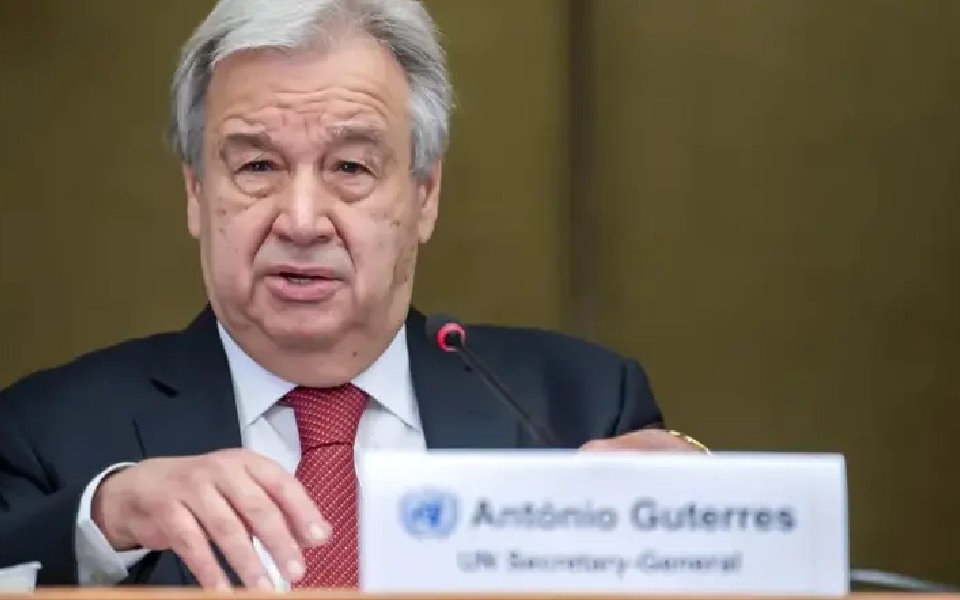
United Nations, May 10 (PTI): UN Secretary-General Antonio Guterres has welcomed the ceasefire agreement between India and Pakistan, describing it as a “positive step” toward ending current hostilities and easing tensions.
Guterres “hopes the agreement will contribute to lasting peace and foster an environment conducive to addressing broader, longstanding issues between the two countries”, a statement issued by Stéphane Dujarric, Spokesman for the Secretary-General, said.
The UN chief “welcomes the ceasefire agreement between India and Pakistan as a positive step toward ending current hostilities and easing tensions”, it said.
The United Nations stands ready to support efforts aimed at promoting peace and stability in the region, the statement added.
The ceasefire came hours after India and Pakistan attacked each other’s military facilities, dangerously escalating the ongoing conflict.
Earlier, US President Donald Trump said India and Pakistan have agreed to a “full and immediate” ceasefire after a “long night of talks mediated by Washington”.
“After a long night of talks mediated by the United States, I am pleased to announce that India and Pakistan have agreed to a FULL AND IMMEDIATE CEASEFIRE. Congratulations to both Countries on using Common Sense and Great Intelligence. Thank you for your attention to this matter,” Trump said in a post on Truth Social.
Secretary of State Marco Rubio said that over the past 48 hours, Vice President J D Vance and he engaged with senior Indian and Pakistani officials, “including Prime Ministers Narendra Modi and Shehbaz Sharif, External Affairs Minister Subrahmanyam Jaishankar, Chief of Army Staff Asim Munir, and National Security Advisors Ajit Doval and Asim Malik”.
“I am pleased to announce the Governments of India and Pakistan have agreed to an immediate ceasefire and to start talks on a broad set of issues at a neutral site,” he said.
“We commend Prime Ministers Modi and Sharif on their wisdom, prudence, and statesmanship in choosing the path of peace,” Rubio said.
“India and Pakistan have today worked out an understanding on stoppage of firing and military action,” External Affairs Minister S Jaishankar said in a social media post.
The announcement came days after India carried out Operation Sindoor striking nine terror infrastructures in Pakistan and Pakistan-Occupied-Kashmir to avenge the Pahalgam attack. Since the operation, Pakistan targeted various Indian military installations without success.
Let the Truth be known. If you read VB and like VB, please be a VB Supporter and Help us deliver the Truth to one and all.
BJP wins in Bengal, Assam, Puducherry boost Modi’s leadership: Karnataka BJP Chief Vijayendra
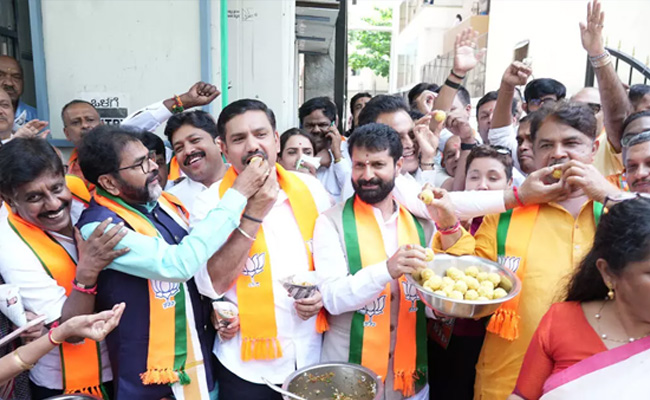
Bengaluru: Karnataka BJP president and MLA B. Y. Vijayendra said the party’s victory in West Bengal, Assam and Puducherry has strengthened the leadership of Narendra Modi and sent out a strong national message.
Speaking to the media at Jagannatha Bhavan, the state BJP office in Bengaluru, he said this was the first election under the party’s national president Nitin Nabin, and the outcome holds significance.
Vijayendra said Amit Shah is widely being referred to as the party’s election strategist across the country. He added that Shah’s planning also played a key role in the victory.
Referring to West Bengal, he said party workers there deserve appreciation, stating that they had faced continuous pressure for decades and have now brought an end to it.
Speaking about the by-elections in Davanagere South and Bagalkote constituencies, Vijayendra said the result in Davanagere South is expected to be decided by a narrow margin. He admitted that the party did not expect a setback in Bagalkote.
He said that although the Congress had won there earlier, the BJP was confident that voters would support them this time. He added that party workers had put in significant effort in both constituencies.
Despite the Chief Minister and several cabinet members campaigning in Bagalkote for 15 days, the party was confident of a win, but it did not pan out as planned or expected, he added.
Among those present at the press meet were Leader of Opposition R. Ashoka, Legislative Council Opposition leader Chalavadi Narayanaswamy, former Deputy Chief Minister and MLA Dr. C. N. Ashwath Narayan, MLC C. T. Ravi, Pratap Simha Nayak, and MLA Harish Poonja.