US accuses Chinese hackers in targeting of COVID-19 research
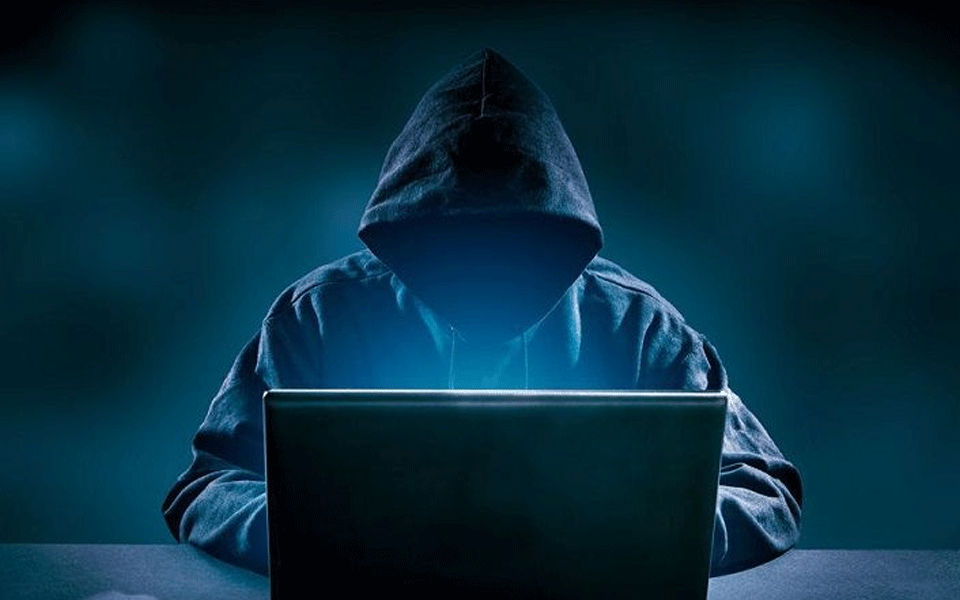
Washington: Hackers working with the Chinese government targeted firms developing vaccines for the coronavirus and stole hundreds of millions of dollars worth of intellectual property and trade secrets from companies across the world, the Justice Department said Tuesday as it announced criminal charges.
The indictment does not accuse the two Chinese defendants of actually obtaining the coronavirus research, but it does underscore the extent to which scientific innovation has been a top target for foreign governments and criminal hackers looking to know what American companies are developing during the pandemic.
In this case, the hackers researched vulnerabilities in the computer networks of biotech firms and diagnostic companies that were developing vaccines and testing kits and researching antiviral drugs.
The charges are the latest in a series of aggressive Trump administration actions targeting China.
They come as President Donald Trump, his reelection prospects damaged by the coronavirus outbreak, has blamed China for the pandemic and as administration officials have escalated their denunciations of Beijing, including over alleged efforts to steal intellectual property through hacking.
The indictment includes trade secret theft and wire fraud conspiracy charges against the hackers, former classmates at an electrical engineering college who prosecutors say worked together for more than a decade targeting high-tech companies in more than 10 countries.
The hackers, identified as Li Xiaoyu and Dong Jiazhi, stole information not only for their personal profit but also research and technology that they knew would be of value to the Chinese government, prosecutors say.
In some instances, the indictment says, they provided an officer for a Chinese intelligence service with whom they worked email accounts and passwords belonging to clergymen, dissidents and pro-democracy activists who could then be targeted.
The officer gave help of his own, providing malicious software after one of the hackers struggled to compromise the mail server of a Burmese human rights group.
The two defendants are not in custody, and federal officials conceded Tuesday that they were not likely to step foot in an American courtroom.
But the indictment carries important symbolic and deterrence value for the Justice Department, which decided that publicly calling out the behaviour was more worthwhile than waiting for the unlikely scenario in which the defendants would travel to the U.S. and risk arrest.
The hacking began more than 10 years ago, with targets including pharmaceutical, solar energy and medical device companies but also political dissidents, activists and clergy in the United States, China and Hong Kong, federal authorities said.
The charges were brought as Trump administration officials, including national security adviser Robert O'Brien and Attorney General William Barr, have delivered public warnings about what they say are Chinese government efforts to use hacking to steal trade secrets for Beijing's financial benefit and to covertly influence American policy.
The hacking is part of what Assistant Attorney General John Demers, the Justice Department's top national security official, described as a sweeping effort to rob, replicate and replace" strategy for technological development.
In addition, he said, China is providing a safe haven for criminal hackers who, as in this case, are hacking in part for their own personal gain but willing to help the state and on call to do so."
The criminal charges are the first from the Justice Department accusing foreign hackers of targeting innovation related to the coronavirus, though U.S. and Western intelligence agencies have warned for months about those efforts.
Last week, for instance, authorities in the U.S., Canada and the United Kingdom accused a hacking group with links to Russian intelligence of trying to target research on the disease, which has killed more than 140,000 people in the United States and more than 600,000 worldwide, according to figures compiled by Johns Hopkins University.
The indictment describes multiple efforts by the hackers to snoop on companies engaged in coronavirus-related research, though it does not accuse them of success in any theft.
Prosecutors say Li in January conducted reconnaissance on the computer network of a Massachusetts biotech firm known to be researching a potential vaccine, and searched for vulnerabilities on the network of a Maryland firm less than a week after the company said it was conducting similar scientific work.
Li also probed the networks of a California diagnostics company involved in developing testing kits, and a biotech firm from the same state that was researching antiviral drugs.
Hacking of vaccine information slows down research as the institution must scramble not only to fix the breach but also to ensure the data it has accumulated has not been altered, Demers said.
Once someone is in your system, they can not only take the data, they can manipulate the data," Demers said.
We do worry to that extent that there could be a slowdown in the research efforts of that particular institution.
The indictment was returned earlier this month in federal court in the Eastern District of Washington, where the hacking outlined by prosecutors was first discovered at the Department of Energy's Hanford site.
If it can occur there, we all must know that it can occur anywhere, U.S. Attorney William Hyslop said of his district.
Let the Truth be known. If you read VB and like VB, please be a VB Supporter and Help us deliver the Truth to one and all.
Bengal: Over 55 pc turnout till 1 pm in repoll in 15 booths of 2 assembly seats
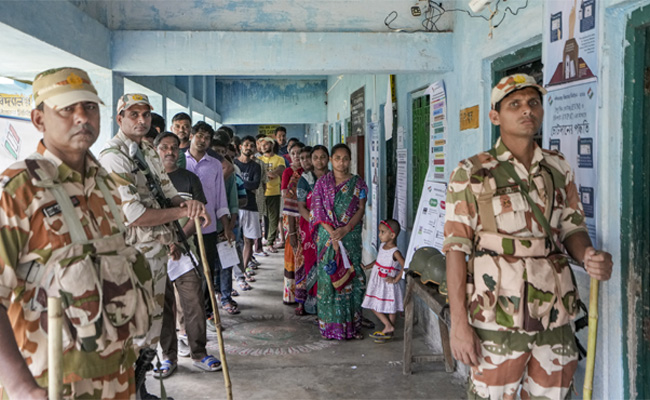
Kolkata (PTI): Over 55 per cent turnout was recorded till 1 pm in repoll in 15 booths of two assembly constituencies in West Bengal's South 24 Parganas district on Saturday, an official said.
Voting was underway more or less peacefully at 11 polling stations of Magrahat Paschim assembly constituency and four in Diamond Harbour, where the EC ordered repoll a day ago, following reports of electoral malpractices.
However, at booth number 179 at Chanda Primary School of Diamond Harbour seat, the Trinamool Congress alleged that a specially abled voter and his mother were harassed by central forces. The alleged incident sparked protests by party workers and locals.
The TMC claimed that the voter's mother, who had entered the booth to assist him, and her son were detained for a considerable time by central forces over alleged rule violations.
ALSO READ: Man arrested for duping Delhi resident of Rs 2 lakh in online car sale fraud
"TMC leaders Manmohini Biswas and Pratik Ur Rahman reached the spot and led the protests, with residents terming the action unwarranted harassment. The matter has been taken care of by our officials there," an official of the poll body said.
Polling was otherwise peaceful across 15 booths in the area, he added.
Voting began at 7 am and will continue till 6 pm, the official said, adding that till 1 pm, the turnout was 55.57 per cent.
Magrahat Paschim registered 56.33 per cent voter turnout, while in Diamond Harbour, it was 54.9 per cent, a poll official stated.
Voting in these two assembly constituencies was held in the second phase of the state elections on April 29.
The repoll order was based on reports received from returning officers and observers of the two constituencies and "material circumstances", the Election Commission official said.
In Magrahat Paschim, TMC's Md Samim Ahamed Molla is pitted against BJP nominee Goursundar Ghosh, while Abdul Majid Halder of the Congress and ISF candidate Abdul Aziz Al Hassan are also in the fray.
TMC candidate Panna Lal Halder is contesting against Dipak Kumar Halder of the BJP in the Diamond Harbour seat. Goutam Bhattacharya of the Congress and CPI(M)'s Samar Naiya are among other candidates.
The BJP had alleged rampant electoral malpractices in certain polling stations of both the assembly seats under the Diamond Harbour Lok Sabha constituency, which is represented by TMC national general secretary Abhishek Banerjee.
The EC had deputed its special observer, Subrata Gupta, to fact-check the allegations from the ground.
The poll panel will decide on repolling in the Falta assembly constituency on Saturday.
The West Bengal assembly elections were held in two phases -- April 23 and April 29 -- amid unprecedented security arrangements.
Counting of votes will take place on May 4.