US, China extend trade truce another 90 days, easing tension between world's largest economies
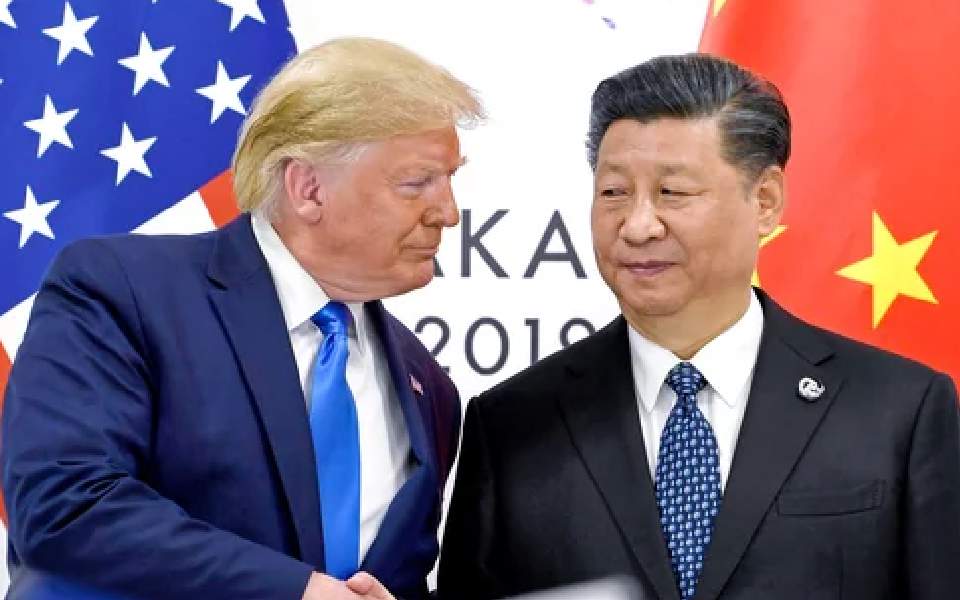
Washington, Aug 12 (AP): President Donald Trump extended a trade truce with China for another 90 days Monday, at least delaying once again a dangerous showdown between the world's two biggest economies.
Trump posted on his Truth Social platform that he signed the executive order for the extension, and that “all other elements of the Agreement will remain the same.” Beijing at the same time also announced the extension of the tariff pause, according to the Ministry of Commerce.
The previous deadline was set to expire at 12:01 am Tuesday. Had that happened the US could have ratcheted up taxes on Chinese imports from an already high 30 per cent, and Beijing could have responded by raising retaliatory levies on US exports to China.
The pause buys time for the two countries to work out some of their differences, perhaps clearing the way for a summit later this year between Trump and Chinese President Xi Jinping, and it has been welcomed by the US companies doing business with China.
Sean Stein, president of the US-China Business Council, said the extension is “critical” to give the two governments time to negotiate a trade agreement that US businesses hope would improve their market access in China and provide the certainty needed for companies to make medium- and long-term plans.
“Securing an agreement on fentanyl that leads to a reduction in US tariffs and a rollback of China's retaliatory measures is acutely needed to restart US agriculture and energy exports,” Stein said.
China said Tuesday it would extend relief to American companies who were placed on an export control list and an unreliable entities list. After Trump initially announced tariffs in April, China restricted exports of dual-use goods to some American companies, while banning others from trading or investing in China. The Ministry of Commerce said it would stop those restrictions for some companies, while giving others another 90-day extension.
Reaching a pact with China remains unfinished business for Trump, who has already upended the global trading system by slapping double-digit taxes – tariffs – on almost every country on earth.
The European Union, Japan and other trading partners agreed to lopsided trade deals with Trump, accepting once unthinkably US high tariffs (15 per cent on Japanese and EU imports, for instance) to ward off something worse.
Trump's trade policies have turned the United States from one of the most open economies in the world into a protectionist fortress. The average US tariff has gone from around 2.5 per cent at the start of the year to 18.6 per cent, highest since 1933, according to the Budget Lab at Yale University.
But China tested the limits of a US trade policy built around using tariffs as a cudgel to beat concessions out of trading partners. Beijing had a cudgel of its own: cutting off or slowing access to its rare earths minerals and magnets – used in everything from electric vehicles to jet engines.
In June, the two countries reached an agreement to ease tensions. The United States said it would pull back export restrictions on computer chip technology and ethane, a feedstock in petrochemical production. And China agreed to make it easier for US firms to get access to rare earths.
“The US has realised it does not have the upper hand,'' said Claire Reade, senior counsel at Arnold & Porter and former assistant US trade representative for China affairs.
In May, the US and China had averted an economic catastrophe by reducing massive tariffs they'd slapped on each other's products, which had reached as high as 145 per cent against China and 125 per cent against the US.
Those triple-digit tariffs threatened to effectively end trade between the United States and China and caused a frightening sell-off in financial markets. In a May meeting in Geneva they agreed to back off and keep talking: America's tariffs went back down to a still-high 30 per cent and China's to 10 per cent.
Having demonstrated their ability to hurt each other, they've been talking ever since.
“By overestimating the ability of steep tariffs to induce economic concessions from China, the Trump administration has not only underscored the limits of unilateral US leverage, but also given Beijing grounds for believing that it can indefinitely enjoy the upper hand in subsequent talks with Washington by threatening to curtail rare earth exports,'' said Ali Wyne, a specialist in US-China relations at the International Crisis Group. "The administration's desire for a trade detente stems from the self-inflicted consequences of its earlier hubris.”
It's unclear whether Washington and Beijing can reach a grand bargain over America's biggest grievances. Among these are lax Chinese protection of intellectual property rights and Beijing's subsidies and other industrial policies that, the Americans say, give Chinese firms an unfair advantage in world markets and have contributed to a massive US trade deficit with China of USD 262 billion last year.
Reade doesn't expect much beyond limited agreements such as the Chinese saying they will buy more American soybeans and promising to do more to stop the flow of chemicals used to make fentanyl and to allow the continued flow of rare-earth magnets.
But the tougher issues will likely linger, and “the trade war will continue grinding ahead for years into the future,'' said Jeff Moon, a former US diplomat and trade official who now runs the China Moon Strategies consultancy.
Let the Truth be known. If you read VB and like VB, please be a VB Supporter and Help us deliver the Truth to one and all.
Indian startup's 'Drishti' satellite launched aboard SpaceX rocket
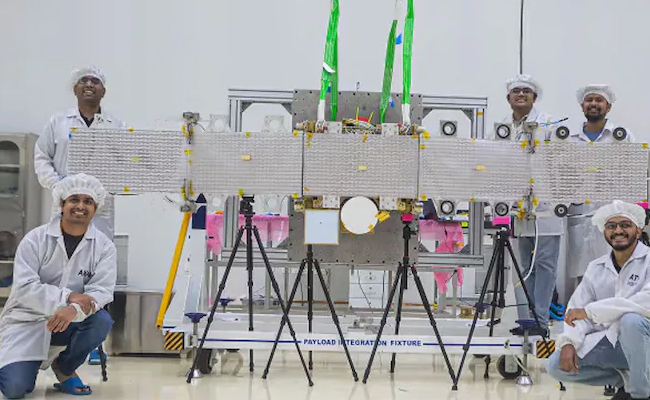
New Delhi (PTI): Bengaluru-based space start-up GalaxEye's Mission Drishti satellite was launched on Sunday aboard SpaceX's Falcon 9 rocket from California.
Mission Drishti is the world's first OptoSAR satellite, integrating electro-optical (EO) and synthetic aperture radar (SAR) sensors into a single operational platform, according to the company.
While EO sensors capture high-resolution images during sunlight and clear skies, SAR sensors provide all-weather and all-time images, using radar pulses.
In a statement, Suyash Singh, founder and CEO of GalaxEye, said, "With the satellite (Mission Drishti) now successfully in orbit, our immediate focus is on completing its commissioning. As we move through this phase, we are already witnessing strong global interest in the differentiated datasets enabled by our OptoSAR payload."
The satellite will help address long-standing limitations of conventional systems and enable more reliable and consistent data acquisition across diverse environmental conditions, the company said.
As a dual-use Earth observation satellite, the mission will support use cases across defence, agriculture, disaster management, maritime monitoring, and infrastructure planning.
The satellite is also expected to complement India's broader initiatives, including the 29 active Earth Observation satellites outlined in ISRO's recent annual report.
The launch came after five years of indigenous research and development, and extensive environmental testing and performance validation of the Mission Drishti.
In a statement, Lt Gen AK Bhatt (Retd), director general of Indian Space Association (ISpA), said, "GalaxEye has achieved what only a few global players have, which is seamlessly combining optical and SAR capabilities on a single platform to enable persistent, all-weather intelligence."
What stands out is not just the technology, but its broader impact on how downstream applications will increasingly define value in the space economy, particularly in Earth observation, where timely, decision-grade insights are critical," he added.
ISpA is the premier industry association of space and satellite companies in the country.
Union Minister Jitendra Singh also took note of the Mission Drishti launch, saying the development marked a significant milestone in India's space journey.
In a post on X, the minister said, "The successful launch of the world's first OptoSAR satellite, and the largest privately-built satellite in the country, reflects the immense potential of our young innovators driving nation-building."
GalaxEye aims to scale up Mission Drishti to a constellation of 10 satellites by 2030, developing a robust and sovereign Earth observation infrastructure for India.