US-China trade war could last 20 years: Jack Ma
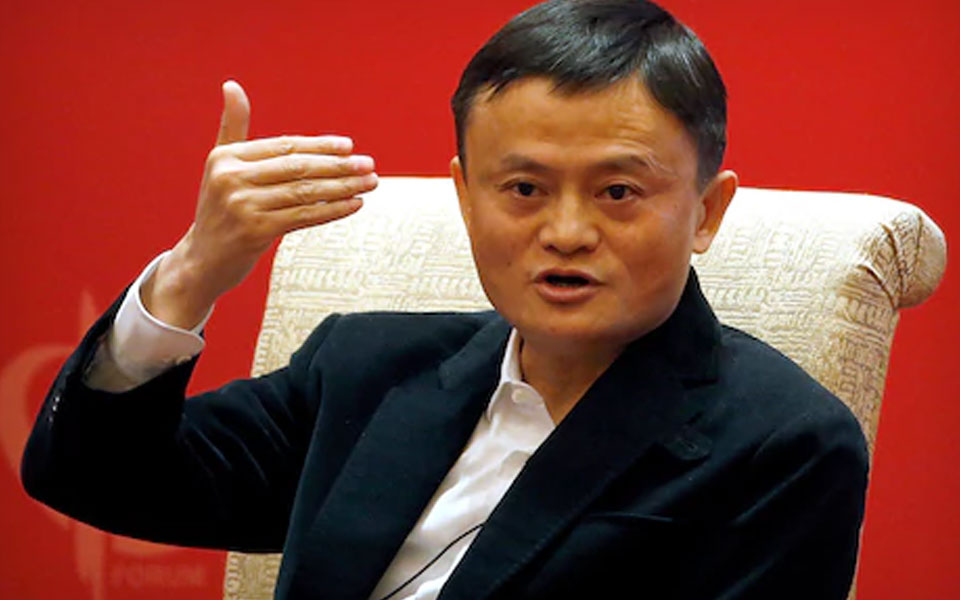
Beijing, Sep 19 : Tech tycoon Jack Ma has told investors to hunker down for a drawn out trade war between the US and China that can last for upto 20 years.
"It's going to last long, it's going to be a mess," Ma, the founder and executive chairman of Alibaba, said on Tuesday at an annual conference for Alibaba investors.
Just hours after the Trump administration slapped a new round of tariffs on Chinese goods worth $200 billion, Ma said the US-China trade war will last not for 20 months or 20 days, but "maybe 20 years".
That would mean no easing of tensions between the world's top two economies for many years after President Donald Trump has left office, even if he serves a second term, the CNN reported.
While the tech billionaire dismissed speculation that geopolitical headwinds played a part in the surprise announcement of his retirement last week, he acknowledged that the ongoing spat with China's largest trade partner is hurting Alibaba's business.
Shares in Alibaba closed 3.5 per cent lower on Monday. The company's stock is down 25 per cent from its all-time high in June.
Ma said a lot of businesses in China and the US will be in trouble in the short term, and eventually, Chinese firms will be forced to turn to other countries, CNN reported.
Ma said the trade war is "against China" but also criticised his country's policies, urging leaders to view the pain inflicted by Trump's tariffs as an opportunity to "upgrade". "China must open the market," he added.
Ma reassured investors that the $410 billion company he helped build is in safe hands. He announced last week that he will step down from Alibaba in a year's time, handing over the reins to CEO Daniel Zhang.
"I'm 100% sure Daniel will do a better job than I do," Ma said. The 54-year-old former teacher repeated his desire to pursue a new career, likely in the field of education.
"I'm not sad at all. I think I'm still young," he said. "In Alibaba I'm old, but in my career I'm still young."
Let the Truth be known. If you read VB and like VB, please be a VB Supporter and Help us deliver the Truth to one and all.
4 workers die after being buried under coal slurry in Jharkhand's Dhanbad
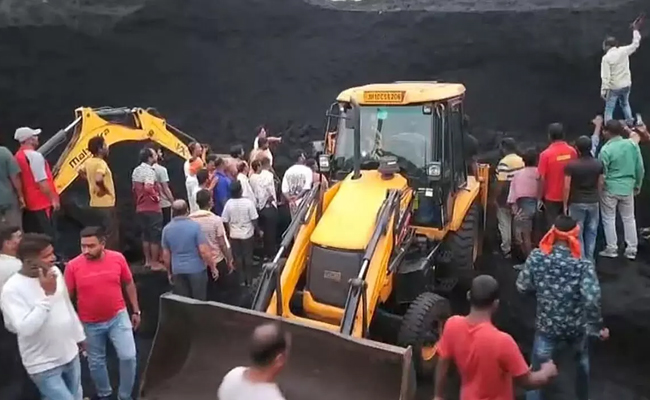
Dhanbad (Jharkhand) (PTI): At least four workers died after being buried under coal slurry in Jharkhand's Dhanbad district on Saturday, a police official said.
The incident took place at Moonidih coal washery in the command area of Bharat Coking Coal Limited (BCCL).
"Bodies of all four workers were dug out of debris during a rescue operation," Putki police station in-charge Waqar Hussain told PTI.
The incident took place when coal slurry was being loaded into trucks by workers, during which a large chunk of slurry fell and trapped several workers underneath, officials said.
The deceased have been identified as Manik Bauri, Dinesh Bauri, Deepak Bauri, and Hemlal Gope.
Meanwhile, the family members of the deceased and local villagers placed the bodies in front of the washery gate and began a protest.
They demanded compensation, jobs for dependents and action against those responsible for the incident.
Police and administration officials are trying to pacify the protesters, an official said.