US Congress approves import ban targeting forced labour in China
Washington, Dec 17: Senators gave final congressional approval Thursday to a bill barring imports from China's Xinjiang region unless businesses can prove they were produced without forced labour, overcoming initial hesitation from the White House and what supporters said was opposition from corporations.
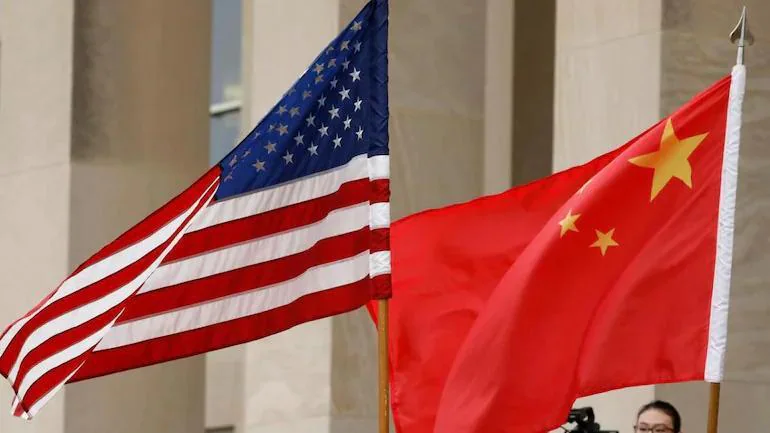
The measure is the latest in a series intensifying U.S. penalties over China's alleged systemic and widespread abuse of ethnic and religious minorities in the western region, especially Xinjiang's predominantly Muslim Uyghurs. The Biden administration also announced new sanctions Thursday targeting several Chinese biotech and surveillance companies, a leading drone manufacturer and government entities for their actions in Xinjiang.
The Senate vote sends the bill to President Joe Biden. Press secretary Jen Psaki said this week that Biden supported the measure, after months of the White House declining to take a public stand on an earlier version of the legislation.
The United States says China is committing genocide in its treatment of the Uyghurs. That includes widespread reports by rights groups and journalists of forced sterilization and large detention camps where many Uyghurs allegedly are compelled to work in factories.
China denies any abuses. It says the steps it has taken are necessary to combat terrorism and a separatist movement.
The U.S. cites raw cotton, gloves, tomato products, silicon and viscose, fishing gear and a range of components in solar energy as among goods alleged to have been produced with the help of the forced labour.
Xinjiang is a resource-rich mining region, important for agricultural production, and home to a booming industrial sector. Detainees also are moved outside Xinjiang and put to work in factories, including those in the apparel and textiles, electronics, solar energy and automotive sectors, the U.S. says.
Many companies have already taken steps to clean up their supply chains. And, frankly, they should have no concerns about this law," Sen. Marco Rubio, the Florida Republican who introduced the earlier version of the legislation with Oregon Democratic Sen. Jeff Merkley, said in a statement.
For those who have not done that, they'll no longer be able to continue to make Americans every one of us, frankly unwitting accomplices in the atrocities, in the genocide," Rubio said.
As in the House earlier this week, the compromise version passed the Senate with overwhelming approval from Democrats and Republicans. The swift passage came after what supporters said was offstage opposition from corporations with manufacturing links to China, although there was little to no overt opposition.
Apple's lobbying firm lobbied on Apple's behalf, a federal disclosure form shows. Apple, like Nike and other corporations with work done in China, says it has found no sign of forced labour from Xinjiang in its manufacturing or supply chain.
Some Uyghur rights advocates and others said they had also feared private opposition from within the Biden administration as it sought cooperation from the Chinese on climate change and other issues.
Psaki, in her statement Tuesday night, noted export controls and import restrictions, sanctions, diplomatic initiatives and other measures the Biden administration had already taken targeting forced labour from Xinjiang.
The Senate also approved Biden's nominee for ambassador to China, veteran diplomat Nicholas Burns, on a 75-18 vote Thursday.
Advocates credited unrelenting support from rights groups and lawmakers, including statements from House Speaker Nancy Pelosi, with helping the bill prevail.
With the legislation, sanctions and months of other new measures, the United States is way ahead of the international community on confronting China on abuses of Uyghurs, said Nury Turkel, a senior fellow at the Hudson Institute and vice chair of the U.S. Commission on International Religious Freedom.
How can anyone get China to change without going after the most important thing to the Chinese government, which is their economic interest?" asked Turkel, who praised Congress but not the administration for what he called coherent messaging on the matter.
The legislation requires government agencies to expand their monitoring of the use of forced labour by China's ethnic minorities. Crucially, it creates a presumption that goods coming from Xinjiang are made with forced labour. Businesses will have to prove that forced labour, including by workers transferred from Xinjiang, played no part in a product to bring it into the United States.
Meanwhile, the Commerce Department announced new penalties targeting China's Academy of Military Medical Sciences and its 11 research institutes that focus on using biotechnology to support the Chinese military.
The move bars American companies from selling goods and technologies to the entities without a license.
China is choosing to use these technologies to pursue control over its people and its repression of members of ethnic and religious minority groups, Commerce Secretary Gina Raimondo said in a statement.
Separately, the Treasury Department announced it was placing DJI, the world's largest drone manufacturer, and seven other Chinese companies on an investment blacklist over their alleged involvement in biometric surveillance and tracking of Uyghurs.
The measure means individuals in the U.S. will be prohibited from purchasing or selling publicly traded securities connected with the companies.
DJI dominates the global market for the small, low-altitude drones used by hobbyists, photographers and many businesses and governments.
Other companies added to the Treasury blacklist are image-recognition software firm Megvii, supercomputer manufacturer Dawning Information Industry, facial recognition specialist CloudWalk Technology, cybersecurity group Xiamen Meiya Pico, artificial intelligence company Yitu Technology and cloud computing firms Leon Technology and NetPosa Technologies.
U.S. intelligence has established that Beijing has set up a high-tech surveillance system across Xinjiang that uses biometric facial recognition and has collected DNA samples from all residents, ages 12 to 65, as part of a systematic effort to suppress Uyghurs, according to a senior administration official who briefed reporters on the sanctions on the condition of anonymity.
The Commerce Department said multiple federal agencies determined that the Chinese academy and research institutes use biotechnology processes to support Chinese military end uses and end users, to include purported brain-control weaponry.
The White House announced last week it would stage a diplomatic boycott of the upcoming Winter Olympics in Beijing, citing China's egregious human rights abuses and atrocities in Xinjiang. U.S. athletes will compete but Biden will not send the usual contingent of dignitaries.
The Chinese Embassy in Washington did not immediately respond to a call and email seeking comment.
Rights groups note prison labour has long been a part of the U.S. economy, with inmates producing goods and providing services such as call centers for what is typically reduced pay. Opponents say the system disproportionately profits off the labour of incarcerated Black Americans.
Let the Truth be known. If you read VB and like VB, please be a VB Supporter and Help us deliver the Truth to one and all.
Vartha Bharati–Sankalp predictions align closely with Karnataka bypoll results

Bengaluru: The Vartha Bharati–Sankalp election analysis has shown a high level of accuracy in predicting the outcome of the recent Karnataka Assembly by-elections held in May 2026, correctly calling winners in both constituencies and closely estimating vote share trends.
The by-elections were held in Bagalkot and Davanagere South, drawing significant political attention as both seats were seen as key tests for the ruling Congress and opposition BJP.
According to the analysis, Vartha Bharati–Sankalp had made three major projections ahead of the results the winning party, vote share percentages, and margin of victory.
In both constituencies, the platform accurately predicted that the Congress would emerge victorious. The outcome matched the projections, with Congress candidates winning in Bagalkot and Davanagere South.
In terms of vote share, the predictions were largely in line with the final results. In Bagalkot, the BJP’s vote share was forecast in the range of 40 to 46 per cent, while the actual figure stood at 42.9 per cent. The Congress vote share, however, exceeded expectations, with the party securing 55.4 per cent against a projected range of 43 to 48 per cent.
The margin of victory in Bagalkot turned out to be significantly higher than anticipated. While the projection had placed the margin between 2,000 and 3,500 votes, the final margin was around 22,332 votes.
In Davanagere South, the predictions also remained largely accurate. The Congress vote share was projected between 43 and 51 per cent, and the final figure stood at 43.9 per cent. The BJP was expected to secure between 42 and 50 per cent but ended with 40.3 per cent.
The analysis had also identified the role of SDPI as a potential spoiler in the constituency. While its vote share was estimated around 6 per cent, the party eventually secured around 12 per cent of the vote.
The margin of victory in Davanagere South was predicted to be between 1,500 and 2,600 votes. The actual margin was higher at around 5,708 votes, though the contest remained relatively close as anticipated.
Overall, the performance of Vartha Bharati–Sankalp stood out for correctly identifying the winning parties in both seats and maintaining close accuracy in vote share estimates, with only limited deviations in specific cases.