US declares public health emergency over monkeypox outbreak
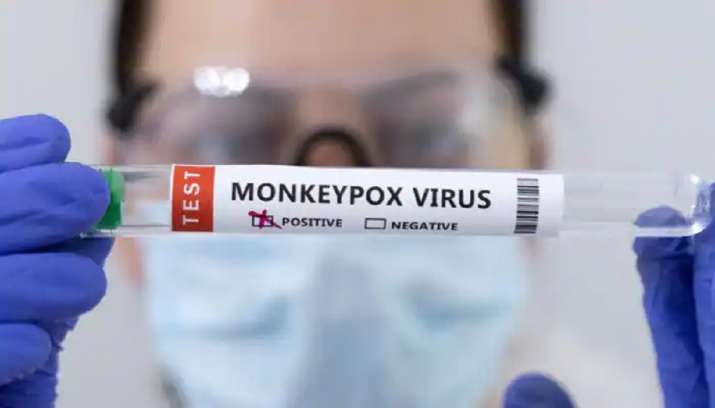
Washington(AP): The federal government declared a public health emergency Thursday to bolster the response to the monkeypox outbreak that has infected more than 7,100 Americans.
The announcement will free up money and other resources to fight the virus, which may cause fever, body aches, chills, fatigue and pimple-like bumps on many parts of the body.
We are prepared to take our response to the next level in addressing this virus, and we urge every American to take monkeypox seriously, said Xavier Becerra, head of the US Department of Health and Human Services.
The declaration by HHS comes as the Biden administration has faced criticism over monkeypox vaccine availability. Clinics in major cities such as New York and San Francisco say they haven't received enough of the two-shot vaccine to meet demand, and some have had to stop offering the second dose to ensure supply of first doses.
The White House said it has made more than 1.1 million doses available and has helped to boost domestic diagnostic capacity to 80,000 tests per week.
The monkeypox virus spreads through prolonged skin-to-skin contact, including hugging, cuddling and kissing, as well as sharing bedding, towels and clothing. The people who have gotten sick so far have been primarily men who have sex with men. But health officials emphasize that the virus can infect anyone.
No one in the United States has died. A few deaths have been reported in other countries.
Earlier this week, the Biden administration named top officials from the Federal Emergency Management Agency and the Centers for Disease Control and Prevention to serve as the White House coordinators to combat monkeypox.
Thursday's declaration is an important and overdue step, said Lawrence Gostin, a public health law expert at Georgetown University.
It signals the US government's seriousness and purpose, and sounds a global alarm, he said.
Under the declaration, HHS can draw from emergency funds, hire or reassign staff to deal with the outbreak and take other steps to control the virus.
For example, the announcement should help the federal government to seek more information from state and local health officials about who is becoming infected and who is being vaccinated. That information can be used to better understand how the outbreak is unfolding and how well the vaccine works.
Gostin said the US government has been too cautious and should have declared a nationwide emergency earlier. Public health measures to control outbreaks have increasingly faced legal challenges in recent years, but Gostin didn't expect that to happen with monkeypox.
It is a textbook case of a public health emergency, Gostin said. It's not a red or a blue state issue. There is no political opposition to fighting monkeypox.
A public health emergency can be extended, similar to what happened during the COVID-19 pandemic, he noted.
The urgency in the current response stems from the rapid spread of the virus coupled with the limited availability of the two-dose vaccine called Jynneos, which is considered the main medical weapon against the disease.
The doses, given 28 days apart, are currently being given to people soon after they think they were exposed, as a measure to prevent symptoms.
Becerra announced the emergency declaration during a call with reporters. During the call, Food and Drug Administration Commissioner Robert Califf said regulators are reviewing an approach that would stretch supplies by allowing health professionals to vaccinate up to five people instead of one with each vial of Jynneos.
Under this so-called dose-sparing approach, physicians and others would use a shallower injection under the skin, instead of the subcutaneous injection currently recommended in the vaccine's labeling.
Califf said a decision authorizing that approach could come within days.
That would require another declaration, to allow the government to alter its guidelines on how to administer the vaccine, officials said.
Health officials pointed to a study published in 2015 that found that Jynneos vaccine administered that way was as effective at stimulating the immune system as when the needle plunger deeper into other tissue.
But experts also have acknowledged they are still gathering information on how well the conventional administration of one or two full doses works against the outbreak.
Others health organisations have made declarations similar to the one issued by HHS.
Last week, the World Health Organisation called monkeypox a public health emergency, with cases in more than 70 countries. A global emergency is WHO's highest level of alert, but the designation does not necessarily mean a disease is particularly transmissible or lethal.
California, Illinois and New York have all made declarations in the last week, as have New York City, San Francisco and San Diego County.
The declaration of a national public health emergency and the naming of a monkeypox czar are symbolic actions, said Gregg Gonsalves, a Yale University infectious diseases expert.
What's important is that the government is taking the necessary steps to control the outbreak and if it comes to that to have a plan for how to deal with monkeypox if it becomes endemic, he said.
Monkeypox is endemic in parts of Africa, where people have been infected through bites from rodents or small animals. It does not usually spread easily among people.
But in May, a wave of unexpected cases began emerging in Europe and the United States. Now more than 26,000 cases have been reported in countries that traditionally have not seen monkeypox.(AP)
Let the Truth be known. If you read VB and like VB, please be a VB Supporter and Help us deliver the Truth to one and all.
Shah named BJP's central observer for election of legislative party leader in West Bengal
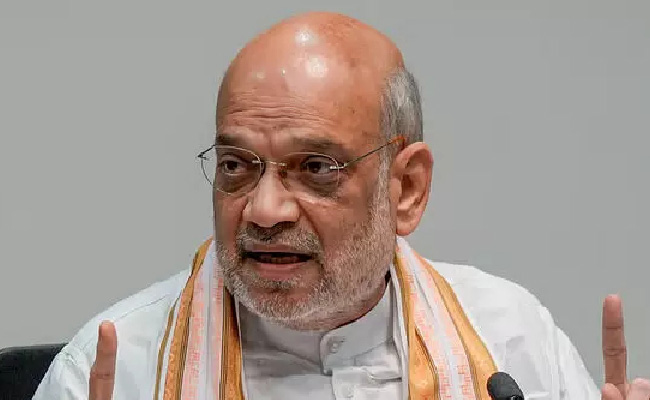
New Delhi (PTI): The BJP on Tuesday named Union Home Minister Amit Shah as the party's central observer for election of its legislative party leader in West Bengal.
The party also appointed Union minister JP Nadda as its central observer for election of the legislative party leader in Assam.
Haryana Chief Minister Nayab Singh Saini was made co-observer for election of BJP's legislative party leader in Assam, according to a notification issued by the party.
Odisha Chief Minister Mohan Charan Majhi was appointed as co-observer for election of the BJP's legislative party leader in West Bengal, according to the notification.
The BJP ousted Trinamool Congress from power in Bengal and captured power for the third time in a row in Assam in results of assembly polls declared on Monday.