US facing serious shortage of airline pilots
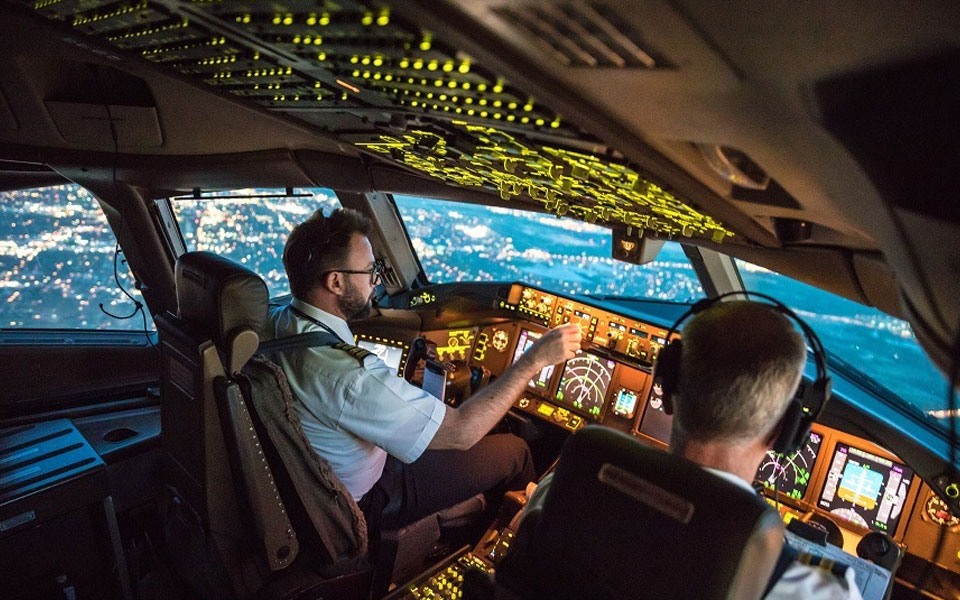
Washington, July 17 : The US is currently facing a serious shortage of airline pilots, particularly at the regional airline levels, according to a report.
The Federal Aviation Administration said in the report on Monday that there were about 827,000 pilots in America in 1987. Over the past three decades, that number decreased by 30 per cent, reports CNN.
During this period, there has been a tremendous increase in the demand for air travel, the report said. The International Air Transport Association predicts that, over the next 20 years, air travel will double.
Major US airlines were not yet directly experiencing the pilot shortage, according to the report.
But smaller regional airlines are experiencing this firsthand. Their schedules have been reduced and some, such as Republic, have been forced into bankruptcy as a result of inadequate staffing.
However, the industry has taken a few steps to address this problem. Regional airlines now offer much higher pay and even signing bonuses.
Meanwhile, the number of pilots supplied by the military has also dwindled. Much of this is due to the use of unmanned aerial vehicles.
In the 80s, roughly two thirds of airline pilots were former military. Recently, that percentage has dropped to less than one-third, CNN reported.
The Navy predicts a 10 per cent pilot shortage in 2020, while the Air Force predicts its own 1,000-pilot shortage by 2022.
In 2009, Congress changed the mandatory retirement age for airline pilots from 60 to 65.
A 2016 report by Boeing shows that 42 per cent of the pilots currently flying for the major airlines in the US will reach their mandatory retirement age of 65 in the next 10 years.
Congress also changed the duty time rules in 2010 to mitigate pilot fatigue issues. This change meant airlines had to increase their pilot staffing by 5 to 8 per cent in order to cover the same schedule.
Let the Truth be known. If you read VB and like VB, please be a VB Supporter and Help us deliver the Truth to one and all.
Over 1 lakh students appear for NEET across TN
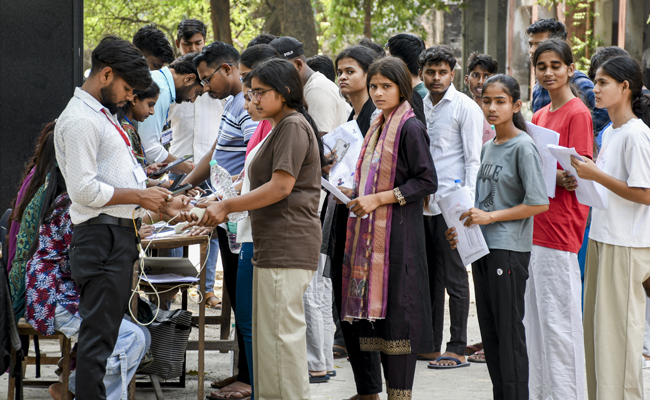
Chennai (PTI): About 1.4 lakh students appeared for the NEET 2026 exam for admission to medical degree courses across 31 centres in Tamil Nadu on Sunday.
Students claimed that the exam paper was easier than the previous year.
Organised by the National Testing Agency (NTA), 22.80 lakh students had registered for the National Eligibility cum Entrance Test (NEET) undergraduate exam nationwide.
NTA sources said that CCTV surveillance was installed at all examination centres, with feeds linked to centralised control rooms.
In view of the large candidate volume and prevailing summer conditions, the NTA ensured reliable power back-up, including generators at all centres, to ensure candidate comfort during the exam. Also, drinking water and on-site medical support were provided to students.
The sources further said that no malpractices were reported, especially in Chennai. The results of NEET are expected to be declared in June, 2026.