US President Trump says he could travel to India next year
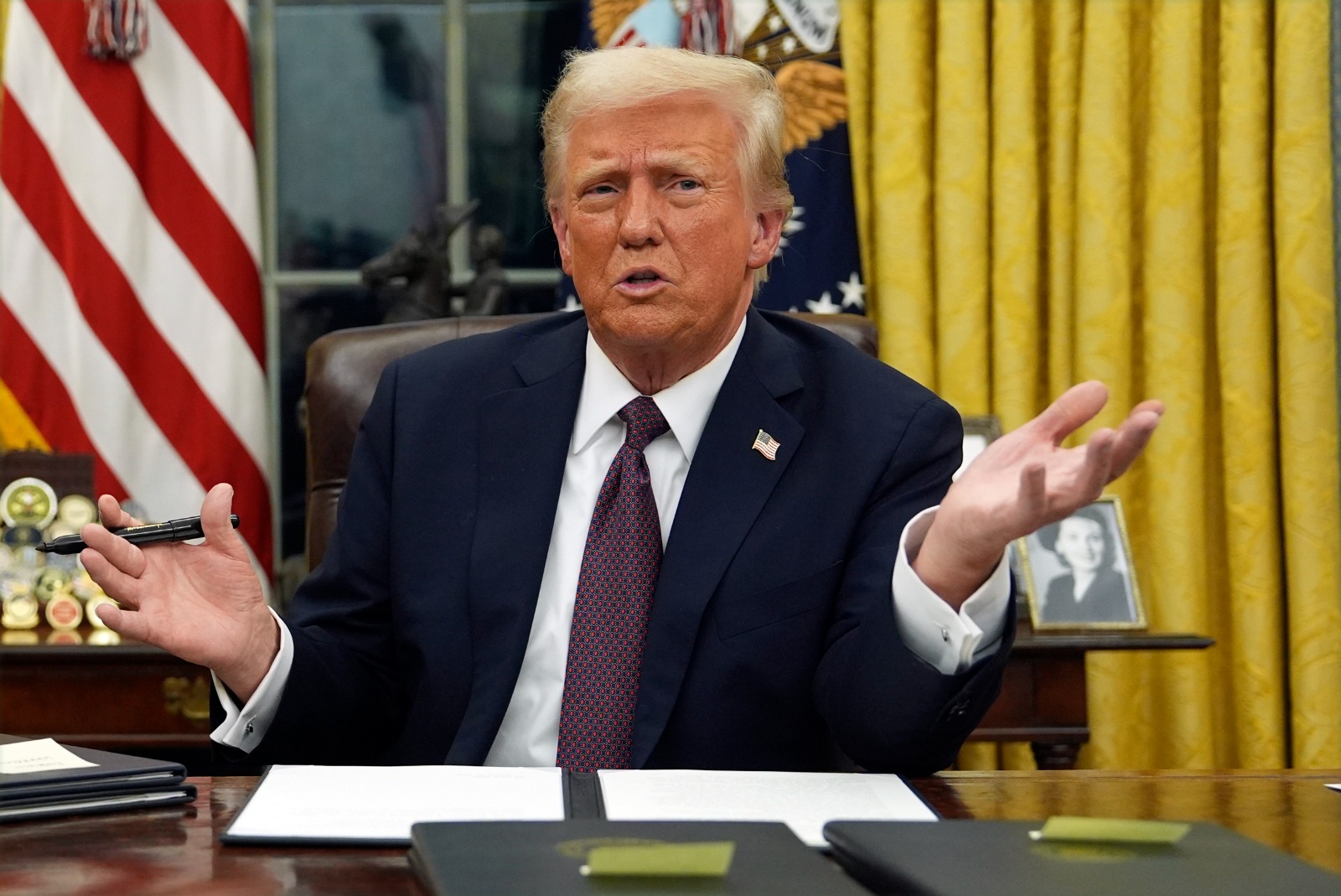
New York/Washington(PTI): US President Donald Trump said he could travel to India next year, emphasising that Indian Prime Minister Narendra Modi “wants” him to visit while calling him a “great man” and a friend.
“He's (PM Modi) a friend of mine, and we speak... He wants me to go there. We'll figure that out. I'll go. I will have a great trip there with Prime Minister Modi, he’s a great man. And I'll be going,” Trump said at the Oval Office on Thursday in response to a question.
When asked if he is planning to go to India next year, Trump said, “It could be, yeah.”
India will host leaders from Australia, Japan, and the United States for the Quad summit in New Delhi after the 2024 summit was held in Wilmington, Delaware.
However, the dates for the summit in India are yet to be announced.
Meanwhile, President Trump once again claimed that India has stopped buying from Russia.
"It’s great, going good. He (PM Modi) stopped... Largely he stopped buying oil from Russia,” Trump said in response to a question on how talks with Modi and trade discussions with India are progressing.
Trump imposed 25 per cent reciprocal tariffs on India and an additional 25 per cent levies for Delhi’s purchases of Russian oil, bringing the total duties imposed on India to 50 per cent.
India had described the US action as "unfair, unjustified and unreasonable" while maintaining that its energy policy is guided by its own national interest.
In his remarks before the press, Trump also reiterated his claim that he stopped the war between India and Pakistan in May using trade.
“Of the eight wars I ended, I would say five or six were ended because of tariffs. I'll give you an example. If you take a look at India and Pakistan, they started to fight, they are two nuclear nations... They were shooting each other. Eight planes were shot down. It was seven. Now it is eight, because the one that was sort of shot down is now abandoned. Eight planes were shot down.
“And I said, 'Listen, if you guys are going to fight, I'm gonna put tariffs on you’. And they both went, you know, they were not happy about that. And within 24 hours, I settled the war. If I didn't have tariffs, I wouldn't have been able to settle that war,” Trump said.
The president also termed tariffs a "great national defence".
Since May 10, when Trump announced on social media that India and Pakistan had agreed to a “full and immediate ceasefire" after a “long night” of talks mediated by Washington, he has repeated his claim over 60 times that he “helped settle” the tensions between the two neighbouring countries.
India has consistently denied any third-party intervention.
India launched Operation Sindoor on May 7, targeting terror infrastructure in Pakistan and Pakistan-occupied Kashmir in retaliation for the April 22 Pahalgam attack that killed 26 civilians.
India and Pakistan reached an understanding on May 10 to end the conflict after four days of intense cross-border drone and missile strikes.
Let the Truth be known. If you read VB and like VB, please be a VB Supporter and Help us deliver the Truth to one and all.
Delhi horror: IRS officer's daughter raped, murdered by former househelp
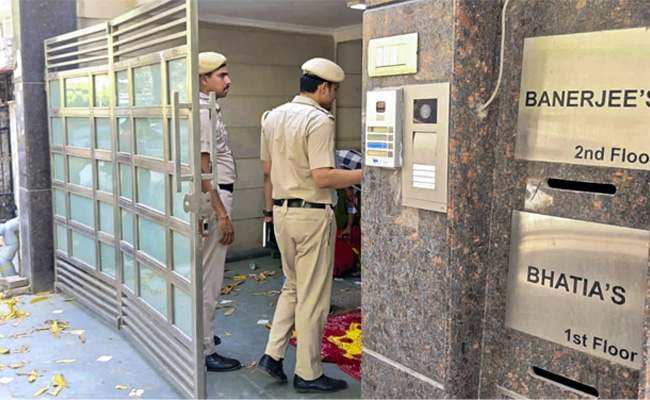
New Delhi (PTI): A 22-year-old IIT graduate and daughter of a senior Indian Revenue Service (IRS) officer was allegedly raped and murdered at her residence by their former househelp in southeast Delhi's upscale Kailash Hills locality on Wednesday morning, hours after he sexually assaulted another woman in Rajasthan's Alwar.
Rahul Meena, the 19-year-old domestic help who had worked with the family for around eight months and was sacked around a month ago, has been arrested for the crime, police said this evening.
The woman, who was preparing for the Union Public Service Commission (UPSC) examination, was alone in her house at the time of the incident and was found murdered in a room by her family members when they returned from the gym, they said.
Preliminary inquiry suggests the woman was sexually assaulted before being strangled to death using a mobile phone charger cable, the police said, adding they are waiting for the postmortem report for confirmation of sexual assault.
ALSO READ: Rahul meets Youth Cong workers arrested for 'shirtless protest' at AI meet, calls them 'babbar sher'
The police also said they have detained two persons -- a car cleaner in the area, and a househelp in the neighbourhood -- for questioning.
A senior police officer said that the victim's parents would lock the house in the morning and leave the keys outside for their domestic help.
Meena was aware of the location of the keys and allegedly used them to enter the house on Wednesday. The accused was familiar with the household, including its layout and the daily routine of the family members.
He knew when the victim's parents would step out for their walk or gym sessions.
Meena, a native of Rajasthan, had been removed from his job around a month ago for alleged misappropriation of daily purchase bills, the officer said after preliminary investigation.
An official said that the victim was alone at the residence at the time of the incident, adding that the accused entered the house around 6 am, attacked the woman and sexually assaulted her. She was allegedly hit with a stick, inflicting significant blunt force trauma on her face and head.
Subsequently, the attacker strangled her using a mobile charging cable before fleeing the spot. The police also said there is no information about the verification of the accused when he was hired.
The sources said the victim put up a strong resistance, following which the accused struck her on the head with a stick to overpower her before strangling her with a charging cable.
The police suspect the crime was committed between 6 am and 7 am, a time likely chosen as two other domestic workers usually arrive later in the day.
A police source said that after the incident, the family members immediately checked CCTV footage and saw Meena entering their building and going to the third floor of the house belonging to the victim.
The family has already handed over the entire CCTV footage to the police.
The police said the suspect was also seen on a nearby street camera carrying a backpack.
They said Meena is also wanted in a sexual assault case in Rajasthan's Alwar.
"A case against the accused was registered on Wednesday. He committed the offence on April 21 with a woman in Rajgarh and fled from Alwar, around 170 km from here, to Delhi.
"An FIR has been registered at the Rajgarh Police Station against him. We are in contact with the Delhi Police, and a team of the Delhi Police has also visited here to question his family members," an officer in Alwar told PTI.
The police earlier said Meena, who was seen outside the house even a few days ago, was missing since the incident, and a manhunt has been launched to trace and apprehend him.
"We are examining all possible angles and gathering evidence," a senior police official said.
The police received information about the incident around 9 am from the victim's parents, who alleged that their former domestic help was involved in the killing of their daughter.
The police said that the woman had completed engineering and was preparing for the civil services examination.
"What we have got to know is that after committing the crime in Rajasthan, he fled from there and came to Delhi. He directly reached here in Kailash Hills. He knew the exact point where girls' parents would hide keys when they would step out for the gym.
"He entered the house when one of the security guards had gone either to attend nature's call or for tea. After committing the crime, he fled towards the jungle side. We are also investigating if the accused changed his clothes just before fleeing," a police officer privy to the investigation told PTI.
CCTV cameras were installed at the entrance of the victim's room, with the live feed accessible on both the victim's and her father's mobile phones, said the officer.
Earlier, the police said that it was suspected that the accused fled with the mobile phone of the victim. They said that more than 20 teams of different units and police stations were working on the case.
The brutal incident has sent shockwaves across the upscale residential locality. Locals expressed concern over safety and security in these neighbourhoods.
Greater Kailash MLA Shikha Roy said the victim was a bright and talented young woman with a promising future, and her death is a painful loss for the entire community.
"I have known her personally for several years and have seen her grow up as a sincere, disciplined and exceptionally talented girl. She was brilliant in her studies, had completed engineering from IIT Delhi, and was preparing for the UPSC examination with great determination.
"She was an equally good dancer and other cultural activities, and despite being deeply focused on her studies, she remained humble and connected with people around her," Roy said.
A case has been registered, and forensic teams have collected evidence from the crime scene.
Some recent cases involving househelps:
- A horrifying double murder rocked Delhi's Lajpat Nagar locality in 2025, where a mother and her 14-year-old son were found brutally murdered inside their home. Both victims had their throats slit by their domestic help.
- Delhi Police in 2024 filed a chargesheet in the case of a 63-year-old doctor's murder in his home in south Delhi's Jangpura. Police named three persons as accused. Among them was a domestic help. They were charged under sections of murder, robbery and criminal conspiracy.
- A 17-year-old domestic worker was apprehended and her associate was arrested by the Delhi Police for the murder-robbery of a 66-year-old woman in her house in Dwarka in 2023.