US President Trump says Military action against Iran still 'on the table'
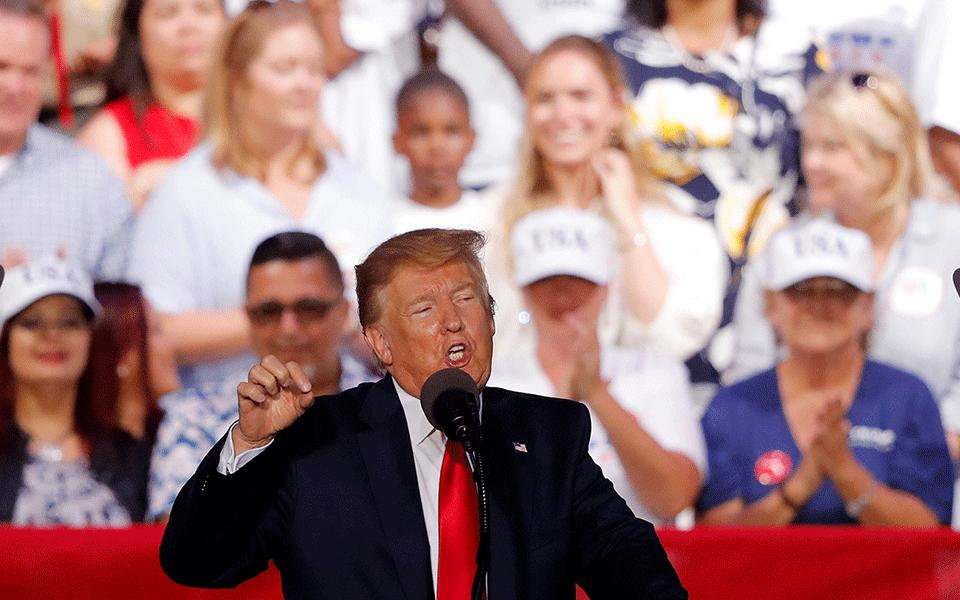
Washington: President Donald Trump said Saturday he's still considering military action against Iran after it downed an unmanned US military aircraft, saying the use of force is "always on the table until we get this solved."
The president said he aborted a military strike set for Thursday after learning 150 people would be killed.
"I don't want to kill 150 Iranians. I don't want to kill 150 of anything or anybody unless it's absolutely necessary," he told reporters as he left the White House for a weekend at the Camp David presidential retreat.
Trump said "we very much appreciate" a decision by Iran's Revolutionary Guard not to shoot down a US spy plane carrying more than 30 people. He said the downing of the US drone was "probably intentional" contradicting what he said Thursday.
The president's comments came as Iran summoned the United Arab Emirates' top envoy to Tehran to protest the neighboring Arab nation's decision to allow the US to use a base there to launch the drone that Iran says entered its airspace, state media reported Saturday.
Iran issued a "strong protest" to the UAE diplomat, saying Iran does not tolerate the facilitation of foreign forces that violate its territory, the report by the official IRNA news agency said.
The US said its RQ-4A Global Hawk was shot down Thursday over international waters in the Strait of Hormuz, not inside Iranian airspace.
The shoot-down by elite Iranian Revolutionary Guard forces marked the first time the Islamic Republic directly attacked the American military amid mounting tensions over Tehran's unraveling nuclear deal with world powers.
The two countries disputed the circumstances leading up to an Iranian surface-to-air missile bringing down the drone, an unmanned aircraft with a wingspan larger than a Boeing 737 jetliner and costing over USD 100 million.
British diplomat Andrew Murrison planned to visit Iran on Sunday and call for the "urgent de-escalation in the region and raise UK and international concerns about Iran's regional conduct" during talks with Tehran's government, Britain's Foreign Office said in a statement Saturday.
"At this time of increased regional tensions and at a crucial period for the future of the nuclear deal, this visit is an opportunity for further open, frank and constructive engagement with the government of Iran," the statement said.
The announcement came a day after Trump said he had called off military strikes on Iran minutes before they were to be carried out Thursday because it would have been out of proportion to the shootdown of an unmanned American surveillance drone.
The drone incident immediately heightened the crisis already gripping the wider region, which is rooted in Trump withdrawing the US a year ago from Iran's 2015 nuclear deal and imposing crippling new sanctions on Tehran.
Recently, Iran quadrupled its production of low-enriched uranium to be on pace to break one of the deal's terms by next week, while threatening to raise enrichment closer to weapons-grade levels on July 7 if Europe doesn't offer it a new deal.
In Iraq, security measures were increased at one of the country's largest air bases, which houses American trainers, a top Iraqi air force commander said Saturday.
The US military said operations at the base were going on as usual and there were currently no plans to evacuate personnel.
The stepped-up Iraqi security measures at Balad air base, just north of the capital of Baghdad come amid the sharply rising tensions in the Middle East between the US and Iran.
On Friday, Iran summoned Swiss Ambassador Markus Leitner to hear Iran's protest over the alleged violation. Switzerland looks after US interests in Iran. Tehran and Washing have had no diplomatic relations since 1979.
Iran said the US drone was a "very dangerous provocation.
Let the Truth be known. If you read VB and like VB, please be a VB Supporter and Help us deliver the Truth to one and all.
Three arrested for running fake Aadhaar racket in UP's Badaun
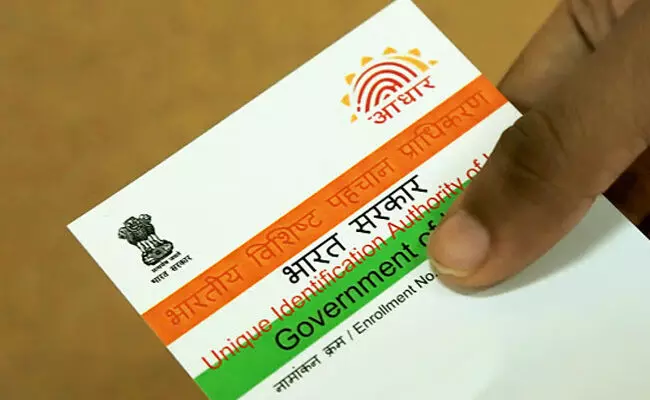
Budaun (UP), Apr 30 (PTI): The Budaun Police on Thursday busted a gang allegedly involved in preparing fake Aadhaar cards and forged documents, and arrested three of its members, officials said.
The action was carried out in the Hazratpur area, where the accused were found operating an illegal setup to generate fake identity documents, they said.
The accused have been identified as Farman Ali, a resident of Munshi Nagla, Anuj Kumar of Uprela, and Brajnandan of Sirsauli.
The police said a fingerprint scanner, three laptops, a hard disk, a scanner, a large number of Aadhaar cards and several suspicious documents were recovered from their possession.
ALSO READ: Hit by car, delivery agent dies after falling from flyover in Delhi
During interrogation, it was revealed that the gang had been involved in preparing fake identity documents for a long time, misleading people and earning money through illegal means, officials said.
Station House Officer Pushpendra Singh said the accused have been produced before a court, and efforts are underway to identify and arrest other members of the gang.
He added that further revelations are likely as the investigation progresses.