US recommends 'pause' for Johnson & Johnson vaccine over blood clot reports
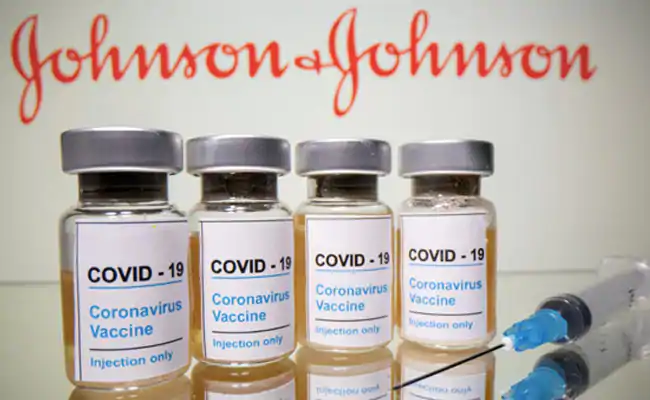
Washington, Apr 13: The US is recommending a pause in administration of the single-dose Johnson & Johnson COVID-19 vaccine to investigate reports of potentially dangerous blood clots.
In a joint statement Tuesday, the Centers for Disease Control and Prevention and the Food and Drug Administration said they were investigating clots in six women that occurred in the days after vaccination.
The clots were observed along with reduced platelet counts making the usual treatment for blood clots, the blood thinner heparin, potentially dangerous.
More than 6.8 million doses of the J&J vaccine have been administered in the U.S., the vast majority with no or mild side effects.
U.S. federal distribution channels, including mass vaccination sites, will pause the use of the J&J shot, and states and other providers are expected to follow. The other two authorised vaccines, from Moderna and Pfizer, are not affected by the pause.
CDC's Advisory Committee on Immunization Practices will meet Wednesday to discuss the cases and the FDA has also launched an investigation into the cause of the clots and low platelet counts.
Until that process is complete, we are recommending a pause in the use of this vaccine out of an abundance of caution, Dr. Anne Schuchat, Principal Deputy Director of the CDC and Dr. Peter Marks, director of the FDA's Center for Biologics Evaluation and Research said in a joint statement.
They are recommending that people who were given the J&J vaccine who are experiencing severe headache, abdominal pain, leg pain, or shortness of breath within three weeks after receiving the shot contact their health care provider.
Officials say they also want to educate vaccine providers and health professionals about the unique treatment required for this type of clot.
The J&J vaccine received emergency use authorization from the FDA in late February with great fanfare, with hopes that its single-dose and relatively simple storage requirements would speed vaccinations across the country.
Yet the shot only makes up a small fraction of the doses administered in the U.S. as J&J has been plagued by production delays and manufacturing errors at the Baltimore plant of a contractor.
Last week the drugmaker took over the facility to scale up production in hopes of meeting its commitment to the U.S. government of providing about 100 million doses by the end of May.
Until now concern about the unusual blood clots has centered on the vaccine from AstraZeneca, which has not yet received authorisation in the U.S. Last week, European regulators said they found a possible link between the shots and a very rare type of blood clot that occurs together with low blood platelets, one that seems to occur more in younger people.
The European Medicines Agency stressed that the benefits of receiving the vaccine outweigh the risks for most people. But several countries have imposed limits on who can receive the vaccine; Britain recommended that people under 30 be offered alternatives.
But the J&J and AstraZeneca vaccines are made with the same technology. Leading COVID-19 vaccines train the body to recognize the spike protein that coats the outer surface of the coronavirus. But the J&J and AstraZeneca vaccines use a cold virus, called an adenovirus, to carry the spike gene into the body. J&J uses a human adenovirus to create its vaccine while AstraZeneca uses a chimpanzee version.
The announcement hit US stock markets immediately, with Dow futures falling almost 200 points just over two hours before the opening bell. Shares of Johnson & Johnson dropped almost 3 per cent.
Let the Truth be known. If you read VB and like VB, please be a VB Supporter and Help us deliver the Truth to one and all.
Allahabad HC orders probe into 'reinstatement' of teacher in UP's Barabanki
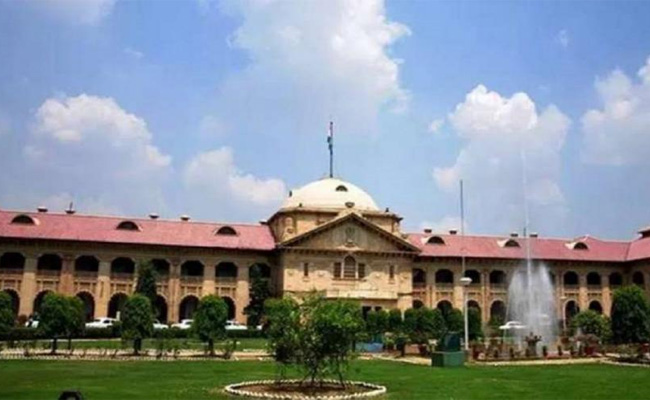
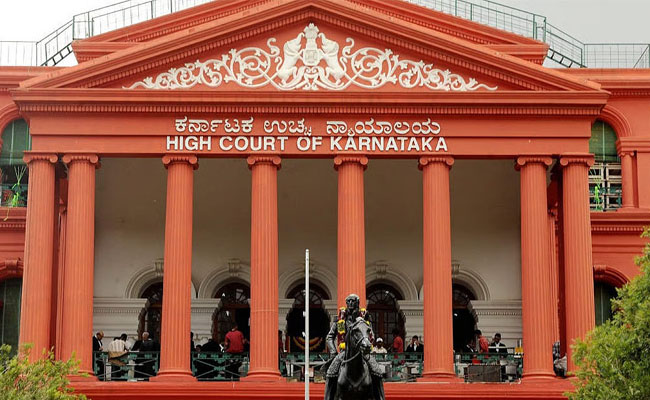
Lucknow (PTI): The Lucknow Bench of the Allahabad High Court on Friday ordered a probe by the special task force (STF) into alleged irregularities in the rejoining of a teacher at City Intermediate College in Barabanki, observing that the reinstatement appeared to be prima facie illegal.
The court also directed the recovery of the salary paid to the teacher during the disputed period.
A bench of Justice Rajeev Singh passed the order on a petition filed by the college management committee. The court expressed doubts over the roles of the District Inspector of Schools (DIOS), Barabanki, the college principal and the teacher concerned and hence, directed a detailed inquiry into the matter.
Taking note of alleged manipulation of records and misleading submissions, the court ordered the immediate transfer of the Barabanki DIOS to ensure a fair probe. It also directed the initiation of disciplinary proceedings against the then joint director of education of the Ayodhya division.
In its order, the court found that the teacher, Abhay Kumar, was initially appointed as an assistant teacher in 2018 but joined an Eklavya Model Residential School in Chhattisgarh as a lecturer in June 2024 without obtaining permission from the management. His subsequent request to retain the lien was rejected.
Despite this, he was allowed to rejoin the Barabanki College in September 2025 on the directions of the joint director of education and the DIOS, and was even paid the salary for October 2025. The court termed the rejoining "wholly illegal" and lacking any legal basis.
The bench also expressed concern over lapses in communication within the education department and directed the Uttar Pradesh chief secretary to ensure that official orders are communicated through email and WhatsApp as well, to prevent disputes.
The matter is next listed for hearing on May 28 when a compliance report is sought.